Best MSN Programs in Florida
Compare 127 accredited Nursing (MSN) programs in Florida at 28 schools, with graduate earnings, cost, debt, and completion data from IPEDS and the U.S. College Scorecard.
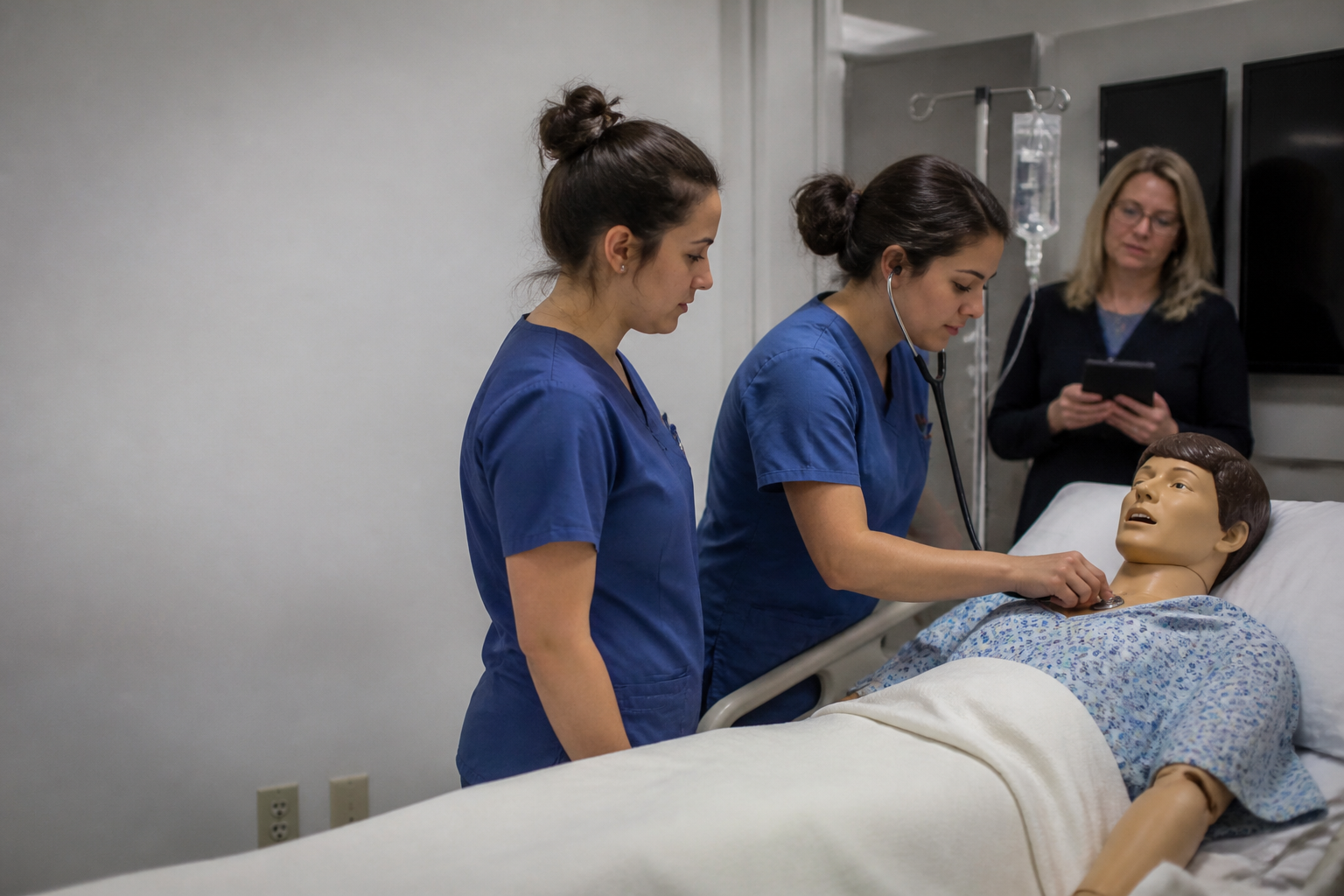
Florida APRN licensure hinges on completing a graduate nursing program and passing a national certification exam in your chosen population focus, whether that’s a Psychiatric Mental Health Nurse Practitioner (PMHNP) MSN in Florida, a Clinical Nurse Specialist (CNS) MSN, or, most commonly, the FNP credential from ANCC or AANP. That makes accreditation, clinical placement support, and total cost the real filtering criteria, not just a school's reputation.
These rankings compare campus, online, and hybrid MSN-FNP options on outcomes rather than marketing. Some are fully online for coursework, but none can be entirely remote once required clinical hours begin. Students who ignore net price or preceptor logistics often stall at the final licensure step after finishing the degree.
Key Points
- No MSN-FNP is fully remote, because clinical hours always happen in person.
- Most ranked Florida schools no longer require GRE scores, so confirm each admissions page.
- A BSN-to-MSN family nurse practitioner track takes roughly two years full-time.
Best MSN Programs in Florida: 2027 Rankings
Figures below come from federal IPEDS and College Scorecard data. Graduation rates describe each school overall, not its nursing program, and net price is an approximate average, so see the cost section and the FAQ for how to read them. Accreditation is noted only where we could confirm it, so check the CCNE directory before you apply.
University of Florida
#1Gainesville, FL · ~$13,000/yr (est.)
The University of Florida in Gainesville is a large public research university with an overall graduation rate of about 91%. Published graduate tuition is roughly $10,770 a year in state and $27,335 out of state, before fees. The only graduate program in our data for UF is a Master of Public Health, offered on campus and online, not an MSN, so no FNP concentration is listed here. CCNE records show UF's master's nursing accreditation was withdrawn effective May 2017, so confirm any current graduate nursing offering and its accreditation directly with the college.
- Social and Behavioral Sciences concentration inside the MPH
- Offered on campus and online, with asynchronous online options
- MPH core in epidemiology, biostatistics, and health policy
- Applied Practice Experience required
- Integrative Learning Experience capstone required
Florida State University
#2Tallahassee, FL · ~$11,000/yr (est.)
Best for: Working RNs wanting fully online nursing education
Florida State University in Tallahassee is a public university with an overall graduation rate of about 86%. Its MSN in Nursing Education is delivered online and asynchronously with no campus visits, and graduate tuition runs about $8,684 a year in state and $24,116 out of state before fees. There is no FNP concentration in our data. The program materials say the GRE is waived, but one description also says the program is pursuing CCNE accreditation, so verify its status before applying.
- All courses online and asynchronous, no campus visits
- 36 total credit hours
- Requires a BSN, 3.0 minimum GPA, and an active RN license
- GRE waiver noted in program materials
- Clinical education focus for teaching roles
- Tuition waivers and Nurse Faculty Loan Program support listed
- 42 total credit hours
- 50 clinical hours and a capstone required
- Some core courses offered evenings online
- Epidemiology certificate credits count toward electives
Ana G. Mendez University
#3Orlando, FL · ~$10,000/yr (est.)
Best for: Aspiring family nurse practitioners studying on site
Ana G. Mendez University in Orlando is a private institution whose Family Nurse Practitioner MSN is delivered on site, with campus options in Metro Orlando, Tampa Bay, and South Florida. Published graduate tuition is about $8,910 a year for in-state and out-of-state students alike, before fees. An overall graduation rate is not reported in the federal data we used, and program-level earnings are not yet available. We could not confirm the program's CCNE or ACEN status, so verify it before applying.
- On-site delivery at Metro Orlando, Tampa Bay, and South Florida campuses
- Family Nurse Practitioner track with primary care leadership focus
- Coursework in pathophysiology, pharmacology, and health assessment
- Biomedical ethics and health policy included
- Didactic and clinical experiences
- No thesis or capstone required
- Prepares graduates to sit for national FNP certification
Florida International University
#4Miami, FL · ~$11,000/yr (est.)
Florida International University in Miami is a public university with an overall graduation rate of about 74%. Graduate tuition runs about $9,119 a year in state and $21,600 out of state before fees. It offers the widest nursing menu on this list, including a hybrid FNP track alongside pediatric, adult-gerontology, and psychiatric-mental health nurse practitioner options, plus nurse educator and direct-entry tracks. Clinicals for some tracks can be arranged outside South Florida.
- Hybrid format
- 49 to 52 semester credits
- Requires a 3.0 GPA, three recommendations, and a current Florida RN license
- NursingCAS application and panel interview for selected applicants
- Thesis, master's paper, or research project
- Hybrid; 47 total credit hours
- Care for newborns through young adults
- Eligible for national NP certification and state APRN certification
- Dual track with Nurse Educator option
- Fall start; clinicals allowed outside South Florida
- Predominantly online; 45 credits over six semesters
- Care for adolescents through the elderly
- Clinicals allowed outside local areas
- Option to add a Nurse Educator Certificate
- Fall start
- Hybrid and campus listings; fall admission only
- 770 clinical hours listed in the catalog
- 3.0 GPA and a Florida RN license required
- Dual Nurse Educator option available
- Applicants complete an admissions interview
- Campus-based; applications run Nov. 1 through Feb. 1 for fall
- Prepares graduates for NLN Nurse Educator certification
- Teaching strategies for culturally diverse populations
- Campus-based direct-entry track for foreign-educated physicians
- 102 total credits over 8 semesters
- No RN license required
- Limited to 45 students a year
- Eligible for NCLEX-RN and APRN certification
- Fully online option; 45 credit hours
- Nine concentration options
- Accelerated one-year pathway available
- Fully online; 17-month program
- About $27,500 total program tuition
- Business school program, not a nursing degree
University of South Florida
#5Tampa, FL · ~$10,000/yr (est.)
The University of South Florida in Tampa is a public university with an overall graduation rate of about 77%. Graduate tuition is about $8,350 a year in state and $19,048 out of state before fees. Its Family Nurse Practitioner MSN is a hybrid, 60-credit program, with pediatric and adult-gerontology nurse practitioner tracks as well. USF reports it opened an expanded College of Nursing facility in Tampa in August 2026, including a hospital-funded simulation center, and that its MSN ranked No. 1 in Florida in the 2026 U.S. News rankings.
- Hybrid; 60 credit hours
- Prepares for ANCC or AANPCB certification
- Comprehensive examination required
- Advanced practice care across the lifespan
- Campus-based; 57 total credit hours
- Prepares for the pediatric primary care NP certification exam
- Lock-step plan and new-graduate plan available
- Comprehensive examination required
- Campus-based; 57 total credit hours
- Comprehensive exam required
- Prepares for certification exam
- 74 credit hours, campus-based
- Combines nursing and College of Public Health courses
- Grant funding may cover tuition
- Full-time plan available
- Hybrid with a fully online option; 42 credit hours
- Ten concentration options
- Prepares students for CPH certification
University of North Florida
#6Jacksonville, FL · $10,000 – $15,000/yr (est.)
The University of North Florida in Jacksonville is a public university with an overall graduation rate of about 69%. Graduate tuition is about $8,570 a year in state and $19,585 out of state before fees. Its MSN options in our data are Nursing Education and an online Nursing Management and Leadership track, with no MSN-FNP; nurse practitioner training sits at the doctoral level. CCNE current-actions records list UNF's master's nursing accreditation as withdrawn effective December 2016, while other listings still describe its MSN tracks as CCNE accredited, so confirm directly with UNF and CCNE.
- Campus-based, housed in the Brooks College of Health
- One of two MSN concentration options
- Fully online; 35 credit hours
- BSN, 3.0 GPA, one year of RN experience, and current RN licensure required
- Full-time or part-time enrollment
- Fall admission only
- Prepares for ANCC certification
- Online student success coach provided
Florida Atlantic University
#7Boca Raton, FL · $7,000 – $18,000/yr (est.)
Florida Atlantic University in Boca Raton is a public university with an overall graduation rate of about 63%. It has the lowest graduate tuition among the ranked public schools: about $5,467 a year in state and $16,695 out of state before fees, or roughly $372 per credit in state. Its part-time hybrid FNP track is described as CCNE accredited, and no GRE or MAT is required. Published credit and clinical-hour totals vary across descriptions (about 42 to 52 credits, 720 to 780 clinical hours), so confirm the current plan of study.
- Hybrid, part-time format; fall admission only
- About 2.5 years to complete
- 780 clinical hours listed on the program page
- No GRE or MAT required
- 3.0 GPA and one recommendation letter
- Eligible for ANCC or AANP certification
- In-state tuition listed at $371.81 per credit
- Hybrid online and on-campus; offered on three Florida campuses
- 52 credit hours; about 2.5 years part-time
- 780 clinical hours; South Florida placements
- Fall start; no entrance exam required
- Prepares for ANCC or AANP certification
- Hybrid; fall and spring starts
- Deadlines: July 1 for fall, Nov. 15 for spring
- 3.0 GPA, one letter of recommendation, and a statement of philosophy
- Background check before first course
- Fully online with no campus visits
- 37 to 39 credit hours
- 180 to 270 practical hours
- Out-of-state tuition listed at $1,026.81 per credit
- Fall and spring admission
University of Miami
#8Coral Gables, FL · ~$47,000/yr (est.)
The University of Miami in Coral Gables is a private research university with an overall graduation rate of about 84%. Published graduate tuition is about $45,540 a year for in-state and out-of-state students alike, before fees, the highest on this list by a wide margin. Its on-campus FNP track is a lock-step cohort that can be finished in one or two years, with a minimum of 616 clinical hours, and an adult-gerontology acute care NP track is also offered.
- Campus-based, lock-step cohort model
- 38 credits in one or two years of study
- Minimum 616 clinical hours
- Fall start for full-time, spring for part-time
- Prepares for AANP or ANCC certification
- Post-master's FNP certificate and BSN-DNP track also offered
- Campus-based; 37 total credit hours
- One to one and a half years of study
- Clinical experiences in South Florida hospitals
- Full-time and part-time options
Atlantis University
#9Miami, FL · ~$14,000/yr (est.)
Atlantis University in Miami is a private institution with an overall graduation rate of about 57%. Published graduate tuition is about $10,764 a year, the same for in-state and out-of-state students, before fees. Its hybrid 36-credit MSN offers concentrations in nursing education, leadership, public health nursing, and health informatics, and can be completed in about 1.2 years. There is no FNP concentration, and program-level earnings are not yet available.
- Nursing Education concentration
- Hybrid online and campus format; 36 credits in about 1.2 years
- Curriculum design and nurse educator role coverage
- Capstone project included
- Scholarships available
- Leadership and administration concentration or certificate
- Healthcare quality and financial management principles
- Prepares for nurse executive roles
- Legal and ethical considerations covered
- Public Health Nursing concentration
- Population-based health perspectives
- High-risk population specialization
- Culturally appropriate care training
- Health Informatics concentration
- Electronic health records training
- Healthcare data management and quality improvement
University of West Florida
#10Pensacola, FL · $5,000 – $10,000/yr (est.)
The University of West Florida in Pensacola is a public university with an overall graduation rate of about 59%. Graduate tuition is about $7,088 a year in state and $22,166 out of state before fees. It offers an online FNP MSN alongside online nurse educator and nurse executive tracks and a campus-based direct-entry MSN for career changers. The online nurse educator and nurse executive tracks are asynchronous, and the nurse executive page says no campus visits are required.
- Online delivery; 45 total credit hours
- 3.0 GPA minimum and prerequisite courses
- Cohort progression with competitive, selective admission
- B grade required in all courses
- Physical exam and background check required
- No thesis or capstone required
- Online and asynchronous; 39 credit hours in about 24 months
- 8-week and 16-week courses
- Three practicum courses
- Next start date January 6
- Online asynchronous; 39 credit hours
- $425 per credit hour listed
- 225 total practical hours
- BSN with 3.0 GPA and current RN license required
- Campus-based; 69 credit hours over about 20 months
- For applicants with a non-nursing bachelor's degree
- TEAS score of 75% minimum
- Over 600 clinical hours
- Total tuition listed at $28,895 in state, $74,410 out of state
- Prepares for the NCLEX-RN
- Fully online; 42 credit hours in 18 to 24 months
- Three concentration options
- Three start dates per year
- Two-semester practicum
Cost & outcomes by school
Federal data for the highest-earning Nursing (MSN) programs, independent of the ranking above. Earnings are this field's master's graduates four years after completing, where the Scorecard reports them.
| School | Earnings | Tuition / yr | Debt | Grads/yr | Format |
|---|---|---|---|---|---|
| Florida Atlantic University FL | — | $6,693 | — | 3,718 | Hybrid |
| Florida State University FL | — | $10,553 | — | 6,764 | Online |
| University of South Florida FL | — | $10,428 | — | 6,756 | Hybrid |
| Florida International University FL | — | $11,334 | — | 7,196 | Campus |
| University of West Florida FL | — | $9,062 | — | 2,852 | Online |
| Florida Gulf Coast University FL | — | $8,961 | — | 1,338 | Hybrid |
| University of North Florida FL | — | $10,364 | — | 1,560 | Campus |
| Ana G. Mendez University FL | — | $10,455 | — | 1,484 | Campus |
| Herzing University-Tampa FL | — | $9,190 | — | — | Online |
| Herzing University-Orlando FL | — | $9,370 | — | 12 | Online |
| Florida Agricultural and Mechanical University FL | — | $9,876 | — | 562 | Online |
| Southeastern University FL | — | $10,659 | — | 736 | Online |
Sources: U.S. Department of Education. Tuition and graduates: IPEDS. Earnings and debt: College Scorecard, this field's master's graduates; a dash means no figure is reported.
Online and Hybrid Master's in Nursing Programs in Florida
Online study offers flexibility, but even among the best online MSN programs, an MSN-FNP always includes in-person clinical hours, so no program is fully remote. "Online" usually means coursework you complete from home, with precepted clinicals near you and sometimes on-campus intensives.
University of West Florida offers an online MSN-FNP, one of the online FNP programs in Florida. Its Spring 2027 application deadline was October 1, 2026, so most new applicants are looking at a later cohort. Florida Atlantic University and Florida International University run hybrid FNP tracks that admit for fall. Florida Atlantic's Fall 2026 deadline was February 15 through GradCAS, and Florida International's fall window runs November 1 to February 1, though confirm the exact date on its admissions page. Florida Southern College is hybrid with weekly in-person days, a January 2027 start, and a September 1 priority deadline. University of Miami lists part-time FNP entry in spring and full-time entry in fall, with a June 1, 2027 deadline for Fall 2027. Florida State University and University of South Florida also appear here with online or hybrid formats.
If you live outside Florida, ask whether the school is authorized to place clinicals in your state before you apply.
Which Ranked Florida MSN Schools Waive or Skip the GRE
Do you still need a GRE score to start a master's program with no GRE required in Florida? For most of the Master's Programs in Florida ranked here, no. Policies published on graduate nursing admissions pages break down roughly like this:
- University of South Florida: No GRE for the master's programs, though it still applies to some doctoral tracks.1
- Florida Atlantic University: No GRE or MAT required; the university has not accepted those scores to offset a GPA below 3.0 since 2023.
- Florida Southern College: No entrance exam, including the nurse practitioner tracks.
- Jacksonville University: Lists a GRE minimum but waives it for applicants with a 3.0 or higher undergraduate nursing GPA.
- University of West Florida: Still asks for the GRE or MAT unless you qualify for a test-score waiver; check with the department on waiver criteria.2
Several other schools ranked here do not publish a clear exam policy on their nursing admissions pages, so confirm directly before assuming.
What usually matters more: an unencumbered RN license (Florida licensure, specifically, at several schools), roughly a 3.0 BSN GPA, and in some APRN tracks about a year of bedside experience.
Master's in Nursing Costs in Florida and APRN Licensure
Tuition plus per-semester fees sets the real cost of a Florida master's in nursing, and that cost varies widely by school and track. Public universities here list annual in-state program tuition roughly between the high $6,000s at Florida Atlantic University and the low $10,000s at the University of South Florida, University of North Florida and Florida State University. Out-of-state rates run far higher, often $20,000 or more. Bethune-Cookman University, a private school, lists $14,100 with no in-state discount. These are institution-reported figures, and they can differ from what a specific MSN-FNP track charges.
For FNP programs, published program-level pricing is more useful. The University of West Florida lists $500 per credit, about $22,500 for 45 credits and 780 supervised hours, or $18,000 with up to nine transfer credits. Florida Southern College lists $680 per credit for 2026-2027, plus a $550 program fee and a $25 to $100 technology fee each semester. Florida State's published per-credit rates apply to its DNP-FNP, not its MSN. Treat any net price figure as a rough institution-wide average, not a program quote.
Licensure path
Graduate from an accredited FNP program, then pass a national certification exam through AANP or ANCC. Next, apply to the Florida Board of Nursing for APRN licensure with your active RN license, transcripts and a background check. Confirm current fees, malpractice coverage and any controlled-substance course requirements directly with the Board.
Related Articles
Clinical Placements and How Long an MSN-FNP Takes in Florida
In a Florida MSN-FNP, the biggest practical variable is not always coursework but whether you can lock in clinical preceptors fast enough to finish on schedule. For a BSN-to-MSN Family Nurse Practitioner (FNP) track, plan on roughly two years full-time and three to four years part-time, with typical totals around 500 or more supervised clinical hours and 40 to 45 credits.
Placement policies vary among the schools ranked here. Florida Southern College arranges clinical rotations in pediatrics, women's health, and adult primary care and requires 660 hours and 44 credits across six semesters. Florida State University expects students to secure their own preceptors and uses a preceptor planning form; its MSN handbook lists 500 clinical/practicum hours across MSN tracks. University of West Florida's Online Family Nurse Practitioner (FNP) MSN requires 780 hours and 45 credits and is full-time only, running 27 to 30 months.
A student-secured preceptor search can add months if local sites are scarce. Ask admissions whether placements are school-arranged, school-approved after you find a site, or fully student-sourced, and how the program supports students when a preceptor falls through.
Florida MSN FAQs
These answers cover accreditation, timelines, independent practice, and working while you study. Confirm details with each school and the Florida Board of Nursing before you apply.
Which Florida MSN programs are CCNE accredited?
How long does it take to become a family nurse practitioner in Florida, counting RN experience, the MSN, certification, and board licensure processing?
Can Florida APRNs practice independently after graduation?
Can I complete a BSN to MSN program in Florida while working full-time?
Compare Nursing (MSN) programs on the data that matters
Explore more MSN specializations or browse every graduate field.
All MSN programs