Best MSN Programs in Washington
Compare 17 accredited Nursing (MSN) programs in Washington at 8 schools, with graduate earnings, cost, debt, and completion data from IPEDS and the U.S. College Scorecard.
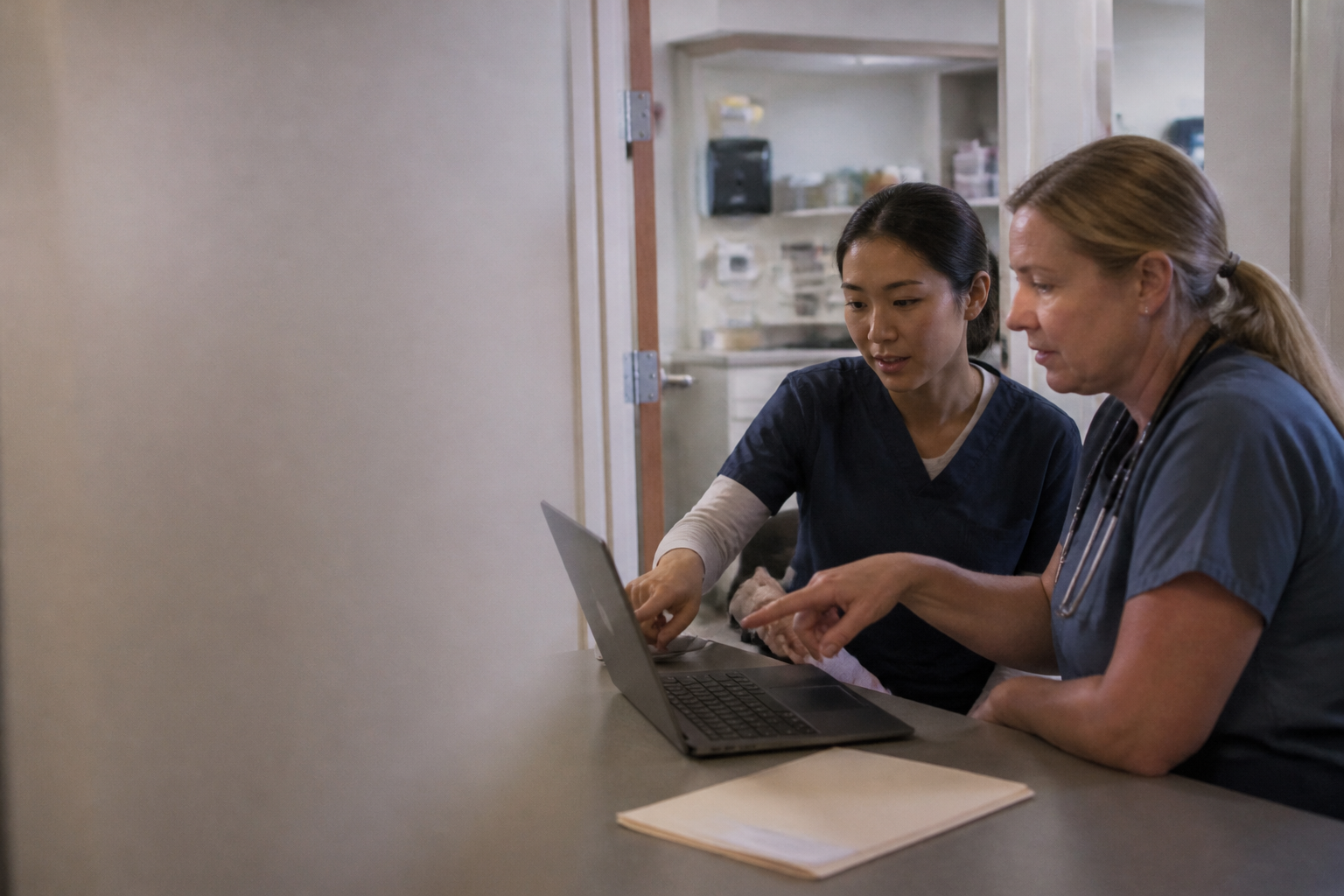
RNs considering Master's Programs in Washington for an MSN now choose among campus, hybrid, and online formats, with family nurse practitioner the most common track.
Published costs in Washington run from about $13,878 per year at Western Washington University to $41,760 for Pacific Lutheran University's accelerated 12-month MSN, and clinical hours stay in person whatever the format.
Hybrid options skew toward nurse educator tracks, while FNP and psychiatric nurse practitioner paths sit at fewer schools, so the specialty you want narrows the field quickly.
Key Points
- Western Washington University's listed in-state graduate nursing tuition is about $13,878.
- Gonzaga's PMHNP MSN is online but requires in-person clinical hours.
- For 2027, University of Washington-Seattle lists no GRE requirement for graduate programs.
Best MSN Programs in Washington for 2027
Washington's master's in nursing landscape spans nurse educator, clinical nurse leader, family nurse practitioner, and psychiatric mental health nurse practitioner tracks. The schools below include a mix of fully online, hybrid, and campus programs, with several located in or near Seattle and Tacoma.
University of Washington-Bothell Campus
#1Bothell, WA · ~$19,000/yr (est.)
Best for: Working RNs seeking hybrid nurse educator format
UW Bothell's Master of Nursing blends online coursework with 100 hours of faculty-led fieldwork, preparing students for nurse education and leadership roles. The program emphasizes health disparities, social justice, and AACN Essentials, with a capstone applying theory to real-world education challenges. Its hybrid format suits working registered nurses, and the campus reports a strong earnings profile for master's-level nursing completers.
- 50 credit hours with eight total courses
- 100 hours of faculty-led clinical fieldwork
- Hybrid format blends online coursework and on-site practice
- Focus on health disparities, social justice, and ethical practice
- Capstone project required
- Aligns with AACN Essentials
- CCNE-accredited Master of Nursing
Gonzaga University
#2Spokane, WA · ~$22,000/yr (est.)
Best for: Online learners pursuing psychiatric mental health
Gonzaga University offers an MSN in Psychiatric Mental Health Nurse Practitioner that is delivered entirely online with five required on-campus immersions. The 47-credit program includes 660 clinical hours and covers psychopharmacology, advanced health assessment, and evidence-based care across the lifespan. Gonzaga reports strong graduate earnings and a high employment share for its master's-level nursing completers.
- 47 credits and 660 clinical hours
- 9 semesters to completion
- Fully online with five required on-campus immersions
- CCNE-accredited
- Covers psychopharmacology and advanced health assessment
- Includes DSM-5 diagnosis training across the lifespan
- Bachelor's degree preferred
Pacific Lutheran University
#3Tacoma, WA · ~$31,000/yr (est.)
Best for: Career changers needing a direct entry path
Pacific Lutheran University offers MSN pathways with Certified Nurse Educator, Clinical Nurse Leader, and Psychiatric Mental Health Nurse Practitioner concentrations, plus an entry-level MSN for non-nursing bachelor's holders. Clinical placements are arranged by PLU faculty, and the cohort-based model keeps tuition predictable across the program. The Tacoma campus has strong clinical partnerships and small cohorts.
- 12-month BSN to MSN track
- Clinical placements arranged by PLU faculty
- Cohort-based structure with small cohorts
- Practicum in medically underserved areas
- $0 application fee
- Meets national certification requirements
- Hybrid online and in-person instruction
- Clinical placements coordinated by PLU
- State-of-the-art nursing simulation lab
- Eligibility for national certification
- Prepares APRN psychiatric mental health practitioners
- Campus-based clinical nurse leader concentration
- 100+ clinical partner sites
- State-of-the-art simulation lab
- CCNE-accredited
- Graduates can advance to DNP or PhD
- For non-nursing bachelor's degree holders
- 27-month completion timeline
- Cohort model learning
- Clinical Nurse Leader and Nurse Educator specializations
- Focus on health disparities
- Pathway to DNP and PhD
Washington State University
#4Pullman, WA · ~$15,000/yr (est.)
Washington State University's Master of Nursing is a 30-credit nurse educator track designed for BSN-prepared registered nurses. Didactic work is mostly online, with about five scheduled Zoom sessions per class and in-person practice experiences; students can complete the plan in four or seven semesters. The program lists a 3.0 GPA minimum and requires an unencumbered RN license in a campus catchment area.
- 30 total credit hours
- 250 clinical hours
- Primarily online didactic coursework
- About five scheduled Zoom sessions per class
- Four- or seven-semester plans
- 3.0 GPA minimum
- Current unencumbered RN license required
Western Washington University
#5Bellingham, WA · $14,000 – $27,000/yr (est.)
Western Washington University's MSN in Nursing Education is a 48-credit, two-year full-time program with online coursework and faculty-arranged practice experiences. Students can work with preceptors across palliative care, public health, primary care, rural health, tribal health, and nursing education. The curriculum aligns with NLN Nurse Educator Core Competencies, and no GRE or standardized test is required.
- 48 total credit hours, two-year full-time
- Online coursework with faculty-arranged practice experiences
- Preceptors in palliative, public, primary, rural, tribal health
- Aligns with AACN Essentials and NLN competencies
- No GRE or standardized test required
- Fall start every two years
- Hybrid program with online asynchronous coursework
- On-site practice hours
- Focus on health equity and systems thinking
- Prepares for NE-BC and CNML certification
- Capstone project required
- WA BON Phase III approval
Seattle University
#6Seattle, WA · ~$24,000/yr (est.)
Seattle University's Family Nurse Practitioner MSN is an eight-quarter, two-year curriculum designed for professional nurses moving into advanced practice primary care. The program requires 33 NURS credits and a B- minimum in specialty courses. Its Seattle location offers direct access to urban clinical sites.
- 8-quarter, two-year curriculum
- 33 NURS credits
- B- minimum in specialty courses
- Prepares advanced practice nurses for direct primary care
- Family nurse practitioner concentration
University of Washington-Seattle Campus
#7Seattle, WA · ~$19,000/yr (est.)
University of Washington-Seattle appears in this comparison for its health-focused master's programs in public health genetics and health informatics rather than a traditional MSN track. The MPH in Public Health Genetics is campus-based, while the Master of Health Informatics and Health Information Management is hybrid. The university reports strong graduate earnings for these fields.
- In-person, on-campus program
- Focus on ethical, legal, policy, and social issues in genomics
- Trains researchers, policy analysts, and academic faculty
- Applications for Autumn 2027 open October 1, 2026
- Hybrid online format
- Leadership development and health IT training
- Prepares for health IT leadership roles
- Focus on enterprise health information systems
- Bachelor's degree in related field required
University of Puget Sound
#8Tacoma, WA · ~$41,000/yr (est.)
University of Puget Sound offers a CEPH-accredited Master of Public Health at a small liberal arts university in Tacoma. The two-year program includes 150 hours of Applied Practice Experience and an integrative learning project. New fall 2027 students are automatically considered for scholarships up to $20,000.
- CEPH-accredited
- Two-year full-time program
- 150 hours of Applied Practice Experience
- Integrative Learning Experience project
- Up to $20,000 institutional aid available
- New students automatically evaluated for scholarships
Central Washington University
#9Ellensburg, WA · ~$13,000/yr (est.)
Central Washington University's Master of Public Health in Ellensburg offers concentrations in Community Health, Epidemiology, and Environmental Health. Coursework can be completed fully online, hybrid, or on campus, with a capstone requiring design and implementation of a public health intervention.
- Fully online option available
- Three concentrations: Community Health, Epidemiology, Environmental Health
- Hybrid, online, and on-campus coursework
- Capstone requires designing and implementing a public health intervention
- Network of over 100 public health alumni
University of Washington-Tacoma Campus
#10Tacoma, WA · $19,000 – $33,000/yr (est.)
Cost & outcomes by school
Federal data for the highest-earning Nursing (MSN) programs, independent of the ranking above. Earnings are this field's master's graduates four years after completing, where the Scorecard reports them.
| School | Earnings | Tuition / yr | Debt | Grads/yr | Format |
|---|---|---|---|---|---|
| University of Washington-Seattle Campus WA | — | $18,792 | — | 9,360 | Hybrid |
| Washington State University WA | — | $14,845 | — | 2,044 | Hybrid |
| Western Washington University WA | — | $13,878 | — | 524 | Hybrid |
| University of Washington-Bothell Campus WA | — | $18,738 | — | 396 | Hybrid |
| University of Washington-Tacoma Campus WA | — | $18,987 | — | 714 | Hybrid |
| Gonzaga University WA | — | $21,987 | — | 1,152 | Hybrid |
| Seattle University WA | — | $24,216 | — | 1,440 | Campus |
| Pacific Lutheran University WA | — | $30,535 | — | 262 | Hybrid |
Sources: U.S. Department of Education. Tuition and graduates: IPEDS. Earnings and debt: College Scorecard, this field's master's graduates; a dash means no figure is reported.
Most Affordable Master's in Nursing Programs in Washington
Western Washington University is the lowest-priced option in the published annual figures shown here, at about $13,878 for in-state graduate nursing tuition and fees. Net price is a separate institution-wide average after grant and scholarship aid, and University of Washington-Tacoma shows the lowest net price in this data at $10,163. Pacific Lutheran University publishes a per-credit MSN rate of $1,160 and a $200 per term nursing fee excluding January term.
| School | Published cost metric | In-state tuition or published cost | Net price after aid | Notes |
|---|---|---|---|---|
| Western Washington University | Annual graduate nursing tuition and fees | $13,878 | Not reported | Annual figure; no per-credit breakdown in available data |
| Washington State University | In-state graduate tuition, Master of Nursing | $14,845 | $14,971 | Net price is institution-wide after aid |
| University of Washington-Tacoma Campus | In-state graduate tuition, Master of Nursing | $18,987 | $10,163 | Net price is institution-wide after aid |
| University of Washington-Bothell Campus | In-state graduate tuition, Master of Nursing | $18,738 | $12,319 | Net price is institution-wide after aid |
| Pacific Lutheran University | Per-credit MSN tuition | $1,160 per credit; $41,760 total for 36 credits | Not reported | $200 per term nursing fee, excluding January term, subject to change; 36-credit BSN-MSN example over 12 months |
| Gonzaga University | Annual graduate nursing tuition and fees | $21,987 | Not reported | Online students pay the same rate regardless of residency |
Online and Hybrid MSN Options in Washington
An online or hybrid master's in nursing delivers lectures over the internet while you still complete supervised clinical hours in person, so "online" never means fully remote, similar to the format covered in our best online MSN programs ranking. Gonzaga's psychiatric mental health nurse practitioner MSN is listed as online, yet it includes five on-campus immersions. UW-Bothell, UW-Tacoma, Pacific Lutheran, Washington State, and Western Washington are hybrid. WSU teaches mostly online with in-person practicums and offers sites in Spokane, the Tri-Cities, and Vancouver. Seattle University's family nurse practitioner track is campus-based.
State authorization
Washington does not automatically authorize national online MSN schools.1 An out-of-state school must be approved by the state nursing commission before placing students in Washington clinical experiences, and the approval is tied to a specific track and covers Washington residents only.12 Confirm state authorization for your exact track directly with the school.
Clinical placement
Policies differ. Pacific Lutheran says faculty arrange clinical placements, including in medically underserved areas. Western Washington describes preceptors across varied settings. Seattle University publishes a preceptor handbook, but it does not say whether the school or the student finds the site.3 For Eastern and rural Washington, ask how far preceptors are from you and whether travel is required.
Before enrolling, get preceptor support and the placement process confirmed in writing.
Related Articles
Which Washington Master's in Nursing Programs Waive the GRE?
Do Washington MSN programs still require the GRE? Where a policy is published, mostly not, as with many No-GRE master's programs. Here is how the ranked schools sort out on their admissions pages.
- GRE not required: University of Washington-Seattle says no graduate program requires it.1 Western Washington lists no entrance exam for its nursing education MSN.
- Optional or waivable: No school here publishes a waiver pathway we could confirm.
- GRE required: None confirmed.
- No policy stated: Pacific Lutheran and Washington State say nothing about the GRE on the pages reviewed.23 Treat that as unknown and ask admissions. We found no stated policy for the remaining schools either.
Other prerequisites and deadlines
Pacific Lutheran lists a 3.0 cumulative GPA and prefers one year of RN experience.2 Its page shows no deadline we could confirm. Washington State's FNP track is a DNP, not an MSN, but it shows what to expect: a 3.0 GPA, 936 nursing hours, and a current RN license.3 Applications open August 15, with a November 15 priority deadline and a January 15 final deadline for a single fall start.
Statistics coursework is a common prerequisite, so confirm it program by program.
Cost, Financial Aid, and Washington ARNP Licensure
Borrowing your way through an MSN and earning your way out through service are two very different financial plans, and Washington rewards the second.
The Washington Health Corps bundles state loan repayment and scholarship programs for health professionals who commit three to five years to a shortage area.1 You generally cannot hold a Health Corps loan repayment award and a Health Corps scholarship at the same time.2
Graduates who move into teaching can apply to the Nurse Educator Loan Repayment program. It pays up to $75,000 toward eligible debt for faculty who teach at least one class per term,3 and the 2026 application window runs October 5 through November 6.
Before taking loans, compare the Most Affordable MSN Programs, ask your employer about tuition assistance, and ask each school about graduate assistantships.
The ARNP Path in Order
- Graduate: Finish an accredited FNP program. Accreditation is what makes you eligible for national certification.
- Certify: Pass a national FNP certification exam, offered by the AANPCB or the ANCC.
- Apply: Submit your ARNP application to the Washington State Nursing Care Quality Assurance Commission. Confirm the current fee on the commission's schedule, because fees are set by rule and can change.
Prescriptive authority requires an active, unrestricted Washington ARNP license, 30 contact hours of pharmacology, and documented supervised clinical practice.4
Washington MSN Programs: Common Questions
These are the questions prospective Washington MSN students ask most often, from nurse practitioner pay to clinical placements and accreditation. The answers below stick to published federal wage data and program-level requirements where those are established.
What is the average salary for a nurse practitioner in Washington?
Can online MSN students complete clinical placements in Washington?
Which Washington MSN programs are CCNE accredited?
Can I work as an RN while completing an FNP program in Washington?
Compare Nursing (MSN) programs on the data that matters
Explore more MSN specializations or browse every graduate field.
All MSN programs