Most Affordable MSN Programs
Compare 2,800+ accredited most affordable Nursing (MSN) programs at 700+ schools, with graduate earnings, cost, debt, and completion data from IPEDS and the U.S. College Scorecard.
Many MSN-FNP programs run $30,000 to $60,000, but the accredited schools ranked here report in-state tuition and fees from $7,160 to $9,987. That spread is the point: public universities in Texas, New York, and California keep the degree affordable. The ranking weights net price and aid, not just sticker price, using federal data. Cost beyond tuition, clinical placement and accreditation checks, and sub-$20,000 options for nurses and direct entry MSN programs for non-nurses get the same scrutiny. In practice, state authorization and placement logistics often matter more than the tuition line.
Key Points
- Texas A&M International's online FNP costs $17,616 total in-state.
- Flat-rate tuition charges one price per six-month term, not per credit.
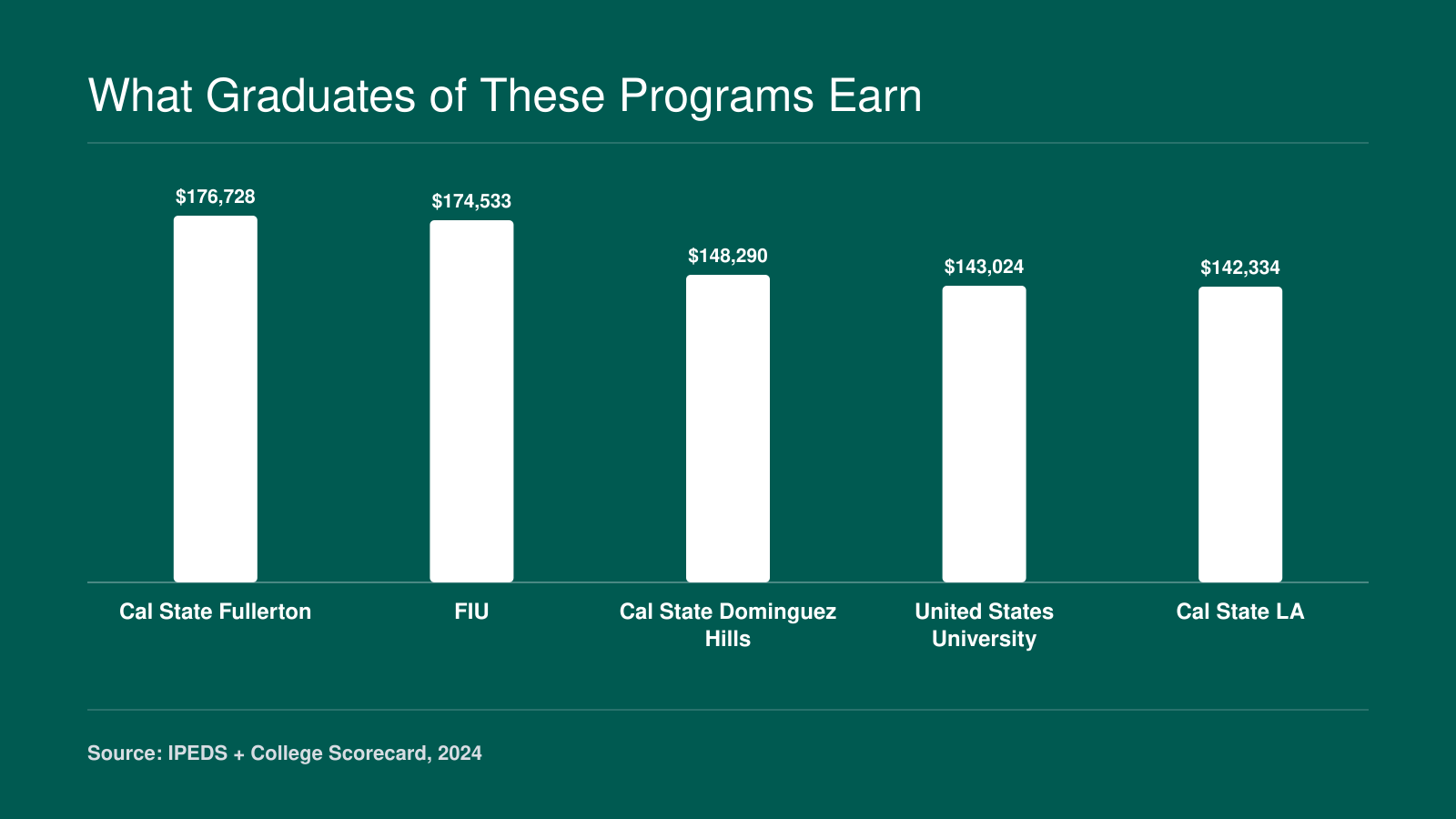
- Accredited graduates earn $142,334 to $176,728 median after five years.
The 10 Most Affordable MSN Programs for 2027
The programs below were selected because they keep out-of-pocket cost low while still leading to advanced nursing roles. Public universities in Texas, New York, and California dominate this list, and several offer fully online or hybrid formats that fit a working nurse's schedule. Use the detailed cards to compare tuition, clinical requirements, and the specific MSN concentration each school delivers.
Texas A&M University-Central Texas
#1Killeen, TX · $5,000 – $10,000/yr (est.)
Best for: Working RNs wanting fully online value
Texas A&M University-Central Texas delivers its MSN in Nursing Administration entirely online in 8-week sessions, with a total program tuition around $13,500. Students taking two classes per term can finish in 18 months and complete 500 practicum hours. This combination of low price, rolling admissions, and fully online delivery makes it a clear value for working Texas RNs.
- $13,500 total program tuition
- 36 credit hours and 12 courses
- 500 clinical hours total
- 8-week online sessions
- Rolling admissions with fall start
- Requires unencumbered Texas or Compact RN license
- Prepares for NE-BC, NEA-BC, or CENP certification
CUNY Hunter College
#2New York, NY · ~$11,000/yr (est.)
Best for: New York nurses seeking urban public value
CUNY Hunter College's Hunter-Bellevue School of Nursing pairs one of the lowest net prices on this list with strong graduate earnings. The nursing education MSN is fully online with synchronous evening classes, while nurse practitioner and clinical nurse specialist tracks are campus-based. For New York residents, the public CUNY tuition schedule makes advanced nursing education unusually affordable.
- 43-credit MSN in Nursing Education
- Part-time, four years across seven semesters
- Online with synchronous evening classes
- 105-hour NYC nurse educator residency
- Prepares for CNE and CHSE certification
- 42-credit AGPCNP concentration
- 630 clinical hours
- Prepares for NY State NP certification
- National board certification by ANCC and AANPCB
- 12-week summer session with 210 clinical hours
- 48-credit PMHNP concentration
- 630 supervised clinical hours
- Includes psychopharmacology and counseling
- Full-time and part-time plans
- Admissions via NursingCAS
- 42-credit MSN with 501 clinical hours
- Online didactic courses with in-person practicums
- CEPH accredited
- Prepares for community and public health roles
- 57-credit dual MSN and MPH
- Community Health Education concentration
- Full-time in five semesters
- Part-time and evening course options
- Requires BSN with 3.0 GPA and NY RN license
- Prepares for Advanced Public Health Nurse certification
- 57-credit dual MSN and MPH
- Environmental and Occupational Health concentration
- Full-time in five semesters
- Evening and late-afternoon courses
- 42-credit Adult-Gerontology CNS
- 500 clinical hours
- Full-time and part-time options
- Prepares for ANCC or AACN certification
- Evening and late-afternoon classes
Texas A & M International University
#3Laredo, TX · ~$7,000/yr (est.)
Best for: FNP candidates prioritizing certification pass rates
Texas A&M International University offers a 48-credit FNP track with a 100% first-time certification pass rate and low Texas resident tuition. The nursing administration and RN-to-MSN options are faster, fully online, and even lower priced. This is a strong pick for Texas nurses who want advanced practice without a big debt load.
- 48-credit online FNP with on-campus visits
- $17,616 total in-state tuition
- 100% first-time certification pass rate
- Requires BSN, Texas RN license, and 3.0 GPA
- One year inpatient experience required
- Two on-campus visits per course
- 31-credit MSN in Nursing Administration
- $11,377 total Texas resident tuition
- 10-month accelerated option
- 180 practicum hours
- Fully online option available
- RN-to-MSN pathway for ADN-prepared nurses
- 54 credit hours, fully online
- 18-month completion
- $19,818 total tuition
- 180 practicum hours
California State University-Los Angeles
#4Los Angeles, CA · ~$9,000/yr (est.)
Cal State LA offers a CCNE-accredited MSN in Nursing Education and a separate MPH with an urban community health concentration. The nursing education track is campus-based with fall admission and requires California RN licensure. Its public university tuition and graduation outcomes make it a practical Los Angeles option.
- 35-38 unit MSN in Nursing Education
- Campus-based with fall admission
- Requires BSN with 3.0 GPA and California RN license
- CCNE accredited
- Thesis or comprehensive exam option
- 42-credit MPH in Urban Community Health
- 36 core units plus 6 electives
- Field experience included
- Some courses may be taught online
CUNY Lehman College
#5Bronx, NY · ~$12,000/yr (est.)
CUNY Lehman College keeps MSN costs low while offering both family and pediatric nurse practitioner concentrations. The 45-credit programs run as cohorts with just one on-campus day per week, which helps working nurses plan around shifts. CCNE accreditation and eligibility for New York State licensure make the Bronx campus a practical local choice.
- 45-credit FNP concentration
- Cohort model with one campus day weekly
- CCNE accredited
- Prepares for NYS licensure and national certification
- 45-credit Pediatric NP concentration
- 12 courses, full-time cohort model
- One campus day per week
- Prepares for pediatric NP certification
The University of Texas Rio Grande Valley
#6Edinburg, TX · $5,000 – $10,000/yr (est.)
The University of Texas Rio Grande Valley provides affordable public tuition and a graduate scholarship of up to $1,000. Its campus-based FNP track emphasizes care for the region's multicultural communities, while the nursing administration MSN is fully online. UTRGV's outcomes data show solid earnings for graduates relative to cost.
- CCNE-accredited FNP program
- Focus on multicultural Rio Grande Valley communities
- UTRGV Graduate Select Scholarship up to $1,000
- Campus-based advanced practice preparation
- 36-credit online Nursing Administration MSN
- Requires BSN, 3.0 GPA, and unencumbered RN license
- Graduate statistics prerequisite
- CCNE accredited
California State University-San Bernardino
#7San Bernardino, CA · ~$10,000/yr (est.)
Cal State San Bernardino's hybrid MSN offers nurse educator, advanced community/public health, and clinical nurse leader concentrations with local clinical practicums. Full-time students can finish in about two to two and a half years, and part-time progression is available. The Inland Empire location and public tuition keep the program accessible for working nurses.
- Hybrid MSN with Nurse Educator concentration
- Full-time completion in 2 to 2.5 years
- Part-time progression available
- Core courses plus chosen concentration
- Hybrid Advanced Community/Public Health Nursing concentration
- Full-time completion in 2 to 2.5 years
- Clinical practicums arranged locally
- San Bernardino or Palm Desert campus sessions
- CCNE and CEPH accredited
- Hybrid Population Health for Clinical Nurse Leaders concentration
- Full-time completion in 2 to 2.5 years
- Part-time options available
- Hybrid Population Health Leadership for Nurse Educators concentration
- Coursework in fiscal management and grant sources
- Prepares for nurse educator and community health roles
California State University-Fullerton
#8Fullerton, CA · $9,000 – $19,000/yr (est.)
Cal State Fullerton combines a high institution-wide graduation rate with strong graduate earnings in nursing. Students can pursue nurse educator, women's health nurse practitioner, or combined nurse-midwife/women's health nurse practitioner paths, with a fall-only admission cycle. Public in-state tuition and clinical placements arranged by faculty add to the value.
- Nurse Educator concentration with 30-38 units
- Fall admission and Feb 1 priority deadline
- Supervised practicum with preceptors
- Curriculum design and evaluation coursework
- 42-credit MPH
- 30 core units plus 9 electives
- 6-unit internship required
- GRE may be required for admission
- Campus-based Women's Health NP emphasis
- Clinical placements arranged by faculty
- Focus on primary ambulatory care for women
- Prepares for women's health nurse practitioner roles
- Combined Nurse-Midwife and WHNP option
- Hybrid format with clinical placements
- Focus on pregnancy, newborn, and gynecologic care
- Prepares for dual advanced practice roles
California State University-Fresno
#9Fresno, CA · ~$9,000/yr (est.)
Fresno State's FNP MSN requires 750 clinical hours but keeps costs within California State University's affordable public tuition. The program is CCNE accredited and approved by the California Board of Registered Nursing. A separate fully online MPH in health promotion offers another low-cost option for nurses interested in public health.
- 43-unit Family Nurse Practitioner MSN
- 750 clinical practicum hours
- Requires California RN license and 3.0 GPA
- CCNE accredited and California BRN approved
- 42-credit fully online MPH in Health Promotion
- Fall start with cohort-based structure
- Field experience required
- Prepares for public health leadership
California State University-Northridge
#10Northridge, CA · ~$9,000/yr (est.)
Cal State Northridge's hybrid MSN in nursing education balances online learning with on-campus meetings, keeping tuition within the CSU system's public range. The MPH in community health education includes evening and afternoon classes and a partnership with Los Angeles County Public Health. CSUN's location and affordability make it a strong option for San Fernando Valley nurses.
- Hybrid MSN with Nursing Education concentration
- Combines online learning and on-campus class meetings
- Includes field training in nursing education settings
- Prepares for nurse educator roles
- MPH in Community Health Education
- Evening and afternoon course offerings
- Internships and fieldwork included
- Partnership with Los Angeles County Public Health
Cost & outcomes by school
Federal data for the highest-earning Nursing (MSN) programs, independent of the ranking above. Earnings are this field's master's graduates four years after completing, where the Scorecard reports them.
| School | Earnings | Tuition / yr | Debt | Grads/yr | Format |
|---|---|---|---|---|---|
| University of the Cumberlands KY | — | $3,195 | — | 8,772 | Online |
| Sentara College of Health Sciences VA | — | $3,639 | — | 38 | Campus |
| Missouri Valley College MO | — | $3,870 | — | 24 | Online |
| Columbia Southern University AL | — | $3,936 | — | 4,312 | Online |
| Middle Georgia State University GA | — | $4,534 | — | 388 | Hybrid |
| Georgia Southwestern State University GA | — | $4,626 | — | 760 | Hybrid |
| The University of Texas Health Science Center at San Antonio TX | — | $4,648 | — | 460 | Hybrid |
| Fort Hays State University KS | — | $4,949 | — | 1,544 | Online |
| Albany State University GA | — | $5,008 | — | 344 | Online |
| Aspen University AZ | — | $5,910 | — | 1,212 | Online |
| University of West Georgia GA | — | $6,046 | — | 2,558 | Hybrid |
| Fitchburg State University MA | — | $6,246 | — | 2,418 | Online |
Sources: U.S. Department of Education. Tuition and graduates: IPEDS. Earnings and debt: College Scorecard, this field's master's graduates; a dash means no figure is reported.
How Much Does an Affordable MSN FNP Program Really Cost?
Finishing an affordable FNP MSN program under $20,000 is realistic only at a public university, and usually only for in-state students. Texas A&M International lists $17,616 in total in-state tuition for its 48-credit online FNP ($367 per credit). WGU's flat rate is $6,955 per six-month term, and one third-party estimate of five terms puts the total near $35,775 for this online MSN program. Not every student needs five terms, so treat that as a planning figure.
Fees Behind the Headline Rate
WGU lists a separate $200 e-books and resources fee, so a term may run $7,155. The $6,955 tuition and the $200 fee are separate. For the other low-cost publics, no verified 2026 fee breakdown turned up, so ask each bursar for technology, clinical, and program fees in writing.
Residency Gaps
WGU prices by term rather than by residency, though it excludes residents of six states. Public schools can differ sharply: Texas A&M International lists $6,650 in-state against $15,490 out-of-state, and Hunter College lists $11,398 against $20,828.
Budget Beyond Tuition
- Textbooks and course materials
- Clinical travel, plus lodging for WGU's three-day in-person workshop
- Background checks and drug screens
- Clinical tracking software such as Typhon
- Certification exam fees
Flat-Rate (WGU-Style) vs. Per-Credit Tuition: Which Saves More?
The biggest pricing fork in affordable MSN programs is how the school charges you. A flat-rate model bills one price per six-month term no matter how many courses you complete, while per-credit tuition bills separately for each credit hour. That structural difference changes who saves and who pays more.
| Factor | Flat-rate (WGU-style) | Per-credit (public online) |
|---|---|---|
| Billing model | Charged a flat fee per 6-month term, not per credit hour | Charged per credit hour each term |
| Current published price | Most WGU MSN tracks: $5,050 per 6-month term; FNP and PMHNP tracks: $6,955 per 6-month term | No single per-credit figure is available in the research data; public online rates vary by state and residency |
| Who saves the most | Fast, self-motivated students who complete extra courses within a term | Part-time working nurses who take fewer credits per term and want predictable per-credit billing |
| Main risk | Students who move slowly still pay the flat term rate, which raises the effective cost per course | Total cost depends on required credit count and added fees; part-time pacing can extend time to degree |
| FNP availability | Yes; WGU lists a BSN-to-MSN Family Nurse Practitioner track at $6,955 per 6-month term | Often available at public universities, but per-credit cost varies by school and residency |
Related Articles
Clinical Hours and Placement: Where Cheap Programs Can Cost You
Yes, affordable master's programs still have to meet clinical standards. Certification bodies such as ANCC set a floor of 500 supervised direct-care hours, while the National Task Force's 2022 education standard is 750. State boards make the final call, and many programs now require 750 or more.
The bigger cost variable is who finds your preceptor. Most online FNP programs expect students to secure their own sites, and guaranteed placement is the minority model. Self-placement can mean months of delay, long drives, or paid preceptor arrangements that erase tuition savings. Even self-found sites need an active affiliation agreement with the school.
- Bellin College: requires 760 hours, and its FNP Clinical Coordinator assigns preceptors, with requests due 20 weeks ahead.
- Arkansas State: 750 hours across six practicums, arranged in your home community with school support, in states where it holds operating authority.
- University of Arizona: 720 hours, including 500 direct-care, all outpatient, with at least one NP preceptor.
Before enrolling, ask admissions: "Will you secure my preceptors, and what happens if no site is found by my start date?"
Accreditation and FNP Certification Pass Rates
Accreditation from CCNE or ACEN is the first filter, and no tuition discount justifies skipping it. Both accreditors are the gateway to board certification eligibility, and they commonly determine whether you qualify for federal aid and employer tuition reimbursement.
Next, benchmark the school's pass rate. The latest national first-time rates are 81% on the AANPCB FNP-C exam and 82% on the ANCC FNP-BC exam, both for 2025. The two exams are reported separately, so compare like with like. CCNE's 2026 standards also expect an 80% pass rate for certification exams.
Some affordable schools publish their numbers. Southeast Missouri State cites 98% first-time and a 100% six-year pass rate on the ANCC and AANP exams. Spring Arbor University lists 88% for its MSN-FNP. Neither listing makes clear the reporting year or cohort size, so confirm those details.
If a program doesn't post a rate, ask for it, along with the exam and the years covered. A missing figure is a question to raise, not a dealbreaker by itself.
What Graduates of These Programs Earn
Higher tuition does not necessarily buy higher earnings. At several schools on this list, in-state tuition runs below $7,500 while median earnings five years after finishing range from $142,334 to $176,728, and estimated 10-year loan payments stay under $530 a month.
Nursing (MSN) programs by state
Frequently Asked Questions About Affordable MSN Programs
These answers cover the cost, timeline, and eligibility questions students most often ask about affordable MSN programs.
Can I complete an MSN online for under $20,000?
Are there online MSN programs for non-nurses?
Are there 1-year online MSN programs?
How can employer tuition benefits, scholarships, or transfer credits lower my MSN cost?
Compare Nursing (MSN) programs on the data that matters
Explore more MSN specializations or browse every graduate field.
All MSN programs