Best MSN Programs in Minnesota
Compare 56 accredited Nursing (MSN) programs in Minnesota at 16 schools, with graduate earnings, cost, debt, and completion data from IPEDS and the U.S. College Scorecard.
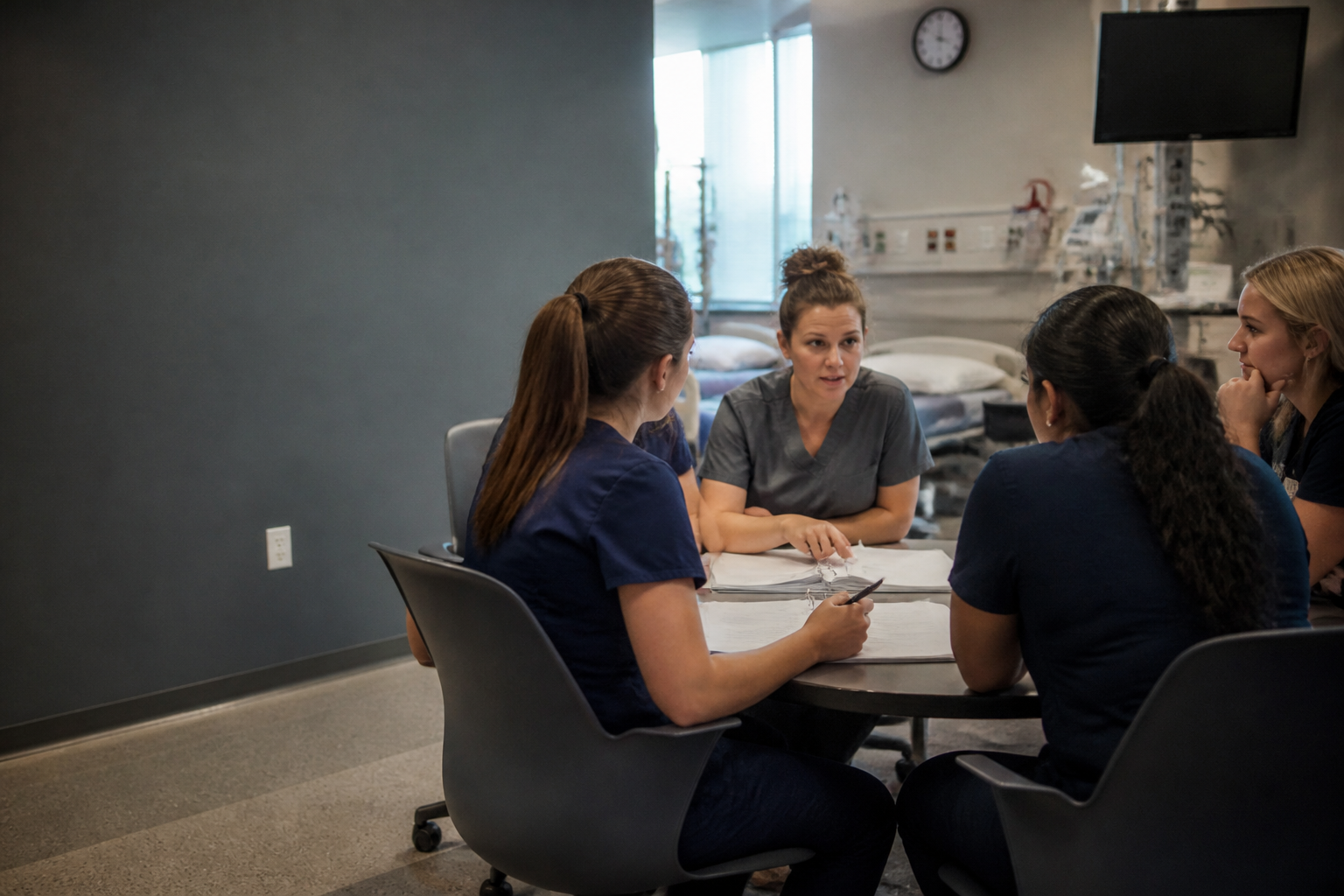
Which Minnesota master's in nursing programs are worth applying to, and which are admitting students now? Length alone varies: the University of Minnesota-Twin Cities direct-entry MSN in Minnesota runs 16 months, St. Thomas 21, and Rasmussen's online FNP track 27.
Tuition spreads too, from $10,360 at Southwest Minnesota State's Nursing Education MSN in Minnesota to $22,017 at the Twin Cities. Some programs start only once a year, so a missed deadline can cost twelve months.
Key Points
- Southwest Minnesota State leads on price at $10,360 in-state for its online Nurse Educator MSN.
- Winona State's FNP certificate lists 840 clinical hours, while Minnesota State Moorhead's MSN requires a 100-hour practicum.
- Ask each school in writing whether it secures clinical placements before you deposit.
The 10 Best Master's in Nursing Programs in Minnesota
Minnesota's master's in nursing options split into direct-entry programs for career changers, online and hybrid programs for working RNs, and one nurse-midwifery degree. Graduation rates below describe each school as a whole, not the nursing program. Confirm current admission status and track-level accreditation on each school's nursing page before you apply.
University of Minnesota-Twin Cities
#1Minneapolis, MN · ~$22,000/yr (est.)
Best for: Career changers wanting campus clinical immersion
The University of Minnesota-Twin Cities offers a 16-month, full-time, on-campus Master of Nursing for people who already hold a bachelor's degree in another field. It is a direct-entry route to the NCLEX-RN, not a program for working RNs. The school's overall graduation rate is about 85%. Its CCNE accreditation should be confirmed for this specific track, and the program describes a fall start, so check the current application cycle.
- 16-month, full-time, on-campus program
- About 500 clinical hours in hospitals, clinics, and community sites
- Starts fall, one start date per year
- 3.5 GPA minimum and prerequisite courses required
- Prepares for the NCLEX-RN
- Simulation with VR, manikins, and standardized patients
- Eligible for public health nursing certification in Minnesota
- Practicum shifts can include evenings and weekends
Saint Johns University
#2Collegeville, MN · ~$18,000/yr (est.)
Best for: Working RNs moving into nurse education
Saint John's University shares a hybrid Master of Science in Nursing in Leadership and Education for Practice with the College of Saint Benedict. It is built for working RNs who want nurse educator or leadership roles. The school's overall graduation rate is about 75%. Accreditation for this program is not confirmed in our data, so verify it before applying.
- Hybrid delivery with synchronous and asynchronous coursework
- 39 credit hours with a required capstone
- 520 clinical practice hours
- 3.0 GPA minimum
- Rolling admissions for fall and spring starts
- Full-time and part-time options
- Prepares for nurse educator certification
College of Saint Benedict
#3Saint Joseph, MN · ~$23,000/yr (est.)
Best for: Central Minnesota nurses wanting regional ties
The College of Saint Benedict offers the same 39-credit hybrid MSN in Leadership and Education for Practice as Saint John's, as part of a central Minnesota partnership. Reported tuition discounts for alumni and CentraCare employees may matter if you fit either group. The school's overall graduation rate is about 77%. Accreditation for this program is not confirmed in our data.
- Hybrid format designed for working registered nurses
- 39 credit hours plus a capstone project
- 520 clinical practice hours
- 3.0 GPA minimum
- Rolling admissions with fall and spring starts
- Full-time and part-time options
- Prepares for nurse educator certification
University of St Thomas
#4Saint Paul, MN · ~$21,000/yr (est.)
The University of St. Thomas runs a 21-month, on-campus Direct Entry MSN for career changers with no nursing experience. It is CCNE-accredited and approved by the Minnesota Board of Nursing. The school's overall graduation rate is about 76%. Admission uses a holistic review, and applicants apply through NursingCAS.
- 21-month, 56-credit campus program
- Requires a non-nursing bachelor's degree
- 3.0 GPA preferred
- Six prerequisite courses and Basic Life Support certification
- Prepares for the NCLEX-RN
- Cohort model with clinical placement partnerships
- CCNE accredited and Minnesota Board approved
St Catherine University
#5Saint Paul, MN · $15,000 – $20,000/yr (est.)
St. Catherine University offers several MSN options, including an online Nurse Educator track, a campus Data Analytics track, and an Entry-Level MSN for non-nursing bachelor's holders. Its nursing programs are listed as CCNE-accredited, though specific tracks should be confirmed. The school's overall graduation rate is about 61%. The Nurse Educator track requires no clinical hours.
- Online, asynchronous, 32 credits over two years
- $760 per credit, $25,080 total tuition
- Fall and summer starts
- No clinical hours, but a practicum and capstone are required
- Prepares for the CNE and/or NCP-BC certification
- Campus-based, 37 credit hours
- Fall and summer starts
- Predictive modeling, machine learning, and data ethics
- Capstone required
- Campus program, 23 months, 49 credits
- $995 per credit, $48,755 total tuition
- For non-nursing bachelor's degree holders
- Spring start; prerequisite courses required
- Prepares for the NCLEX-RN
- Dedicated clinical placement coordinator
Bethel University
#6Saint Paul, MN · ~$10,000/yr (est.)
Bethel University offers an M.S. in Nurse-Midwifery, a specialty degree and not a general MSN. Coursework is online with two three-day campus intensives, and the program lists accreditation by the Accreditation Commission for Midwifery Education. The school's overall graduation rate is about 71%. Bethel recommends against full-time work while enrolled, so plan accordingly.
- Hybrid: online coursework, two 3-day campus intensives, one 3-day online intensive
- 57 credit hours over 2 or 3 years
- Fall start; capstone required
- Prepares for the AMCB certification exam
- Bethel reports a 97% pass rate
- Clinical practica in sexual and reproductive health, birth, and newborn care
Winona State University
#7Winona, MN · ~$11,000/yr (est.)
Winona State University offers a hybrid MS in Nursing with a Nurse Educator focus, delivered through its Rochester campus. Its nursing programs are listed as CCNE-accredited. The school's overall graduation rate is about 57%. The program also serves as a foundation for later DNP or PhD study.
- Hybrid delivery with Rochester campus
- 47 credit hours; 3.0 GPA minimum
- Fall and spring starts
- Teaching practicum with preceptors in academic and healthcare settings
- Coursework in curriculum design, instruction, and evaluation
- Foundation for DNP or PhD study
Rasmussen University-Minnesota
#8St. Cloud, MN · ~$7,000/yr (est.)
Rasmussen University-Minnesota has the broadest online MSN menu on this list. It offers four nurse practitioner concentrations plus nursing education, nurse administrator, and informatics tracks, with no GRE requirement. The online MSN is listed as CCNE-accredited. The school's overall graduation rate is about 53%, the second lowest here. Admission requires a BSN and an unencumbered RN license.
- Online, about 27 months
- Estimated $51,130 total cost
- BSN, 3.0 GPA, and RN license required
- January and July starts; in-person practicum
- Online, about 27 months
- Two professional references required
- Local community practicums
- E-prescribing and telehealth training
- Online, about 27 months
- Estimated $51,130 total cost
- January and July starts
- Prepares for NP board certification
- Online, about 27 months
- Estimated $50,680 total cost
- Background check required
- Covers mental health across the lifespan
- Online with a practicum in your local community
- Curriculum design and educational leadership focus
- Prepares nurse educators for academic or clinical settings
- Online, 48 credits
- Can finish in about 18 months
- Total cost starts at $17,320
- Field experience required
- Online, 48 credits, about 18 months
- Around $17,500 total cost
- Four start dates per year
- BSN, RN license, and 3.0 GPA required
Minnesota State University Moorhead
#9Moorhead, MN · ~$12,000/yr (est.)
Minnesota State University Moorhead offers an online MSN with a Nurse Educator emphasis and a Nursing Administration and Organization Systems Leadership concentration. It is among the lower-cost options here. The Nurse Educator track lists NLN CNEA accreditation, and the administration MSN is listed as CCNE-accredited. The school's overall graduation rate is about 57%. Stackable graduate certificates can count toward the MSN.
- Fully online, part-time available
- 40 credits: 31 core plus 9 for the emphasis
- Requires BSN, unencumbered RN license, and 3.0 GPA
- Two practicum courses, portfolio, and oral exam
- Up to 9 transfer credits accepted
- Dual MSN and MHA enrollment option
- Online and hybrid delivery options
- Stackable graduate certificate options
- Monthly synchronous virtual meetings
- Listed as CCNE accredited
Southwest Minnesota State University
#10Marshall, MN · ~$10,000/yr (est.)
Southwest Minnesota State University in Marshall offers a fully online MSN Nurse Educator program for registered nurses. It is built around education theory, instructional technology, and culturally responsive teaching, and ends with a capstone. The school's overall graduation rate is about 45%, the lowest on this list. Accreditation for this program is not confirmed in our data.
- Online delivery for working RNs
- 39 total credit hours
- Capstone project required
- Instructional technologies and curriculum development
- Advanced health assessment and pharmacology core
- Leadership and quality improvement coursework
Cost & outcomes by school
Federal data for the highest-earning Nursing (MSN) programs, independent of the ranking above. Earnings are this field's master's graduates four years after completing, where the Scorecard reports them.
| School | Earnings | Tuition / yr | Debt | Grads/yr | Format |
|---|---|---|---|---|---|
| Walden University MN | — | $10,885 | — | 16,946 | Online |
| Capella University MN | — | $15,092 | — | 14,818 | Online |
| Rasmussen University-Minnesota MN | — | $6,627 | — | 578 | Online |
| Minnesota State University-Mankato MN | — | $10,449 | — | 1,206 | Online |
| Herzing University-Minneapolis MN | — | $9,370 | — | 6 | Online |
| Bethel University MN | — | $10,260 | — | 586 | Hybrid |
| Southwest Minnesota State University MN | — | $10,360 | — | 318 | Online |
| Winona State University MN | — | $10,886 | — | 328 | Hybrid |
| Metropolitan State University MN | — | $11,323 | — | 370 | Hybrid |
| Minnesota State University Moorhead MN | — | $11,902 | — | 556 | Online |
| University of Minnesota-Twin Cities MN | — | $22,017 | — | 5,442 | Campus |
| Saint Johns University MN | — | $18,030 | — | 62 | Hybrid |
Sources: U.S. Department of Education. Tuition and graduates: IPEDS. Earnings and debt: College Scorecard, this field's master's graduates; a dash means no figure is reported.
Online and Hybrid MSN Programs in Minnesota
Winona State's 2026 FNP graduate certificate plan lists 840 clinical hours,1 while Minnesota State University Moorhead's online and hybrid MSN, one of the state's best online MSN programs, includes a 100-hour practicum (NURS 640P)2 and monthly synchronous sessions.3 Gaps like that are why placement and immersion rules in FNP programs in Minnesota need checking school by school. Policies change often, so a single comparison table would go stale.
What to search and ask
On official program pages, look for "clinical placement," "preceptor," "immersion," and "on-campus intensive." Then contact admissions or the clinical placement coordinator at Moorhead, St. Catherine, Winona State, or Bethel with specific questions:
- Does the school arrange preceptors and sites, or do students secure their own?
- Are any campus visits required, and how many days in total?
- When does the practicum start, and how many hours does it require?
- Can clinical hours be completed in my home area?
For outside context, check the Minnesota Board of Nursing and professional groups such as AANP, AACN, and NONPF. BLS.gov is useful for career outlook, but it will not tell you a program's policy. Get any answers in writing before you apply.
Related Articles
Which Minnesota MSN Programs Waive or Make the GRE Optional?
Minnesota nursing schools have followed the broader shift toward master's programs with no GRE required, though official MSN pages still vary in how clearly they state GRE policy. The clearest published statement comes from the University of Minnesota's School of Nursing for its Master of Nursing, which says, "We no longer require a GRE score."1 For the MSN, Minnesota State University Moorhead's admission page does not mention a GRE requirement, GRE-optional policy, or a GRE waiver. It asks applicants with a GPA below 3.0 to complete its Minimum Requirement Waiver question, but that is tied to GPA, not the GRE.2 The University of Minnesota Crookston's MSN FAQ similarly publishes no GRE policy.3 Across the available official MSN admission pages, no program states a GRE requirement or a conditional GRE waiver. Policies can change by term and format, so confirm test-optional language on each school's admissions page for your intended start term.
Admission Requirements and How Long a Master's in Nursing Takes in Minnesota
Requirements depend on whether you already hold an RN license.
- RN licenseMinnesota State University Moorhead's traditional MSN requires a BSN, a 3.0 GPA, and a current unencumbered RN license. Applicants below 3.0 may be considered provisionally.
- ADN-prepared nursesMoorhead offers an RN-to-MSN Bridge, advertised at as few as 43 credits. Its accelerated RN-BSN-MSN track totals 142 credits, depending on prior coursework.
- Non-nursesThe University of Minnesota-Twin Cities, Metropolitan State University, and University of St Thomas accept bachelor's holders from other fields. Expect a 3.0 GPA (preferred at St. Thomas), plus science prerequisites. The University of Minnesota requires nine courses, including 3 credits of inferential statistics. Metro State requires eight. St. Thomas requires six, plus AHA BLS certification.
- LengthMetro State's entry-level cohort runs 30 months full-time, with 62 credits and 630 clinical hours. Confirm part-time timelines with each school.
The 5 Most Affordable MSN Programs in Minnesota
Southwest Minnesota State University leads this list at $10,360 in-state tuition for its online Nurse Educator MSN, and its out-of-state figure is the same. Residency matters most at the University of Minnesota Twin Cities, where program tuition is $22,017 in-state and $33,249 out-of-state, though the published Master of Nursing per-credit rate is the same for both groups. Net price is an institution-wide average after aid, not an exact quote for MSN students, so confirm costs with each bursar.
| School | Program | Format | In-state tuition | Out-of-state tuition | Per-credit rate | Avg. net price after aid (institution-wide) |
|---|---|---|---|---|---|---|
| Southwest Minnesota State University | Nursing, MSN: Nurse Educator | Online | $10,360 | $10,360 | N/A | $15,291 |
| Herzing University-Minneapolis | MSN in Family Nurse Practitioner | Online | $9,370 | $9,370 | $770 | $16,670 |
| University of Minnesota-Twin Cities | Master of Nursing (Direct Entry) | Campus | $22,017 | $33,249 | $895 (resident and nonresident) | $16,778 |
| Metropolitan State University | Entry-Level MSN (Direct Entry) | Hybrid | $11,323 | $11,323 | $755.44 plus $42.30 fees (2026-2027) | $16,863 |
| Winona State University | Nursing, Nurse Educator (MS) | Hybrid | $10,886 | $15,953 | N/A | $17,503 |
MSN Costs, Financial Aid, and Minnesota APRN Licensure
Sticker tuition is one price; the full bill is another. Budget for program fees, clinical-related expenses, background checks, and national certification exam fees on top of tuition. The Most Affordable MSN Programs table above gives school-level figures; use it as a starting point for a Minnesota master's programs tuition comparison and ask each school for a complete cost sheet.
Ways to Offset the Bill
Employer tuition reimbursement is often the largest lever for working nurses, and graduate assistantships can reduce costs at schools that offer them. The federal Nurse Corps scholarship and loan repayment programs are also worth a look if you are willing to work in a high-need setting.
The Minnesota APRN Path
Licensure follows a clear sequence:
- Graduate from an accredited graduate-level APRN program that meets Minnesota Board of Nursing standards.1
- Pass a national certification exam in your role and population focus (AANP or ANCC for FNPs).1
- Apply for APRN licensure with the Board, including a background check if the Board has not run one within the past year.2
New nurse practitioners and clinical nurse specialists must also complete 2,080 postgraduate practice hours under a collaborative agreement before practicing independently. Postgraduate-practice rules change August 1, 2026, so check your completion date and specialty against current Board instructions.3
Minnesota MSN Programs With the Highest Graduate Earnings
Earnings below are median figures for master's nursing graduates at each school, measured 5 years after finishing. They cover the broader nursing field, not necessarily the specific track listed, so treat them as a guide. For context, the Minnesota Board of Nursing reports statewide first-time AANP FNP pass rates of 84.0% in 2021 and 83.0% in 2024.
| School | Listed track | Median earnings (5 years after finishing) | Published FNP certification pass rate |
|---|---|---|---|
| Minnesota State University-Mankato | Nurse Educator (online) | $126,466 | None published for this track |
| Winona State University | Nurse Educator (hybrid) | $125,129 | None published for this track |
| Bethel University | Nurse-Midwifery (hybrid) | $120,461 | None published for this track |
| St Catherine University | Nurse Educator (online) | $117,165 | None published for this track |
| Walden University | Psychiatric-Mental Health Nurse Practitioner (online) | $117,144 | None published for this track |
Frequently Asked Questions About MSN Programs in Minnesota
How long does an MSN program take in Minnesota?
Which MSN programs in Minnesota accept RNs with an associate degree?
Should I choose an MSN or a DNP if I want to become an FNP in Minnesota?
Can out-of-state students enroll in Minnesota's online MSN programs?
Compare Nursing (MSN) programs on the data that matters
Explore more MSN specializations or browse every graduate field.
All MSN programs