Best Master's in Sustainability Programs in Florida
Compare 24 accredited Sustainability programs in Florida at 16 schools, with graduate earnings, cost, debt, and completion data from IPEDS and the U.S. College Scorecard.
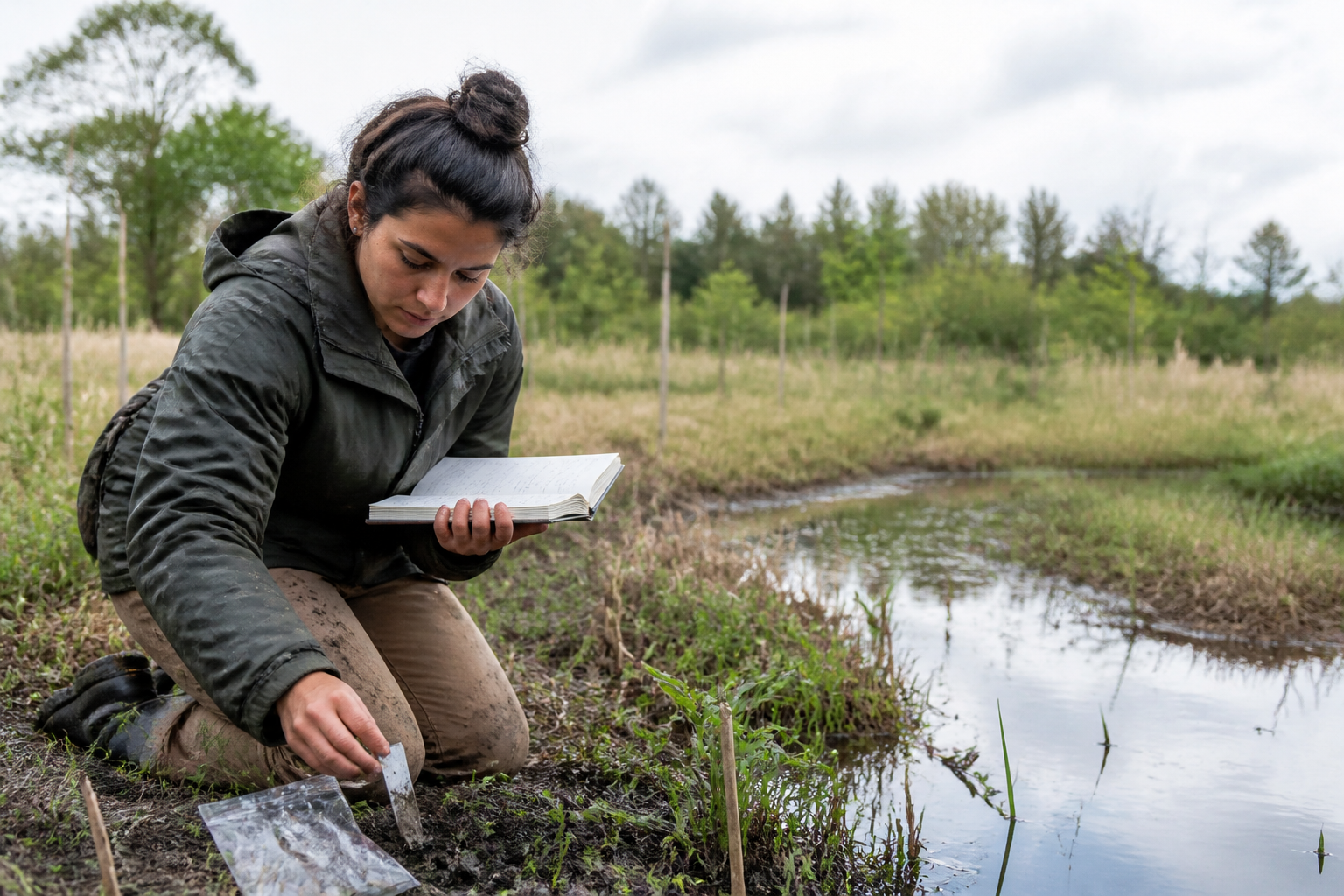
Florida sits at the front line of climate risk: hurricane exposure, saltwater intrusion, and rising seas have pushed resilience planning and ESG reporting into permanent demand across state agencies, utilities, and corporate compliance teams. For a prospective student, that means weighing in-state tuition at a public flagship against the flexibility of an online, work-while-you-study format.
The programs here cover engineering-minded, business-focused, and policy-oriented degrees, including sustainability MBA programs, from public universities to online-first providers. Graduate pay swings hard by sector and specialization, so cost and likely debt deserve as much scrutiny as any program name.
Key Points
- The University of Florida's online interdisciplinary ecology master's costs $484.48 per credit in 2026.
- Florida requires 12 months of documented residency before you qualify for in-state graduate tuition.
- GRE rules differ by school, so check each admissions page before scheduling a test.
Florida's Top 10 Master's in Sustainability Programs
Florida's sustainability master's options range from engineering-minded built-environment degrees to business-focused ESG programs and policy-oriented environmental degrees. The ten schools below span public flagships, private universities, and online-first providers. Graduation rates cited are institution-wide, and net price figures are approximate institution-wide averages after aid, not program-specific numbers.
University of Florida
#1Gainesville, FL · ~$13,000/yr (est.)
Best for: Aspiring sustainable design and construction leaders
The University of Florida pairs a STEM-designated, hands-on sustainable development degree from its College of Design, Construction and Planning with a newer online interdisciplinary ecology master's. The school's overall graduation rate is about 91%, and its approximate institution-wide net price after aid is among the lowest on this list at roughly $6,500. It suits students who want a flagship credential with either a built-environment focus or a flexible distance option.
- STEM-designated interdisciplinary graduate program
- Covers building energy modeling and sustainable construction
- Includes the economics of sustainability and return on investment analysis
- Six-credit practicum plus electives from urban planning to wastewater treatment
- Offered on campus through the College of Design, Construction and Planning
- Fully online option built for distance-education students
- 30 credit hours with thesis or capstone option
- Five concentration options
- State Employee Tuition Waiver accepted
Florida State University
#2Tallahassee, FL · ~$11,000/yr (est.)
Best for: Business-minded career changers studying online
Florida State University takes a business route into sustainability through its online Master of Science in Entrepreneurship with a Social and Sustainable Enterprises major. The curriculum centers on a triple bottom line approach, with coursework on ESG measurement, sustainable value chains, and risk management. The school's overall graduation rate is about 86%, and the program does not require an entrance exam.
- 30 credit hours, delivered fully online
- No entrance exam required
- Fall start only, with synchronous and asynchronous options
- Two letters of recommendation, one of them academic
- Study abroad option in Florence, Italy
- Career targets include sustainability manager and ESG analyst
Florida International University
#3Miami, FL · ~$11,000/yr (est.)
Best for: Government-bound policy professionals studying on campus
Florida International University offers two campus-based options in Miami: a Professional Science Master's in Environmental Policy and Management and a research-oriented MS in Environmental Studies. Both lean toward applied environmental work in agencies, nonprofits, and private firms. The school's overall graduation rate is about 74%, with an approximate institution-wide net price after aid near $9,300.
- 31 credits, completed in about two years
- Skills-based curriculum for working professionals
- Covers environmental regulation, resource management, and data analysis
- Stakeholder presentation and communication training
- 36 credit hours with thesis and non-thesis tracks
- Fall and spring starts
- Three letters of recommendation; prerequisite courses required
- Accelerated pathway from the BA in Sustainability
- JD and MS joint degree pathway
- Up to six transfer credits accepted
University of Miami
#4Coral Gables, FL · ~$47,000/yr (est.)
The University of Miami runs three one-year, 30-credit STEM-designated programs, which helps international students seeking work authorization extensions. The school's overall graduation rate is about 84%, but this is the most expensive option here, with an approximate institution-wide net price after aid around $37,000. None of the programs listed requires an entrance exam.
- 30 credits; finish in about a year or study part-time
- STEM-designated with thesis or capstone option
- Covers food, water, and energy security
- Includes GIS and spatial data analysis
- Internships with development professionals
- 12-month, 30-credit STEM-designated program
- 36-month STEM OPT extension noted
- Graduate certificates available in geospatial technology
- Research assistantships and municipal internships
- 12-month, 30-credit STEM-designated program
- Resilience-focused track within the same degree
- Internships with municipal and national organizations
- Financial aid and scholarships available
University of South Florida
#5Tampa, FL · ~$10,000/yr (est.)
The University of South Florida delivers its sustainability degrees through the Patel College of Global Sustainability, with the Sustainability Management degree built jointly with the business college. Formats include fully online, on-campus, and blended. The school's overall graduation rate is about 77%, and its approximate institution-wide net price after aid is near $9,800, making it a strong cost-to-flexibility pick.
- 36 credit hours; online, on-campus, or blended
- Systems and nexus thinking focus
- Covers circular economies and the sustainable development goals
- Internships, certification training, and applied projects
- 36 credit hours with a policy concentration
- Fully online option available
- Triple bottom line framework
- Two concentration options in the degree
- Three concentration options
- Sustainable business finance and ESG reporting
- Sustainable supply chains and circularity
- Policy and regulations training
Ana G. Mendez University
#6Orlando, FL · ~$10,000/yr (est.)
Ana G. Mendez University offers a fully online MS with a specialization in Environmental Planning, aimed at professionals moving into environmental management roles in public or private sectors. The curriculum emphasizes sustainable energy management and water protection. The approximate institution-wide net price after aid is near $19,800; the school's overall graduation rate is not reported in the data used here.
- Fully online option available
- Prepares for environmental management leadership
- Strategies for sustainable energy management
- Roles include natural resources planner and environmental mitigation planner
Nova Southeastern University
#7Fort Lauderdale, FL · ~$25,000/yr (est.)
Nova Southeastern University's campus-based Professional Science Master's in Environmental Science is a science-heavy option near South Florida's reefs, mangroves, and estuaries. It skips the thesis and finishes in about 18 months. The school's overall graduation rate is about 63%, and its approximate institution-wide net price after aid is around $30,000.
- 30 credits, completed in about 1.5 years
- No thesis or capstone required
- Four concentration options
- Three start dates per year with rolling admissions
- 2.8 GPA minimum; prerequisite courses required
- Lab, classroom, and field work at the Oceanographic Campus
Florida Gulf Coast University
#8Fort Myers, FL · ~$9,000/yr (est.)
Florida Gulf Coast University's MA in Environmental Studies is built around a required internship with a local agency or environmental group, followed by a capstone instead of a thesis. Coursework mixes ecology, GIS, statistics, and policy. The school's overall graduation rate is about 57%, with an approximate institution-wide net price after aid near $12,600.
- Two-year full-time path with part-time options
- Required internship with a local agency
- Capstone tailored to the internship; no thesis
- GRE listed among admission exams
- Competitive tuition waivers and scholarships available
Florida Agricultural and Mechanical University
#9Tallahassee, FL · ~$10,000/yr (est.)
Florida A&M University offers an MS in Environmental Science with research-intensive concentrations, including policy and management, restoration and waste management, and biotechnology. Students work in a 6,000-square-foot research facility with GIS labs and analytical instruments. The school's overall graduation rate is about 53%, and its approximate institution-wide net price after aid is near $13,700.
- 36 credit hours with thesis required
- Covers environmental law, risk analysis, and regulation
- GRE listed among admission exams; 3.0 GPA minimum
- Summer internship option for 3 to 12 credits
- 36 credit hours; thesis required
- First-year core, second-year concentration
- Faculty expertise in toxicology and radiation protection
- Requires a prospective research advisor
- 36 credit hours; thesis required
- Entrance exam required (GRE)
- 19 core hours and 12 concentration hours
- Instruments include ICP/OES, GC/MS, and HPLC
Everglades University
#10Boca Raton, FL · ~$24,000/yr (est.)
Everglades University's online Master of Science in Sustainability is a 12-month, 36-credit program for working professionals and career changers, with no environmental studies background required. The school is SACSCOC accredited. Its overall graduation rate is about 61%, and its approximate institution-wide net price after aid is near $27,400.
- 12-month, 36-credit program
- Fully online, with the same courses offered on campus
- Built on the Triple Bottom Line framework
- Capstone required
- Group projects on real environmental challenges
- Accepts applicants from diverse educational backgrounds
Cost & outcomes by school
Federal data for the highest-earning Sustainability programs, independent of the ranking above. Earnings are this field's master's graduates four years after completing, where the Scorecard reports them.
| School | Earnings | Tuition / yr | Debt | Grads/yr | Format |
|---|---|---|---|---|---|
| University of South Florida FL | $64,880 | $10,428 | $29,657 | 51 | Hybrid |
| Florida Atlantic University FL | — | $6,693 | — | — | Campus |
| Florida Gulf Coast University FL | — | $8,961 | — | — | Campus |
| Florida Agricultural and Mechanical University FL | — | $9,876 | — | — | Campus |
| Florida State University FL | — | $10,553 | — | — | Online |
| Ana G. Mendez University FL | — | $10,455 | — | — | Online |
| Florida International University FL | — | $11,334 | — | — | Campus |
| University of Florida FL | — | $12,737 | — | — | Campus |
| Bethune-Cookman University FL | — | $14,100 | — | — | Campus |
| Schiller International University FL | — | $14,400 | — | — | Campus |
| Embry-Riddle Aeronautical University-Daytona Beach FL | — | $22,870 | — | — | Online |
| Florida Institute of Technology FL | — | $24,320 | — | — | Campus |
Sources: U.S. Department of Education. Tuition and graduates: IPEDS. Earnings and debt: College Scorecard, this field's master's graduates; a dash means no figure is reported.
Cost, debt & payoff
Median earnings of this field's master's graduates (4 yrs after completing) vs. their median federal loan debt · U.S. College Scorecard
Across these programs the median graduate earns about $64,880 and finishes with roughly $29,657 in debt — a ratio that clears a common rule of thumb (keep debt below first-year salary). Tuition and debt vary widely school to school, so check the per-school figures in the table above before you shortlist.
How We Ranked Florida's Sustainability Master's Programs
We built the order of sustainability master's programs from federal IPEDS and College Scorecard figures: graduate tuition, net price, program-level earnings and debt, and each institution's overall graduation rate. Prestige and advertising did not factor in.
Two details matter beyond the numbers. Every school in these Master's Programs in Florida holds regional accreditation from SACSCOC, and that status belongs to the university, not to individual programs. Some programs also carry a STEM designation, which lets international students apply for a 24-month OPT extension. USF's MS in Global Sustainability and its MS in Sustainability Management (launching Fall 2026) are STEM-designated, as are programs at the University of Florida and University of Miami. USF's MA and the Everglades University master's do not show one in the sources we checked.1
The data has limits. Some program-level earnings figures are not yet published, and net price is an institution-wide average, not a program-specific cost.
Online and Hybrid Sustainability Master's Options in Florida
The University of Florida's online MS in Interdisciplinary Ecology (IEC-Online) costs $484.48 per credit in 2026, or $14,534.40 for 30 credits. It is fully online, and no on-campus residency is identified. Whether any courses require live sessions is not stated, so ask before enrolling.
UF's MS in Architectural Studies, Sustainable Design is low-residency, mixing pre-recorded content with live online meetings. Published residency details differ: an orientation in Gainesville plus a field trip and final on-site presentation, or two short Gainesville sessions plus an international study tour. Students pay their own travel and lodging. The 36-credit program runs about $27,306, with special rates for Florida residents.
The University of South Florida offers its Global Sustainability master's on campus, blended, or fully online. Synchronous requirements, residencies, and any online fee are not published. Florida State, Ana G. Mendez University, and Everglades University also list fully online options. FSU mentions both synchronous and asynchronous formats. None of the three publishes a separate online rate.
For full-time workers, the fully online IEC-Online or an asynchronous-friendly track fits best. Low-residency formats demand scheduled travel.
Which Ranked Florida Master's Programs Waive the GRE?
Several of Florida's strongest sustainability master's programs have dropped the GRE, a move that places them among No-GRE master's programs, but policies vary enough that you should check each program before booking a test date.
- Not required: The University of Florida's Integrated Sustainable Development master's requires no GRE from any applicant. Florida State's Social and Sustainable Enterprises major and the University of Miami's MS in Sustainable Development both list no entrance exam.
- Optional: Miami's separate MS in Sustainable Business treats GRE or GMAT scores as optional. Submitting them may help with merit scholarships.
- GRE listed: Florida Agricultural and Mechanical University's Environmental Science MS and Florida Gulf Coast University's Environmental Studies MA list the GRE. FGCU's related environmental science master's sets no minimum score,2 so confirm current expectations with the department.
- No published policy: We found no stated GRE policy for Florida International University, the University of South Florida, Ana G. Mendez, Nova Southeastern or Everglades. Ask admissions directly.
Beyond testing, a 3.0 GPA is the common floor. UF applies it to upper-division coursework,1 FAMU sets the same minimum, and Nova Southeastern accepts 2.8. Expect two recommendation letters at FSU and Nova, prerequisite courses at Nova, and a statement of purpose at most schools.
Related Articles
Cost of a Sustainability Master's in Florida, Plus Certifications Worth Adding
Published program costs vary sharply among Florida's sustainability master's programs, so compare total credits and fees before committing.
Tuition Benchmarks
- University of Florida: The 36-credit MS in Architectural Studies, Sustainable Design concentration lists $718 per credit plus $40.50 per credit in fees, an estimated $27,306 before residencies and travel.
- Florida International University: The 30-credit MS in Environmental Engineering lists $455.64 per credit for Florida residents and $1,056.29 out-of-state, roughly $13,670 in-state and $31,690 out-of-state before fees.3
- University of Miami: The 32-credit Master of Sustainable Business lists $2,887 per credit plus $1,438 in program fees, about $93,833 total; that published rate is for 2027-28, not the current 2026 cycle.
Published materials for these programs do not establish a separate online or distance-learning fee. Net price remains an institution-wide average after aid and can run well below published out-of-state tuition at public universities.
Certifications
Florida has no state license for sustainability professionals. Employers often value optional credentials. LEED Green Associate costs $250 ($200 USGBC members, $100 students) with no prerequisites.1 LEED AP combined exam is $550 ($400 members), or specialty-only $350 ($250 members); candidates must be 18 and hold Green Associate unless passing both together.2 Envision ENV SP and Florida Green Building Coalition designations are also valued, but current 2026 exam fees and eligibility were not published in the sources reviewed.
Career Outcomes for Florida Sustainability Master's Graduates
Graduates of Florida sustainability master's programs move into roles such as sustainability manager, resilience planner, and ESG analyst, in corporate, consulting, and government settings. Pay varies widely by sector and specialization. The figure below is the one program-level earnings number published for the schools here, and it is reported by the school itself rather than measured by federal data.
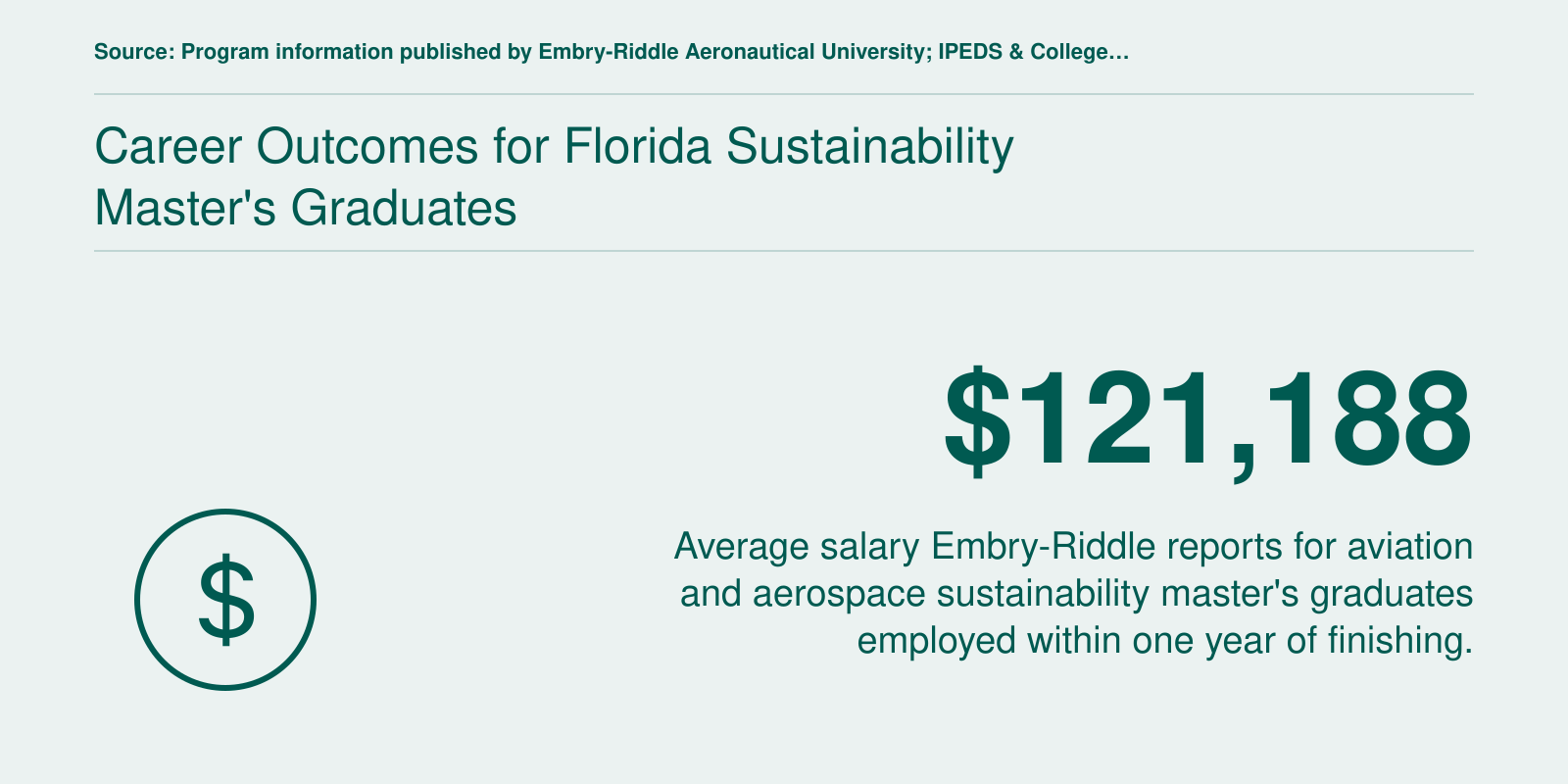
For Florida residents, in-state tuition at a public university often shapes your return more than prestige does, so weigh net price and likely debt before the brand name.
Frequently Asked Questions About Florida Sustainability Master's Programs
Deadlines shift each cycle, so confirm dates on each program's admissions page before you apply. UF's Master of Integrated Sustainable Development takes fall starts only, and its Fall 2027 deadline has not been published. Florida State says applicants must contact the department for program-specific terms and deadlines.1
When are application deadlines for Florida sustainability master's programs?
Can I finish a Florida sustainability master's fully online?
How long does a sustainability master's in Florida take?
Compare Sustainability programs on the data that matters
Explore more Science & Engineering specializations or browse every graduate field.
All Science & Engineering programs