Best Master's in Sustainability Programs in Tennessee
Compare 6 accredited Sustainability programs in Tennessee, with graduate earnings, cost, debt, and completion data from IPEDS and the U.S. College Scorecard.
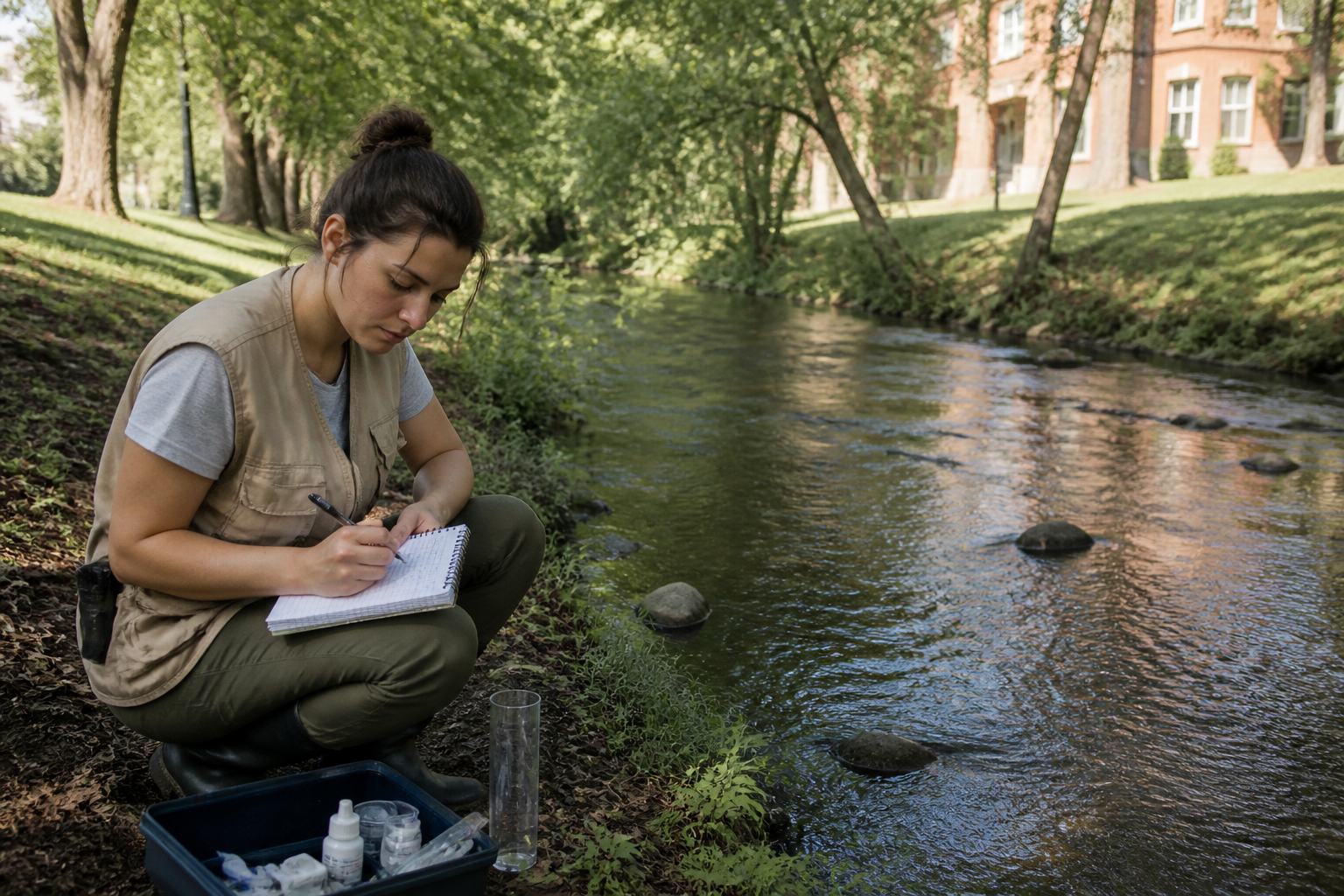
A Tennessee master's in sustainability is less a single degree than a family of them. Lipscomb University's M.S. in Sustainability carries the name; the other ranked schools fold sustainability into environmental science, engineering, and nutrition programs.
Listed in-state tuition runs from $11,110 at The University of Tennessee-Chattanooga to $57,868 at Vanderbilt University. Format splits too: University of Memphis's program is fully online, Lipscomb is hybrid, and the rest are campus-based.
No Tennessee board licenses sustainability work, so internships and technical depth carry more weight than any credential.
Key Points
- Lipscomb University's M.S. in Sustainability is the most flexible option here, with no standardized exam required.
- Tennessee Tech's program page states no GRE policy, so confirm with admissions before applying for 2027.
- No Tennessee board licenses sustainability roles; TDEC operator certifications and PE licensure apply by job.
Top-Ranked Master's in Sustainability Schools in Tennessee for 2027
Six Tennessee programs make this list, from a hybrid Master of Science in Sustainability to campus environmental science degrees and a fully online option. Each card shows format, listed graduate tuition, and the school's institution-wide graduation rate, which describes the whole university and not completion in the program. Program-level earnings appear only where the federal data publishes them.
Vanderbilt University
#1Nashville, TN · ~$58,000/yr (est.)
Best for: Engineering-minded students studying on campus
Vanderbilt's campus-based Master of Science in Environmental Engineering centers on sustainability and resilience, with an Environmental Science concentration. Listed graduate tuition is $56,376 for in-state and out-of-state students alike, the highest on this list. The university's institution-wide graduation rate is about 94%. The program's own earnings and debt figures are not published, so none are shown here.
- Format: Campus, Nashville
- Concentration listed: Environmental Science
- 30 total credit hours
- Thesis or capstone option
- Entrance exam required; TOEFL or IELTS for international applicants
- 3.0 GPA minimum
- Starts fall
Lipscomb University
#2Nashville, TN · ~$17,000/yr (est.)
Best for: Working professionals wanting evening flexibility
Lipscomb's Master of Science in Sustainability is a hybrid program built for working professionals, with evening classes and a fully online option. The program page lists $1,091 per credit for on-campus courses and an 18% discount for fully online study, so confirm which rate applies to your format. Lipscomb is institutionally accredited by SACSCOC, and its institution-wide graduation rate is about 72%. Stackable options include a graduate certificate, technical certificates, and a dual M.S./MBA.
- Format: Both (hybrid, with a fully online option)
- 30 total credit hours, finished in 12 to 16 months
- 6 concentration options, or build your own
- Test optional; no entrance exam required
- Capstone required; 2 recommendation letters minimum
- Dual M.S./MBA option
- Memphis cohort with the Tennessee National Guard launched in spring 2026
The University of Tennessee-Chattanooga
#3Chattanooga, TN · ~$11,000/yr (est.)
Best for: Future environmental managers and policy analysts
UTC's M.S. in Environmental Science with an Environmental Administration and Management focus combines science with policy, law, economics, and sustainability. Listed graduate tuition is $9,120 in-state and $17,184 out-of-state. Program-level federal data shows median earnings of $41,700 one year after completion, based on a small group of graduates. UTC is SACSCOC accredited, and its institution-wide graduation rate is about 50%.
- Format: Campus, Chattanooga
- Rolling admissions with fall, spring, and summer starts
- Thesis or capstone option; internships can serve as the capstone
- 3 letters of recommendation minimum
- Partnerships with the EPA and TVA
- Up to $250 in travel funding
Tennessee Tech
#4Cookeville, TN · $10,000 – $15,000/yr (est.)
Tennessee Tech's Professional Science Master's in Environmental Sustainability blends science, policy, and business, with an internship or capstone in both tracks. Listed graduate tuition is $11,000 in-state and $14,360 out-of-state. The university is SACSCOC accredited, and its institution-wide graduation rate is about 58%. Program-level earnings are not published, so none are shown.
- Format: Campus, Cookeville
- Concentration: Environmental Sustainability
- 30 total credit hours
- Thesis option or non-thesis capstone
- Prerequisite courses required
- Courses include Environmental Law, Environmental Economics, and Conservation Biology
University of Memphis
#5Memphis, TN · $10,000 – $15,000/yr (est.)
The University of Memphis offers its Environmental Nutrition MS fully online, with a food sustainability and food justice focus. Listed graduate tuition is $9,954 in-state and $14,166 out-of-state. The university's institution-wide graduation rate is about 51%. It is the most food-systems-oriented option here and suits students whose sustainability interests lean toward health and nutrition.
- Format: Online (asynchronous, through UofM Global)
- Concentration: Environmental Nutrition
- 33 total credit hours
- GRE scores not required to apply
- Applied project and internship with a capstone
- Registered dietitians can claim six prior learning credits
Tennessee State University
#6Nashville, TN · $11,000 – $24,000/yr (est.)
Tennessee State's M.S. in Environmental Science offers three concentrations: Geospatial Sciences, Natural Resources, and Plant Sciences. Listed graduate tuition is $9,940 in-state and $22,560 out-of-state. The university is SACSCOC accredited, and its institution-wide graduation rate is about 34%, the lowest on this list. Program-level earnings are not published.
- Format: Campus, Nashville
- Concentration listed: Natural Resources (also Geospatial Sciences and Plant Sciences)
- Thesis (about two years) or non-thesis (35 credits minimum)
- 2.5 GPA minimum; GRE listed among entrance exams
- 3 letters of recommendation minimum
- Up to 12 transfer credits allowed
- Starts fall or spring
Cost & outcomes by school
Federal data for the highest-earning Sustainability programs, independent of the ranking above. Earnings are this field's master's graduates four years after completing, where the Scorecard reports them.
| School | Earnings | Tuition / yr | Debt | Grads/yr | Format |
|---|---|---|---|---|---|
| The University of Tennessee-Chattanooga TN | — | $11,110 | — | — | Campus |
| Tennessee State University TN | — | $11,188 | — | — | Campus |
| University of Memphis TN | — | $11,628 | — | — | Online |
| Tennessee Tech TN | — | $12,386 | — | — | Campus |
| Lipscomb University TN | — | $17,334 | — | — | Hybrid |
| Vanderbilt University TN | — | $57,868 | — | — | Campus |
Sources: U.S. Department of Education. Tuition and graduates: IPEDS. Earnings and debt: College Scorecard, this field's master's graduates; a dash means no figure is reported.
Online and Hybrid Master's in Sustainability Options in Tennessee
Online and hybrid delivery means how much of a master's in sustainability can be completed at a distance, and whether any in-person or scheduled real-time work remains. Lipscomb University's M.S. in Sustainability leads the ranked Tennessee programs for flexibility: the 2026 catalog describes every course as HyFlex, so students can attend on campus, fully online, or asynchronously and may switch formats during a course. The University of Memphis M.S. in Environmental Nutrition is fully online through UofM Global and uses asynchronous classes. Other ranked sustainability or environmental management master's programs at Vanderbilt University, The University of Tennessee-Chattanooga, Tennessee Tech, and Tennessee State University are listed as campus-based.
Lipscomb is already enrolling and requires 30 graduate credits, with a typical 12-15 month completion time; students may take up to five years, and six credits per semester counts as full-time. A public program proposal in Knoxville described a hybrid degree with an online-only option and a 2025 start, but its current 2026 enrollment is not confirmed. Tennessee Tech does not publish delivery format, launch status, credit hours, or a standard completion timeline in the available sources.
Before enrolling in online master's in sustainability programs or hybrid options, working professionals should confirm whether synchronous sessions or a short on-campus residency are required.
Which Tennessee Master's in Sustainability Programs Waive or Make the GRE Optional
Lipscomb University does not require a standardized exam for its M.S. in Sustainability. Tennessee Tech's program page does not state a GRE policy. Policies and deadlines change, so confirm every detail with each admissions office before you apply.
| School | GRE Policy | Minimum GPA / Prerequisites | Application Deadline | Start Terms |
|---|---|---|---|---|
| Lipscomb University (M.S. in Sustainability) | No standardized exam required. | 3.00 cumulative GPA listed in one source, though the admissions page itself does not state a minimum. A four-year undergraduate degree is required. Business or environmental science coursework and relevant work experience are helpful but not necessary. | All application items due 30 days before the start of the month you plan to enroll. | Specific terms not listed. The deadline is tied to your enrollment month. |
| Tennessee Tech (Professional Science Master's, Environmental Sustainability concentration) | No published policy. | Not stated on the program page. | Not stated on the program page. | Not stated on the program page. |
Related Articles
Master's in Sustainability Tuition in Tennessee and Licensure or Certification
The lowest sticker price and the most flexible delivery rarely come from the same school, so compare cost with the format you need among the Most Affordable Master's in Sustainability Programs.
Tuition and total cost
Listed annual in-state tuition runs from lowest to highest: The University of Tennessee-Chattanooga ($11,110), Tennessee State University ($11,188), University of Memphis ($11,628), Tennessee Tech ($12,386), Lipscomb University ($17,334), and Vanderbilt University ($57,868). The residency gap matters at the public schools. Tennessee State charges $23,808 out of state, UTC $19,174, while Lipscomb and Vanderbilt charge everyone the same.
Lipscomb publishes the clearest per-credit math: $1,091 across 30 credits is $32,730, with textbooks included. Online courses carry an 18% discount, roughly $895 per credit, though the school does not say whether it covers all 30 credits. Confirm any added fees before budgeting.
Net price figures are institution-wide averages after aid, not quotes for these degrees.
Licensure and certification
Tennessee does not license sustainability professionals, so no state exam gates the degree. Graduates typically pursue voluntary credentials such as LEED or the ISSP Sustainability Associate and Sustainability Professional certifications. None of the programs here clearly builds in LEED or ISSP exam prep. Lipscomb says students can earn graduate credit for certain green professional certifications, but it does not specify which ones.
Tennessee Certification Pathways for Sustainability Graduates
Highest Reported Graduate Earnings Among Tennessee Sustainability Programs
Frequently Asked Questions About Tennessee Master's in Sustainability Programs
What can you do with a master's in sustainability in Tennessee?
Are sustainability master's programs in Tennessee accredited?
When do applications open and close for the next fall start?
Can I transfer graduate credits or earn a sustainability graduate certificate first?
Compare Sustainability programs on the data that matters
Explore more Science & Engineering specializations or browse every graduate field.
All Science & Engineering programs