Most Affordable Master's in Math Education Programs
Compare accredited Mathematics master's programs by earnings, cost, and outcomes.
Sample layout — live rankings and program data appear here once the data source is connected.
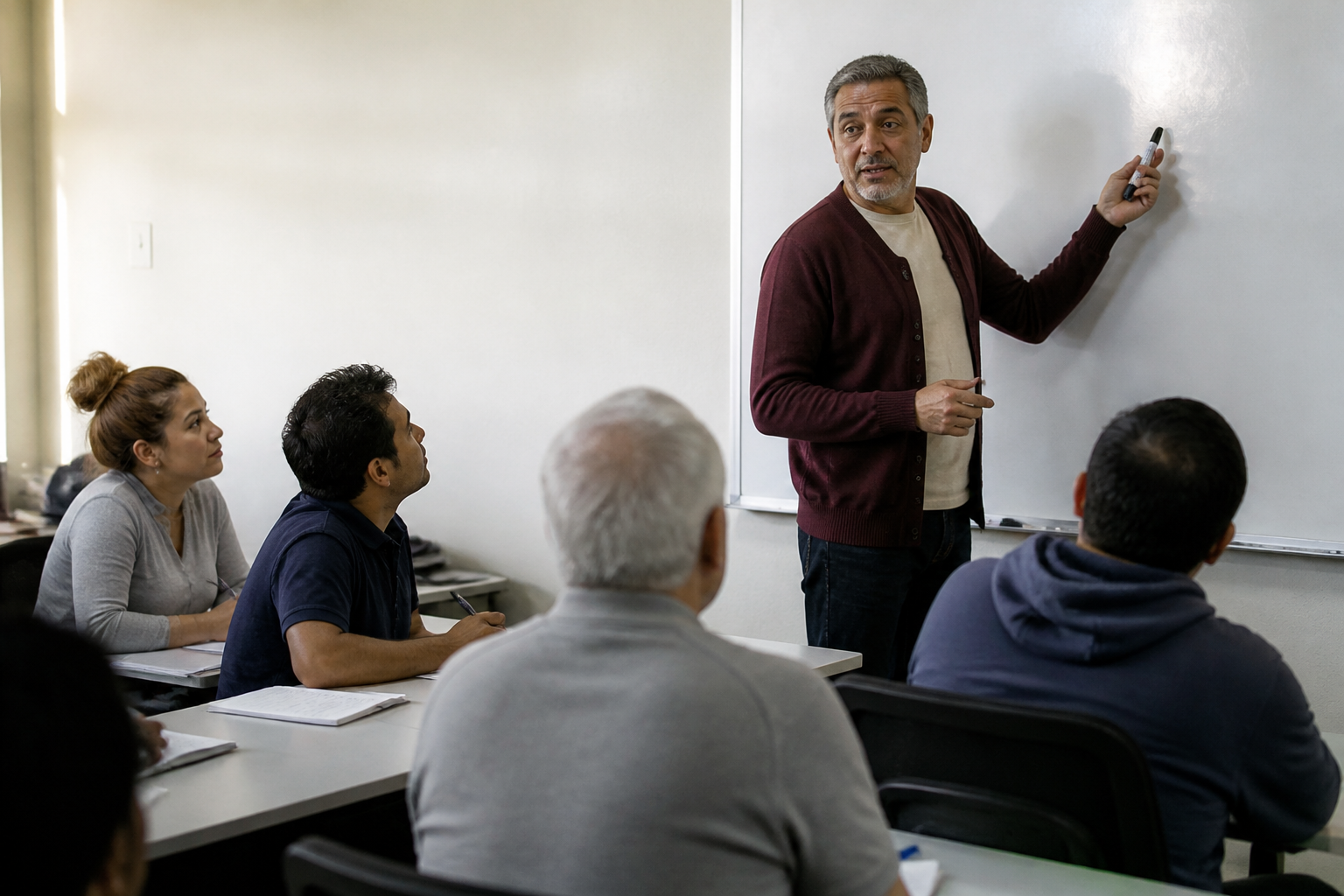
Many districts pay more for a master's, and some states tie professional certification to one, yet the price of earning it varies widely. In-state graduate tuition at the schools ranked here runs from $6,791 at Fayetteville State University to $15,097 at the University of California-San Diego.
The list favors low net price and available financial aid, and it also flags fees, licensure fit, and online enrollment rules.
A low sticker price helps only if the program matches your license status.
Key Points
- Ranking weighs tuition against completion and career outcomes, not prestige.
- Actual cost adds fees, books, software, and licensure exam prep.
- Choose initial licensure or advanced credential track before comparing programs.
The 10 Most Affordable Master's in Math Education Programs
These programs balance tuition against completion and career outcomes, with campus, hybrid, and fully online options. Several are built for working teachers and career changers who need a clear certification path. Use the cards to compare cost, format, and the specific grade band or credential each school prepares you for.
CUNY Brooklyn College
#1Brooklyn, NY · $10,000 – $15,000/yr (est.)
Best for: Aspiring New York City middle school math teachers
CUNY Brooklyn College prepares future New York City middle school mathematics teachers through two M.S.Ed. tracks focused on problem-based lesson design, student work analysis, and differentiation. The campus-based programs include NYC public school internships and lead to New York State Initial and Professional certification. It is a strong fit for applicants who want urban classroom experience and a structured pathway into grades 1-6 or 5-9 teaching.
- Rolling admissions, fall and spring starts
- 3.0 GPA minimum, 2 recommendation letters
- Leads to NYS Initial and Professional Certification
- Capstone required
- Internships in NYC public schools
- Options based on teaching experience
- Starts fall or spring
- Prerequisite courses required
- Prepares for NYS Professional Certificate
- Online option available for 30 credits
- Flexible credit options from 30 to 45
- Internships in NYC schools
- Interview required for admission
CUNY Lehman College
#2Bronx, NY · ~$12,000/yr (est.)
Best for: Bronx-based educators seeking flexible teaching certification
CUNY Lehman College offers an M.S.Ed. in Mathematics Education with separate middle childhood and adolescent certification tracks. The program includes 100 clinical hours, student teaching, and an internship certificate option that lets eligible candidates earn while they finish. Multiple sequences accommodate both math majors and career changers, and students can add certification in Students with Disabilities.
- Middle childhood (5-9) and adolescent (7-12) options
- 100 clinical hours plus student teaching
- Leads to NYS initial and professional certification
- Option to add Students with Disabilities certification
- Internship certificate for paid teaching while studying
- Multiple sequences for math and non-math majors
The University of Texas Rio Grande Valley
#3Edinburg, TX · $5,000 – $10,000/yr (est.)
Best for: Online educators seeking 10-month affordable specialization
The University of Texas Rio Grande Valley runs a fully online M.Ed. in Curriculum and Instruction with a Mathematics Education specialization. The 30-credit program uses 7-week terms and can be completed in as few as 10 months, with a published total tuition near $13,750 for students not employed by partner organizations. It is designed for working educators who want an affordable, accelerated path into curriculum specialist and instructional coaching roles.
- $13,750 total program tuition and $458 per credit
- 30 total credit hours, 10-month completion
- 7-week course terms
- 3.0 GPA minimum and capstone required
- $0 application fee
- Part of Texas Regional Collaborative
University of Florida
#4Gainesville, FL · ~$13,000/yr (est.)
University of Florida delivers an online Master of Arts in Education with a Mathematics Education concentration for practicing and aspiring teachers. The 30-credit curriculum blends advanced math content with research-based pedagogy, including AI-enhanced math instruction, and offers thesis or project options. Students can start in fall, spring, or summer and typically finish in about two to three years.
- 30 total credit hours
- Complete in about 2-3 years
- Full-time and part-time options
- Three start dates per year
- 2.7 GPA minimum
- Thesis or capstone option
- EPI pathway to Florida teacher certification
University of California-Los Angeles
#5Los Angeles, CA · ~$14,000/yr (est.)
UCLA combines a secondary mathematics teaching credential with an M.Ed. for grades 6-12. The campus-based program integrates sociocultural learning, critical race theory, and community cultural wealth with classroom fieldwork. Applicants can choose from a two-year master's and credential program, math residency pathways, or a joint mathematics/education option for UCLA undergraduates.
- Earns teaching credential with M.Ed.
- Joint program for UCLA undergraduates
- Apply mid-September to early December
- Focus on sociocultural learning and critical race theory
- Bridges theory and practice
University of South Florida
#6Tampa, FL · ~$10,000/yr (est.)
University of South Florida offers a hybrid M.Ed. in Curriculum and Instruction with a Mathematics Education concentration for experienced educators. The 30-credit program emphasizes student thinking analysis, equitable learning design, technology integration, and leadership. Graduates can pursue roles as advanced math teachers, instructional coaches, curriculum designers, or district coordinators, and the program provides a pathway to teaching dual enrollment or undergraduate math courses.
- 30 total credit hours
- Designed for experienced educators
- Pathway to dual enrollment teaching
- Flexible online, hybrid, and on-campus formats
- Prepares for instructional leadership roles
Fayetteville State University
#7Fayetteville, NC · $7,000 – $18,000/yr (est.)
Fayetteville State University offers a Master of Education in Secondary Education with a Mathematics Specialty Area for college graduates and working professionals who earned a bachelor's degree outside of education. The campus-based program prepares candidates to teach high school mathematics in grades 9-12, with coursework in curriculum development, instructional design, assessment, and technology integration. It emphasizes research-based practices for diverse learners.
- Prepares to teach grades 9-12
- Designed for degree holders outside education
- Curriculum development and instructional design focus
- Technology integration emphasis
University of California-San Diego
#8La Jolla, CA · $15,000 – $20,000/yr (est.)
UC San Diego offers an Elementary Mathematics Education Concentration inside its M.Ed./Multiple Subject Credential program. The campus-based track includes a specialized seminar on advanced K-6 teaching practices, a summer math pedagogy course, and student teaching placements with experienced mentors. The program is designed for aspiring elementary teachers who want to lead math initiatives and support instructional improvement.
- Prerequisite courses required
- Program currently on hiatus
- Prepares elementary math teachers and leaders
- Specialized student teaching placements
- Focus on K-6 mathematics teaching practices
- Summer course in elementary math pedagogy
University of California-Riverside
#9Riverside, CA · ~$15,000/yr (est.)
UC Riverside offers self-supporting master's degrees in mathematics, including an M.S., an M.A., and an applied M.S. option. The 36-unit mathematics programs are not K-12 certification tracks, but they prepare graduates for community college mathematics teaching, business and industry roles, or doctoral study. Teaching assistantships are awarded quarterly, and external fellowships such as GEM are available.
- Complete in 1-2 years
- 36 total credit hours
- Teaching assistantships awarded quarterly
- GEM Fellowship Program available
- Careers in business and industry
- Eligibility for doctoral programs
Arkansas State University
#10Jonesboro, AR · $7,000 – $13,000/yr (est.)
Arkansas State University offers a 30-credit Master of Science Education in Mathematics for certified educators who want to deepen both mathematical content knowledge and classroom teaching skill. The campus-based program covers mathematical theory, instructional strategies, and practical application, with small cohorts and collaboration with fellow educators. Graduates can pursue roles as secondary math teachers, dual enrollment instructors, or district math facilitators.
- 30 total credit hours
- 2.8 GPA minimum and prerequisite courses
- Designed for certified educators
- Mix of advanced math and education training
- Career: Secondary Math Teacher
- Career: Dual Enrollment Instructor
None of the ranked Mathematics programs match the most affordable lens yet. The full ranking is at the link above.
What a Math Education Master's Really Costs: Tuition, Fees, Books, and Exams
Published tuition and all-in cost are two different numbers, and only the second one has to fit your budget. Tuition is the headline. Technology or online fees, per-credit distance fees, textbooks, software such as graphing tools, and licensure testing are billed separately and vary by school.
Tuition Examples
CUNY Brooklyn College lists in-state tuition of $11,524 and out-of-state tuition of $20,954. CUNY Lehman College is nearly identical at $11,570 in-state and $21,000 out-of-state. The University of Texas Rio Grande Valley advertises its online master's in math education at $458.33 per credit across 30 credits, about $13,750 in total. Those figures cover tuition only. Reliable fee and textbook amounts for these schools were not available, so ask each program for its current fee schedule instead of assuming there are none.
Exam Costs
If your track leads to initial licensure, budget for Praxis Mathematics: Content Knowledge (5165). ETS lists the fee at $1301, and a 3% online service fee applies to online transactions in the 2026-27 cycle2. Optional prep costs extra: the official practice test is $24.95 and the prep eBook is $45.3 Licensed teachers pursuing an advanced credential may not need this exam, so confirm with your state.
Net Price and One Tip
The net price for Brooklyn and Lehman, roughly $3,100, is an institution-wide average after aid. It is approximate and not a personal quote. Before comparing affordable math education master's programs, request each program's per-credit cost sheet, multiply by total credits (for example, $458.33 x 30), and then add fees, books, and exam costs.
Initial Licensure or Advanced Credential? Know Which Track You're Buying
Math education master's programs come in two different products: one that earns you a first teaching license, and one that builds on a license you already hold. Confusing them is an expensive mistake.
Initial licensure tracks
These programs include student teaching or clinical hours and end in a license. Brooklyn College and Lehman College both lead to New York State initial and professional certification. Brooklyn's program targets middle school (grades 5-9), while Lehman offers a 5-9 or 7-12 option. UCLA's M.Ed. earns a California teaching credential. UF's online M.A.E. lists a path to Florida certification, though it also serves practicing teachers. Fayetteville State prepares candidates to teach grades 9-12, so confirm the licensure details with the school.
Advanced credential tracks
These are built for teachers who are already certified. USF points toward math coach or specialist roles, Arkansas State is designed for certified educators, and UTRGV targets curriculum specialist and coordinator careers. UC Riverside's M.S. in Mathematics is a subject-area degree, not teacher preparation.
Secondary or elementary?
Yes, an initial-licensure track can lead to secondary math certification (grades 6-12 or 7-12). Usually, though, that license is valid only in the school's home state or through reciprocity, so check secondary education licensure requirements with your own state's education department before enrolling.
Elementary math specialist and K-8 endorsements are a separate path from secondary licensure. UC San Diego's elementary math concentration focuses on K-6 and is currently on hiatus. Match the program to the grade band you want to teach.
Related Articles
Studying Online From Another State: Authorization and Transfer Credit Rules
Is an online math education master's yours to take if you live across the state line? Not automatically. Several programs on this page are fully online or hybrid: University of Texas Rio Grande Valley's online M.Ed., University of Florida's online M.A.E., and University of South Florida's hybrid M.Ed., for example. Others are campus-based.
Start with state authorization
A school generally must be authorized to enroll you online, often through NC-SARA. But NC-SARA membership does not create licensure reciprocity.1 If a program advertises a route to teacher licensure, it must publish state-by-state disclosures of where it meets or does not meet educational requirements.2 UNC Pembroke, for instance, is an NC-SARA member but restricts its initial-licensure programs to in-state students.3
Transfer credit as a cost saver
Maximum transfer credits are usually modest, often six to twelve. University of Georgia accepts up to 6 graduate credits from an accredited institution.4 Indiana University of Pennsylvania caps transfer, workshop, and special-topics credits at 9 total and requires pre-approval.5
Before applying, check the program's professional licensure disclosure page for your state and confirm how prior graduate coursework or district professional development credit will be evaluated.
What Math Education Master's Graduates Earn
Among the programs ranked here, the highest published program-level median earnings are from The University of Texas Rio Grande Valley.
Questions About Affordable Math Education Master's Programs
What is the cheapest online master's in math education?
Can I teach secondary math with a master's in math education?
Are online math education master's degrees respected by employers?
How can teachers lower the cost?
Compare Mathematics programs on the data that matters
Explore more Education & Teaching specializations or browse every graduate field.
All Education & Teaching programs