Accelerated Master's in STEM Education Programs
Compare accredited Stem Science Technology Engineering Math master's programs by earnings, cost, and outcomes.
Sample layout — live rankings and program data appear here once the data source is connected.
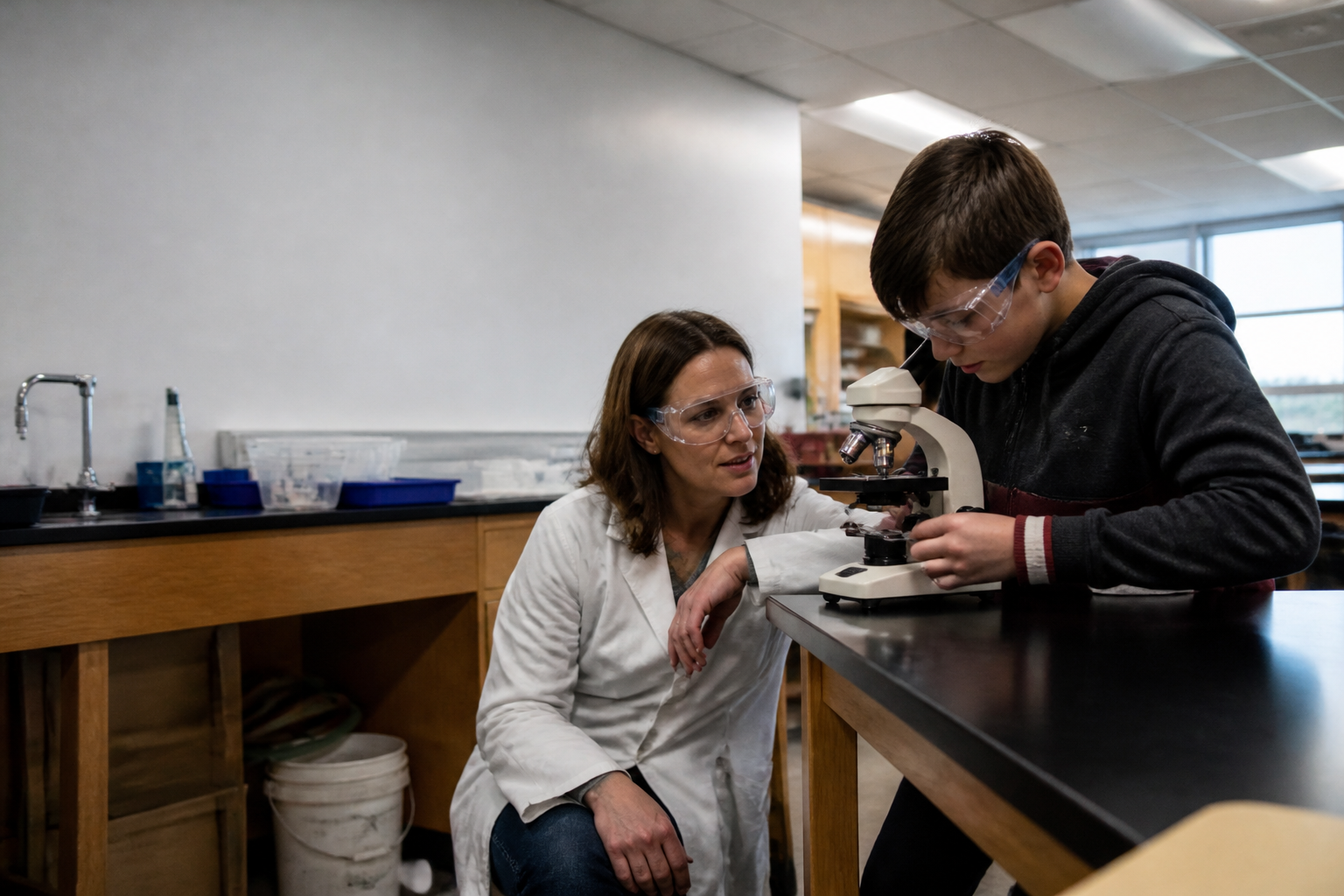
A teacher who wants a STEM education master's for a salary-schedule bump, an added endorsement, or a move out of the classroom usually faces a tradeoff: speed against depth. Traditional formats run about two years. Accelerated programs compress that to roughly 10 to 14 months through year-round terms, shorter courses, and in some cases 4+1 routes.
Faster is not automatically simpler. Initial-licensure tracks add student teaching, and state approval varies, so the fastest path on paper is not always the one your district will credit.
Key Points
- Net price after aid, not sticker tuition, is the real comparison.
- State licensure rules differ; confirm your home state before enrolling online.
- Accreditation separates first-licensure programs from those extending current ones.
10 Accelerated STEM Education Master's Programs You Can Finish Fastest
Speed was our first filter, but fit to classroom teaching shaped the final order. The programs below are ordered by the shortest published path to graduation, with total credits and then published tuition as tiebreakers. A few adjacent STEM master's appear because they are genuinely fast, but each is labeled when it is not a teaching credential.
William & Mary
#1Williamsburg, VA · $15,000 – $20,000/yr (est.)
Best for: Aspiring secondary STEM teachers in Virginia
William & Mary's School of Education runs a one-year, in-person M.A.Ed. in Curriculum & Instruction with secondary science and mathematics concentrations. The 41-credit program starts in summer and leads to Virginia licensure for grades 6-12, including a 15-week full-time student teaching placement. Applicants can access Noyce scholarships up to $26,000 per year, and recent graduates reported a 100 percent placement rate.
- 41 total credit hours
- One-year program, starts summer
- Science and mathematics concentrations
- Leads to Virginia secondary licensure, grades 6-12
- 60 clinical hours plus 15-week full-time student teaching
- Noyce scholarships up to $26,000 yearly
- 100% job placement rate reported
- Summer mentoring with practicing educators
Oregon State University
#2Corvallis, OR · $15,000 – $20,000/yr (est.)
Best for: Career changers needing hybrid licensure pathway
Oregon State offers hybrid master's pathways in math education and science education, with full-time and part-time cohorts. The full-time track can be completed in one year, and students complete internships plus a full-time student teaching placement. Graduates earn a K-12 Oregon teaching license with endorsements, and published tuition is $609 per credit.
- $609 per credit
- Full-time one-year or part-time two-year cohort
- Hybrid with asynchronous online plus Saturday in-person
- Two concentration options
- 47 to 53 quarter credits required
- Two 3-credit professional internships
- Full-time student teaching in spring
- Leads to K-12 Oregon teaching license
- Five concentration options
- One-year full-time or two-year part-time
- Hybrid national student cohort
- More than 700 student teaching hours
- License reciprocal in many states
- ESOL endorsement optional
- Two Saturday sessions per quarter, Zoom available
University of Oregon
#3Eugene, OR · ~$19,000/yr (est.)
Best for: Middle and high school math or science candidates
The University of Oregon's UOTeach program is a one-year, four-term cohort-based M.Ed. that leads to an Oregon preliminary teaching license. Candidates choose middle and high school endorsements in mathematics and science, and every student completes the ESOL endorsement. The program starts in summer and includes nine months of supported student teaching in public schools.
- One-year, four-term cohort
- Starts summer, full-time or part-time
- Leads to Oregon preliminary teaching license
- Mathematics and Science Education endorsements
- Nine months of supported student teaching
- ESOL endorsement embedded for all
- Application window September 25 to January 15
- Career support with resume workshops and COE Career Fair
University of Delaware
#4Newark, DE · $20,000 – $25,000/yr (est.)
The University of Delaware offers a one-year Master of Science in Secondary STEM Education with subject concentrations from biology and chemistry to physics, mathematics, and technology education. The program leads to institutional recommendation for grades 7-12 certification. STEM undergraduates can enter through the school's 4+1 option by taking two graduate courses senior year, and published tuition is $1,149 per credit.
- One-year program
- $1,149 per credit
- Nine concentration options
- Leads to institutional recommendation for grades 7-12 certification
- B.S./M.S. 4+1 option available
- Take two graduate courses senior year
- Middle and high school teaching preparation
- Open to a variety of STEM majors
Texas Christian University
#5Fort Worth, TX · $35,000 – $40,000/yr (est.)
TCU's College of Education offers a Master of Education in Curriculum and Instruction with mathematics or science education specializations. Students choose a research emphasis or a teaching and learning emphasis, and an accelerated master track is available. The campus program connects students with faculty research and careers in K-12 schools, higher education, and government.
- Four concentration options
- Mathematics education or science education specialization
- Research or teaching and learning emphasis
- Accelerated Master track available
- Faculty include NSF Research Fellow and two Piper Professors
- Field experiences with faculty research
- Careers in schools, higher education, government
Johns Hopkins University
#6Baltimore, MD · ~$65,000/yr (est.)
Johns Hopkins offers a full-time Master of Education for Teaching Professionals with a STEM teacher preparation focus. The 39-credit program runs four semesters of coursework plus a year-long paid residency in Maryland partner schools. It provides full-tuition support, health insurance, and a living stipend, and graduates commit to four years in a JHU-approved district.
- 39 total credit hours
- Seven concentration options
- Starts summer, cohort-based
- Full-tuition support plus health insurance and living stipend
- Four-year teaching commitment in Maryland partner schools
- Meets Maryland certification requirements
- $10,000 Noyce stipend available
- Paid residency as full-time teacher
Tufts University
#7Medford, MA · ~$51,000/yr (est.)
Tufts offers a campus-based MS in STEM Education that blends advanced pedagogy with graduate STEM coursework. The program requires 34 credits and a year-long seminar, and can be completed in about 24 months. Students can pursue a thesis, project, research team, or internship, and published tuition is $1,299 per credit.
- 34 total credit hours
- $1,299 per credit
- Thesis, project, research team, or internship option
- Year-long STEM education seminar
- Transfer credits accepted
- Prepares future PhD candidates
- Careers in PreK-16 STEM education, museums, and industry
- Faculty-supervised research experiences
Grove City College
#8Grove City, PA · ~$9,000/yr (est.)
Grove City College offers a 30-credit Master of Engineering in Systems Engineering and Technology Management, which can be completed in as little as one year. This is an engineering management program rather than a teaching credential, so it appears here only as a fast adjacent STEM option. Published tuition is below state and national averages for similar degrees.
- 30 total credit hours
- One-year program, full-time or part-time
- Starts fall
- Technical leadership preparation
- Careers in software, hardware, academia, government
- Tuition below state and national averages
- Applications open December 1
Seton Hall University
#9South Orange, NJ · ~$37,000/yr (est.)
Seton Hall offers a one-year, 30-credit Master of Science in Professional Communication and Digital Media Arts. The STEM-designated program blends online and in-person study and is a communication and media path, not a teaching master's. It sits 14 miles from New York City and prepares graduates for roles in public relations, sports media, marketing, and digital content.
- One-year, 30-credit program
- Blended online and in-person
- STEM-designated M.S.
- Rolling admissions, GRE or MAT required
- Capstone required
- 14 miles from New York City
- Careers in public relations, health communication, sports media
- International students welcome
Rollins College
#10Winter Park, FL · ~$23,000/yr (est.)
Rollins College's Crummer Graduate School of Business offers a full-time Accelerated MBA with STEM designation. The 12-to-16-month program requires 38 credits, a required STEM internship, and a capstone, and carries a published total program tuition of $60,000. This is a business pathway, not a teaching credential, but eligible international graduates can seek up to 36 months of STEM OPT.
- $60,000 total program tuition
- 12-16 month full-time program
- 38 total credit hours
- Required STEM internship and capstone
- Up to 36 months STEM OPT eligibility
- Day and night classes, two start dates per year
- Test optional, no entrance exam required
- Employer tuition reimbursement supported
None of the ranked Stem Science Technology Engineering Math programs match the fastest lens yet. The full ranking is at the link above.
What Makes a STEM Education Master's 'Accelerated'?
What counts as an accelerated master's in STEM education, and is it the same as a master's in math or science? No. It is a graduate program for current or aspiring teachers, focused on teaching science, technology, engineering, and math. It shortens the calendar through 6- to 8-week terms, year-round enrollment, heavier course loads, or a 4+1 pathway that combines a bachelor's and master's.
What It Is Not
- Content master's: An MS in Mathematics studies the subject itself, not how to teach it.
- Certification alone: A standalone STEM teaching certificate does not include a master's degree.
- Alternative-route degree: These focus on getting career changers licensed quickly, not on STEM pedagogy specifically.
Timeline Levers
Most programs run about 30 to 36 credits. Your pace depends on term length, full-time or part-time load, summer sessions, and how many transfer credits are accepted. Student teaching, a residency, or a capstone can lengthen the schedule.
The University of Delaware shows the model. Its Secondary STEM Education M.S. is a one-year degree, and current UD undergraduates can use a 4+1 option: 6 to 8 graduate credits count toward both degrees, for five years total. UD's online master's in education programs use 5-, 7-, or 14-week courses, but that doesn't establish the same calendar for this degree.
Concentrations
Expect math, science, technology/engineering, or integrated STEM, though labels vary by school. Delaware organizes by subject area (physics, biology, chemistry, earth science, technology education, and others) with certification and non-certification tracks. The certification track suits future classroom teachers. The non-certification track emphasizes leadership, curriculum development, and research.
Accreditation and Licensure Outcomes, Program by Program
The single most important question a prospective student can ask is whether a program is built to issue a first teaching license or to extend one you already hold, because those paths serve different people and carry different state approvals. Initial-licensure programs must be approved by a state education agency; advanced programs generally assume you are already certified and want to deepen your content or add an endorsement.
What the available records actually confirm is narrow. Central Connecticut State University's STEM Education, MS is written for already-certified PreK-12 teachers, which places it squarely in the advanced category rather than an initial-licensure route. For the other programs, we could not verify a current, program-specific institutional accreditor, CAEP or AAQEP status, or licensure outcome from the sources at hand, so we are not going to label them from assumption.
Portability Is Not Guaranteed
Most states require out-of-state completers to apply through reciprocity under NASDTEC agreements, which facilitate review but are not automatic reciprocity or an interstate compact. The receiving state can still impose its own testing, subject-area, and degree requirements. Confirm your plan directly with the state board where you intend to teach before you enroll.1
Related Articles
What a Fast STEM Education Master's Really Costs and Pays Back
Sticker Price Versus Net Cost
The gap between the cheapest and priciest totals across these programs is wide, but tuition is only part of the bill. A shorter program also trims living costs and the months you spend away from a full paycheck. Compare net cost after aid, not the advertised total.
Aid That Can Shrink the Bill
- Noyce Scholarship: The NSF Robert Noyce Teacher Scholarship Program provides at least $10,000 per year, capped at cost of attendance.1 In return, you teach math or science in a high-need district for two years per year of support, within six years of graduating. The NSF page we reviewed is an older solicitation, so confirm current terms with the program.
- TEACH Grant: Up to $4,000 per year for full-time study. Awards disbursed before October 1, 2026 were cut 5.7% to $3,772.2 You must teach four years in a high-need field at a low-income school within eight years, or the grant converts to a loan with interest.
- District reimbursement: Many districts reimburse tuition. Ask HR for the cap and any service requirement.
The Payoff and Payback Math
Most districts pay more for a master's. The NCTQ report on ineffective master's degree premiums finds that in 2025 a new teacher with a master's earned $547 more than one with a bachelor's. That is an average for new teachers, so check your own district's salary schedule.
Divide total net cost by the annual salary bump. A hypothetical $15,000 net cost against $547 a year takes about 27 years to recoup. Grants and reimbursement are what make the numbers work.
Admissions Checklist and Transfer-Credit Rules That Shorten Your Timeline
Line up your transcript, GPA, teaching or STEM coursework, and credit decisions before you apply.
- Bachelor's degree and GPAHold a bachelor's degree from an accredited institution. University of Delaware 4+1 STEM programs require a 3.0 overall GPA; engineering and computer science require at least 75 undergraduate credits at application, and computer science requires a 3.2 major GPA and 90 credits before graduate enrollment.
- Teaching or STEM courseworkAdvanced licensure tracks generally expect a teaching certificate; initial licensure tracks expect STEM content coursework. Confirm which track you are applying to before you submit.
- Recommendations, statement, GREPlan for recommendation letters and a personal statement where required. Delaware's 4+1 application does not require the GRE or an application fee.
- Graduate transfer creditAt Delaware's 4+1 STEM programs, graduate transfer credit is generally capped at 9 credits; courses must be graded B- or better and completed within the last five years.
- 4+1 dual-counted creditsDelaware's engineering 4+1 lets selected senior-year graduate courses count toward the master's. In computer science, up to 6 credits of approved 600-level CIS courses can be dual-counted; independent study and research cannot.
- Prior-learning and professional development creditPublished prior-learning or professional-development credit is limited for these accelerated STEM education programs, so confirm any credit-by-exam or workshop options with the program before assuming they shorten your timeline.
- Application timingFor Delaware's 4+1, apply by May 31 of junior year for priority or Dec. 1 of senior year for final consideration. If your program has rolling or multiple start dates, confirm the next cohort; if fixed, start at least three months before the term.
Quick Answers on Fast-Track STEM Education Degrees
Fast STEM education master's programs raise practical questions about pace, format, and licensure. These answers stick to what the programs below publish about their own timelines and delivery.
What is the quickest timeline I can realistically expect for an accelerated STEM education master's?
How do I know a fast STEM education master's program has the right accreditation?
Can I complete this degree without pausing my full-time teaching job?
Will a fast STEM education master's give me a teaching license or only build on one I already hold?
Are live class sessions or in-person field hours required in online STEM education programs?
Can a 4+1 bachelor's-to-master's pathway reduce my total time in school?
Compare Stem Science Technology Engineering Math programs on the data that matters
Explore more Education & Teaching specializations or browse every graduate field.
All Education & Teaching programs