Best Nurse Practitioner (NP) MSN Programs in Pennsylvania
Compare 81 accredited Nurse Practitioner (NP) programs in Pennsylvania at 31 schools, with graduate earnings, cost, debt, and completion data from IPEDS and the U.S. College Scorecard.
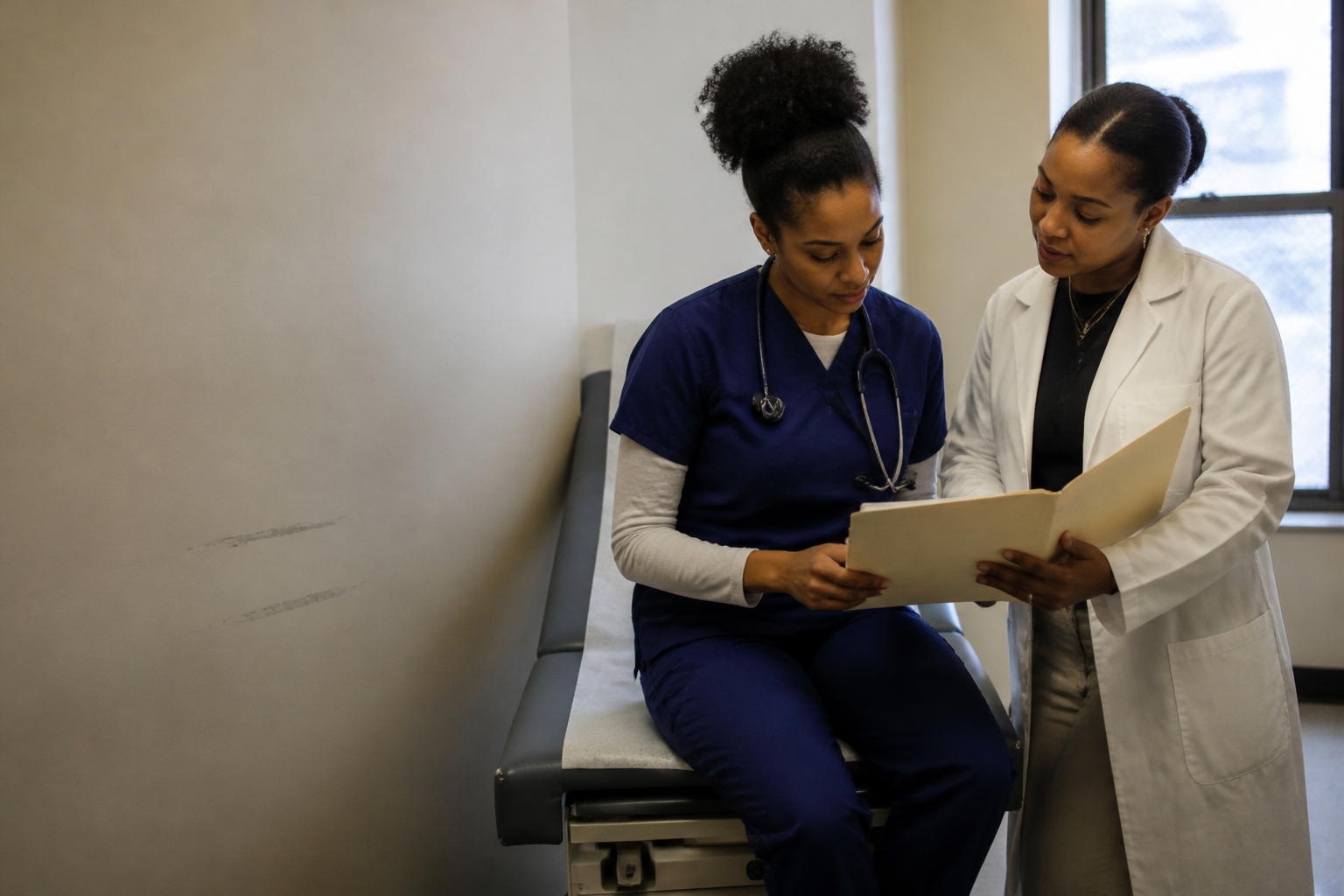
A nurse practitioner master's in Pennsylvania typically runs 36 to 52 credits and somewhere around 750 to 825 supervised clinical hours, ending in national certification in one population focus, such as a Psychiatric Mental Health Nurse Practitioner, and a CRNP license from the state board.
What separates these programs is price and placement support. Immaculata lists $730 per credit across a 44-credit FNP track; Scranton's faculty secure clinical sites near where students live, while other schools expect more legwork.
FNP earnings in the state cluster around six figures early on. Graduate debt varies far more than those paychecks do.
Key Points
- Drexel's online MSN still requires a mandatory four-day on-campus intensive in the first week.
- Penn, Villanova, Widener, and Carlow do not require the GRE for NP admission.
- Check each school's published clinical hours, since the national benchmark is 750 direct patient-care hours.
Pennsylvania's Top 10 Nurse Practitioner Master's Programs, Ranked
Brand name counts for less than what a program costs and where its graduates land, and Pennsylvania's list shows it. A Philadelphia Ivy sits next to two flagship public universities and several mid-priced private schools, and their listed tuition and average net price after aid differ by tens of thousands of dollars. Formats range from fully online to hybrid with required campus visits, and each card notes which tracks, including FNP, each school offers.
University of Pennsylvania
#1Philadelphia, PA · ~$48,000/yr (est.)
Best for: Working nurses at partner health systems
Penn offers the widest NP menu in the state: family, pediatric, adult-gerontology primary and acute care, psychiatric mental health, neonatal, women's health, and nurse-midwifery, mostly on campus with hybrid acute care and psychiatric tracks. Listed in-state tuition and fees run about $68,686, but the institution-wide average net price after aid is about $28,699, and the school's overall graduation rate is 96.5%.
- 14 course units, with four research and science core courses
- Full-time and part-time plans, including 2-year and 3-year part-time paths
- Starts fall, spring, or summer
- Clinical sites include addiction medicine, homeless health, and gender-spectrum care
- All faculty currently in practice
- Two-year program, full-time or part-time
- Well-child and sick-visit training
- Six clinical courses taken together
- CCNE accredited
- 12 courses, full-time or part-time
- Starts summer, fall, or spring
- Clinical preceptorships with case studies
- Focus on acute and chronic condition management
- 12 course units in a hybrid format
- Concentration options across cardiology, trauma, transplant, and nephrology
- Optional minors in oncology, palliative care, forensics, or global health
- Immersive simulation technology
- General surgery clinical concentration
- Preceptor matching provided
- Post-graduate certificate option for primary-care-prepared NPs
- Summer or fall start
- Internal medicine clinical concentration
- Mentored clinical experience included
- Preceptor matching provided
- Full-time or part-time, summer or fall start
- 14 months full-time or three years part-time
- Hybrid, with in-person clinical placements arranged
- Total cost listed at about $103,526 to $105,814
- Three-semester clinical practicum
- 3.0 GPA minimum
- 15 months full-time or 24 months part-time
- Campus-based with some hybrid courses
- Total cost listed at $101,925 to $103,741
- Summer or fall start
- 14 months full-time, or two to three years part-time
- In-person with some online or hybrid courses
- Total cost listed at $96,637 to $102,475
- Eligible for dual certification
- Four-semester program, full-time or part-time
- Clinicals at Level III and IV NICUs in PA, NJ, and DE
- Faculty manage the clinical placement process
- Work experience and 3.0 GPA required
Villanova University
#2Villanova, PA · $20,000 – $25,000/yr (est.)
Best for: Nurses wanting secured clinical placements
Villanova pairs online core courses with in-person clinicals across its FNP, pediatric, adult-gerontology, and psychiatric mental health tracks, all at 47 credits. The school secures clinical placements in Pennsylvania, New Jersey, and Delaware, which removes one of the biggest headaches in NP study. Listed in-state tuition and fees are about $67,776, the institution-wide average net price after aid is about $43,756, and the school's overall graduation rate is 91.9%.
- 47 credit hours, hybrid format
- Core courses online, clinicals in person
- Clinical placement in PA, NJ, and DE
- Option to continue into the post-master's DNP
- 47 credit hours, core courses online
- Clinical courses completed in person
- Prepares for pediatric primary care
- Option to continue into the post-master's DNP
- 47 credit hours, core courses online
- In-person clinical courses
- Primary care learning objectives
- Option to continue into the DNP
- 47 credit hours with 600 clinical hours
- Clinical placement secured by the school
- Lifespan psychiatric care with evidence-based therapy focus
- Core courses online
Drexel University
#3Philadelphia, PA · ~$39,000/yr (est.)
Best for: Online learners who can travel for intensives
Drexel runs most of its NP tracks online with synchronous lectures, and each one requires on-campus or virtual intensives. Options include pediatric primary care, adult-gerontology primary and acute care, psychiatric mental health, a pediatric dual option, and a combined FNP and emergency NP track. Listed in-state tuition and fees are about $62,412, the institution-wide average net price after aid is about $38,509, and the school's overall graduation rate is 78.2%.
- 52 credits at $1,169 per credit
- Online, part-time, about three years
- Starts fall, winter, or spring
- Program reports a 100% licensure pass rate
- Eligible for ANCC or PNCB certification
- 52 credits with 640 clinical hours
- Hybrid with mandatory on-campus intensives
- Eligible for AANP or ANCC certification
- Cares for patients aged 13 and older
- 57 credits with 800 clinical hours
- Online with mandatory on-campus intensives
- Two years of acute care experience required
- Approved by the Pennsylvania State Board
- No entrance exam required
- Students coordinate their own clinical sites
- Mandatory on-campus or virtual intensive
- Prepares for the ANCC psychiatric certification exam
- 62 credits with 1,000 clinical hours
- Dual certification eligibility
- Mixed inpatient and outpatient experience
- Prepares for PNCB exams
- 62 quarter credits at $1,169 per credit
- Part-time only, about four years
- One year of pediatric experience and current PALS required
- Self-coordinated clinical sites
- 16 courses, fully online option available
- Prepares for both FNP and ENP certification exams
- BLS, ACLS, and PALS required before clinicals
- Mandatory on-campus intensive visits
Thomas Jefferson University
#4Philadelphia, PA · ~$25,000/yr (est.)
Jefferson's Philadelphia programs are 45-credit hybrids with campus sessions at Center City or Dixon, and students can take two to five years to finish, which suits working nurses. Tracks cover pediatric primary care, adult-gerontology primary care, psychiatric mental health, women's health, neonatal, and midwifery. Listed in-state tuition and fees are about $47,505, the institution-wide average net price after aid is about $28,928, and the school's overall graduation rate is 68.6%.
- 45 credits, hybrid online and on campus
- Complete in two to five years
- Prepares for the CPNP-PC exam
- 45 credits, hybrid format
- Prepares for ANCC or AANPCB certification
- Campuses in Center City and Dixon
- 45 credits across a 12-course curriculum
- Substance use disorder training
- Clinical placement support
- Prepares for PMHNP-BC certification
- 62 credits over three years, starts fall
- Final four semesters in clinical rotations
- Certified Midwife direct-entry pathway
- Prepares for the American Midwifery Certification Board exam
- 45 credits, hybrid
- Prepares for the NCC certification exam
- Care for women across the lifespan
- 45 credits, campus-based
- Covers embryology and high-risk infants
- Partnership with Nemours Hospital for Children
- Graduates earn the NNP-BC credential
University of Pittsburgh-Pittsburgh
#5Pittsburgh, PA · ~$28,000/yr (est.)
It is a recent expansion rather than a long-established track, so there are no program-level outcomes to lean on yet. Listed in-state tuition and fees are about $21,926 (about $41,430 out of state), the institution-wide average net price after aid is about $30,434, and the school's overall graduation rate is 85.5%.
- Hybrid delivery through Pitt Online
- Care for psychiatric disorders across the lifespan
- Learning outcomes built on AACN Essentials
- One of five MSN concentrations at the school
University of Scranton
#6Scranton, PA · ~$12,000/yr (est.)
Scranton offers a 36-credit FNP track, which the school lists at 21 months full-time, with online core courses and weekly on-campus specialty classes. Faculty arrange clinical placements near students' homes. A psychiatric mental health NP track is also available. Listed in-state tuition and fees are about $53,983, the institution-wide average net price after aid is about $32,568, and the school's overall graduation rate is 79.8%.
- 36 credits, 21 months full-time
- Hybrid with weekly on-campus specialty courses
- Faculty-secured clinicals, two days a week over four semesters
- Program reports a 100% first-time FNP certification pass rate
- 42 credits with 750 practicum hours
- Online with on-campus intensives, 21 months full-time
- Thesis option and post-master's certificate offered
- Fall start, 3.0 GPA minimum
Pennsylvania State University
#7University Park, PA · ~$26,000/yr (est.)
Penn State's listing here is its Adult Gerontology Primary Care NP MSN, offered through the Ross and Carol Nese College of Nursing in a hybrid format. It is one of the lowest-priced options on this list for in-state students at about $20,644 in listed tuition and fees (about $41,790 out of state). The institution-wide average net price after aid is about $32,875, and the school's overall graduation rate is 86.1%.
- Hybrid format, CCNE accredited
- Primary care for adults from young adulthood to older age
- Faculty advisers and graduate advisers assigned
- International study opportunities available
Immaculata University
#8Immaculata, PA · ~$13,000/yr (est.)
Immaculata offers a part-time hybrid FNP track at a published $730 per credit for 2025-26, with 44 credits and 825 clinical hours over roughly 2.5 years. Its institution-wide average net price after aid is about $24,258, the lowest on this list, with listed tuition and fees of about $29,330. The school's overall graduation rate is 71.0%, and no GRE is required.
- 44 credits, about 2.5 years part-time
- $730 per credit for 2025-26
- 825 clinical hours, hybrid format
- No GRE required, 3.0 GPA preferred
- Two recommendations and current RN license required
Duquesne University
#9Pittsburgh, PA · $25,000 – $30,000/yr (est.)
Duquesne's FNP, adult-gerontology acute care, and psychiatric mental health NP tracks are all delivered online over about three years, with on-campus residency visits. The FNP track includes concentration options in forensic nursing, nursing education, or transcultural nursing. Listed tuition and fees are about $48,986, the institution-wide average net price after aid is about $37,730, and the school's overall graduation rate is 77.5%.
- 44 credits with 775 clinical hours, three-year online format
- Concentrations in forensic, education, or transcultural nursing
- One year of RN experience and 3.0 GPA required
- Up to nine transfer credits, on-campus residency required
- 42 credits, online over three years
- Acute care experience required
- Some campus residencies
- NONPF-aligned curriculum
- 44 credits, online over three years
- Substance abuse component and forensic nursing perspective
- Campus residency visits required
- Prepares for the PMHNP-BC exam
Gwynedd Mercy University
#10Gwynedd Valley, PA · ~$16,000/yr (est.)
Gwynedd Mercy offers online pediatric primary care and adult-gerontology primary care NP concentrations at a published $947 per credit for the adult-gerontology track. Its institution-wide average net price after aid is about $27,483, with listed tuition and fees of about $40,122. The school's overall graduation rate is 56.9%, the lowest of the ten, so ask about program-level completion before you commit.
- Online graduate nursing program
- Pediatric care from birth to age 21
- Part of a five-concentration MSN
- CCNE accredited
- 43 credits at $947 per credit
- Online with some hybrid courses
- Valid Pennsylvania RN license and 12 months of clinical practice required
- Employer reimbursement and military benefits supported
Cost & outcomes by school
Federal data for the highest-earning Nurse Practitioner (NP) programs, independent of the ranking above. Earnings are this field's master's graduates four years after completing, where the Scorecard reports them.
| School | Earnings | Tuition / yr | Debt | Grads/yr | Format |
|---|---|---|---|---|---|
| Pennsylvania State University-Penn State Shenango PA | — | $22,614 | — | — | Hybrid |
| Pennsylvania State University-Penn State Schuylkill PA | — | $25,234 | — | — | Hybrid |
| York College of Pennsylvania PA | — | $8,340 | — | 250 | Online |
| Pennsylvania Western University PA | — | $11,261 | — | 2,636 | Hybrid |
| University of Scranton PA | — | $11,630 | — | 912 | Hybrid |
| Neumann University PA | — | $11,320 | — | 210 | Online |
| Commonwealth University of Pennsylvania PA | — | $12,140 | — | 840 | Online |
| Millersville University of Pennsylvania PA | — | $12,479 | — | 592 | Hybrid |
| Immaculata University PA | — | $12,780 | — | 238 | Hybrid |
| Messiah University PA | — | $14,040 | — | 440 | Online |
| Cedar Crest College PA | — | $14,971 | — | 152 | Hybrid |
| Holy Family University PA | — | $15,900 | — | 532 | Online |
Sources: U.S. Department of Education. Tuition and graduates: IPEDS. Earnings and debt: College Scorecard, this field's master's graduates; a dash means no figure is reported.
Online and Hybrid NP Master's Options in Pennsylvania, Including Required Campus Visits
online nurse practitioner programs in Pennsylvania can trim your commute, but campus time rarely disappears entirely, especially for skills check-offs and clinical intensives. Drexel's online MSN requires a mandatory four-day on-campus intensive during NURS 534 in the first week of the summer quarter. Pitt's hybrid MSN-FNP builds in three on-campus immersions, described as short but without published day counts. Carlow's online FNP MSN program includes a brief hands-on residency on campus plus 760 clinical hours.
The key caveat: "100% online" coursework does not mean 100% remote. Clinical rotations always happen in person, usually near your home, but you still need to plan for travel to campus for orientations, skills labs, or intensives. For Villanova, Penn State, and Gwynedd Mercy, available materials do not publish whether an on-campus residency is required, so confirm directly before enrolling.
If you plan to complete clinicals outside Pennsylvania, ask the program about state authorization; some schools limit out-of-state online students.
Which Pennsylvania NP Master's Programs Waive the GRE?
The GRE has largely faded from nurse practitioner admissions in Pennsylvania, following the broader rise of master's programs with no GRE required. University of Pennsylvania dropped it as of July 1, 2021, and Villanova University, Widener University, and Carlow University also do not require it. Pitt lists a waiver as well. Drexel University's GRE entry reads N/A. Duquesne University and Penn State publish no FNP-specific GRE policy that we could confirm, so ask their admissions offices directly.
Minimum GPA is the more common hurdle: 3.0 at Penn, Pitt, Drexel, Widener, and Carlow, and 3.2 at Villanova. Expect a BSN from an accredited program, an active Pennsylvania RN license, and an undergraduate statistics course (Pitt asks for a B- or better). RN experience varies. Penn requires none for FNP, while Drexel prefers one to two years of medical-surgical work.
Tip: if a school asks for RN experience, confirm whether it must be finished before the clinical sequence starts, not just before you apply.
Cost of an NP Master's in Pennsylvania: The 5 Lowest-Priced Programs
These are the most affordable FNP master's programs here, shown in order of lowest net price. Net price is an institution-wide average, not specific to the NP program, so multiply the per-credit rate by total credits for a closer estimate. Employer tuition reimbursement and the HRSA Nurse Corps Scholarship can cut what you pay out of pocket.
| School | In-State Graduate Tuition | Out-of-State Graduate Tuition | Net Price (Institution-Wide) | Per-Credit Rate and Total Credits |
|---|---|---|---|---|
| Commonwealth University of Pennsylvania | $12,140 | $17,000 | $15,699 | $557 tuition (about $814 to $831 with mandatory fees); 50 credits |
| Penn State Shenango | $22,614 | $30,518 | $18,095 | N/A; four semesters full-time |
| Pennsylvania Western University | $11,261 | $12,386 | $18,256 | $557; 49 credits, about $27,293 before fees |
| York College of Pennsylvania | $8,340 | $8,340 | $18,556 | N/A; 47 credits |
| Cedar Crest College | $14,971 | $14,971 | $18,659 | N/A; credits not listed |
Related Articles
Where Pennsylvania FNP Graduates Earn the Most, and How They Fare on Board Exams
Earnings below are program-level medians from federal College Scorecard data, with the time window stated in each row. Pass rates appear only where a school publishes them. If a school you like does not list its AANP or ANCC first-time pass rate, ask the admissions office for it directly.
| School and program | Median graduate earnings | FNP certification pass rate |
|---|---|---|
| Gannon University, Family Nurse Practitioner (hybrid) | $193,562 (five years after finishing) | N/A |
| Villanova University, Family Nurse Practitioner (hybrid) | $184,811 (five years after finishing) | N/A |
| York College of Pennsylvania, Family Nurse Practitioner (online) | $159,209 (four years after finishing) | N/A |
| University of Pennsylvania, Family Nurse Practitioner MSN (campus) | $136,122 (five years after finishing) | 100% first-time, Class of 2025 (also 100% for 2023 and 2024); cohort size not listed |
| Pennsylvania State University, Adult Gerontology Primary Care Nurse Practitioner (hybrid) | $129,551 (five years after finishing) | N/A |
| Millersville University of Pennsylvania, MSN FNP | N/A | 78.5% first-attempt, ANCC and AANP combined, three-year average 2024 to 2026; cohort size not listed |
Becoming a CRNP in Pennsylvania
Clinical Hours and Preceptor Placement at Pennsylvania NP Schools
The national benchmark for NP tracks is 750 direct patient-care clinical hours, but published totals are not always comparable because schools define clinical hours differently. Drexel's FNP MSN requires 720 hours across five clinical courses (24 quarter credits), yet students find and coordinate their own site and preceptor. Villanova secures MSN placements in Pennsylvania, New Jersey, and Delaware and requires clinical courses in person. Widener reports 525 hours for its MSN FNP. Pittsburgh and Carlow run roughly 760 to 780 hours, mostly student-arranged, though exact totals vary. Wilkes reports 545 or 629 hours depending on concentration and source. Before enrolling, ask admissions what share of last cohort had placements arranged by the program, and confirm any geographic limits or extra placement fees for out-of-state students.
Pennsylvania NP Master's Programs: Quick Answers
These answers cover the questions applicants ask most often about NP master's study in Pennsylvania. Deadlines and policies change by cycle, so confirm details on each school's admissions page before you apply.
What is the FNP certification pass rate for Pennsylvania programs?
Can I work full time while completing an NP master's in Pennsylvania?
When are application deadlines and start terms for Pennsylvania NP master's programs?
Which nurse practitioner programs are based in Philadelphia?
How long does a part-time FNP master's take in Pennsylvania?
Do Pennsylvania NP schools admit nurses with less than a year of RN experience?
Does Pennsylvania require national board certification before you can practice as a CRNP?
Compare Nurse Practitioner (NP) programs on the data that matters
Explore more Nurse Practitioner (NP) specializations or browse every graduate field.
All Nurse Practitioner (NP) programs