Best Master's in TESOL Programs in South Carolina
Compare 3 accredited TESOL & Multilingual Learners programs in South Carolina, with graduate earnings, cost, debt, and completion data from IPEDS and the U.S. College Scorecard.
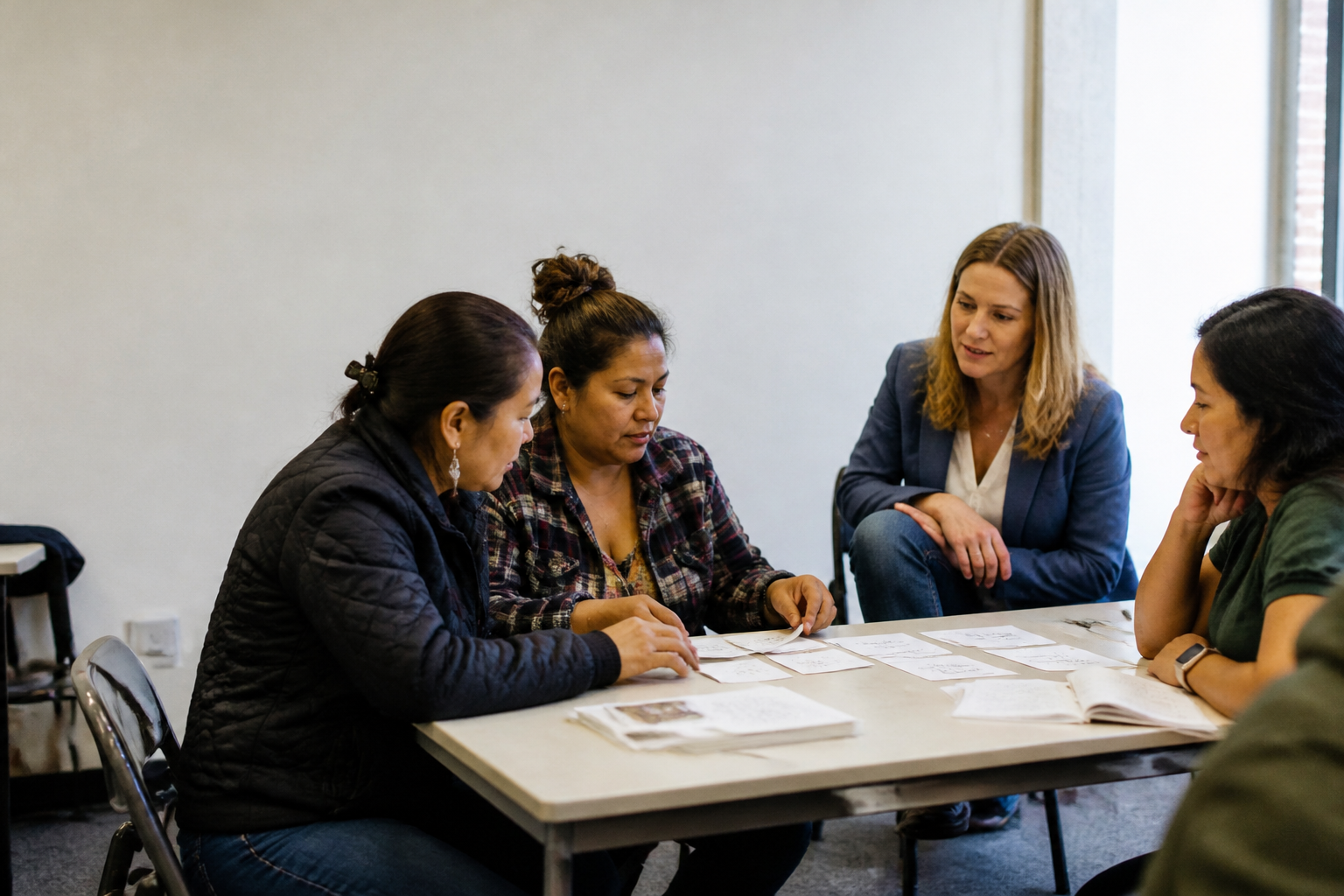
South Carolina's ESOL add-on requires 15 semester hours and a Praxis ESOL score, yet only a few in-state schools offer a full TESOL-focused master's. For a teacher watching more multilingual learners fill the room, or a career-changer aiming at that work, the choice is narrower than the national market suggests.
Tuition runs from about $14,000 at USC Upstate to well above that at Furman, so format, cost, and fit with certification matter more than brand name.
The state's three options differ more in schedule and price than in subject matter.
Key Points
- USC Upstate charges in-state teachers $362 per credit for online TESOL.
- South Carolina's ESOL add-on requires 15 credit hours and 15 practicum hours.
- Furman University requires official GRE scores for 2027 admission.
Top-Ranked Master's in TESOL Programs in South Carolina
These three South Carolina TESOL master's programs were weighed on what they cost, how working teachers can fit them into a school-year schedule, and how well they connect to the state's ESOL endorsement and add-on certification pathways. Furman stands out for district-connected endorsement work, while the College of Charleston and USC Upstate give practicing educators flexible online and cohort-based routes.
Furman University
#1Greenville, SC · ~$15,000/yr (est.)
Best for: Classroom teachers seeking South Carolina ESOL endorsement
Furman's 30-credit M.A.Ed. in TESOL is a two-year route for educators who want to pair research-based multilingual-learner instruction with action research and community fieldwork. The program is built around South Carolina school-district partnerships that support TESOL endorsement and add-on certification, and the university's education department brings more than a century of teacher preparation. It suits certified South Carolina teachers who want a schedule that does not interrupt a current teaching job.
- 30 credit hours in a two-year format
- Blends research-based ML instruction with action research and community fieldwork
- Builds toward South Carolina TESOL endorsement and add-on certification
- Education department has more than 100 years of teacher preparation
- Designed to be completed without interrupting a teaching career
College of Charleston
#2Charleston, SC · $16,000 – $21,000/yr (est.)
Best for: Working professionals wanting part-time graduate flexibility
College of Charleston's M.Ed. in Languages with Multilingual Learners/ESOL emphasis is built for working professionals who need flexible scheduling, with full-time or part-time options and multiple start dates. The curriculum covers linguistics, second language acquisition, cross-cultural competencies, and technology, and ends in a capstone teaching portfolio aligned with TESOL and ACTFL standards. It is a good match for educators in the Lowcountry or anywhere in the state who prefer a flexible pathway to PK-12 add-on certification.
- Fully online with full-time or part-time enrollment
- Three start terms per year: fall, spring, and summer
- Six credit hours of approved electives plus 50 field experience hours
- Capstone teaching portfolio aligned with TESOL and ACTFL standards
- Two concentrations: Spanish and Multilingual Learners/ESOL
- Minimum 2.5 GPA and two references for admission
University of South Carolina-Upstate
#3Spartanburg, SC · ~$14,000/yr (est.)
Best for: Certified educators in Upstate school districts
USC Upstate's 36-credit TESOL concentration within the applied learning and instruction master's is designed for practicing educators who already hold a South Carolina teaching certificate. Its accelerated eight-week courses, no thesis or capstone requirement, and district partnership cohorts make it one of the most practical regional options for Upstate teachers. Strong in-state pricing and transfer credit flexibility further lower the total cost.
- 36 credit hours in 12 accelerated eight-week courses
- No entrance exam required; valid teaching certificate expected
- No thesis or capstone required
- $362 per credit in-state; total around $13,032
- Practicum can be completed at a current workplace
- District partnership cohorts may have different schedules and tuition
Cost & outcomes by school
Federal data for the highest-earning TESOL & Multilingual Learners programs, independent of the ranking above. Earnings are this field's master's graduates four years after completing, where the Scorecard reports them.
| School | Earnings | Tuition / yr | Debt | Grads/yr | Format |
|---|---|---|---|---|---|
| University of South Carolina-Upstate SC | — | $14,114 | — | — | Online |
| Furman University SC | — | $14,796 | — | 1 | Hybrid |
| College of Charleston SC | — | $16,300 | — | — | Online |
Sources: U.S. Department of Education. Tuition and graduates: IPEDS. Earnings and debt: College Scorecard, this field's master's graduates; a dash means no figure is reported.
Online and Hybrid Master's in TESOL Options for Working South Carolina Teachers
Can you finish a master's in TESOL in South Carolina without leaving your classroom job? It depends on the school, and the formats differ more than the program names suggest.
USC Upstate is the clearest case. Its M.Ed. in Applied Learning and Instruction, TESOL concentration, is labeled fully online, runs about two years and 36 credit hours, and uses an accelerated eight-week course format. The required practicum (ENSL U760, 3 credits) is in person, but the program says it may be completed at your current workplace.
College of Charleston's M.Ed. in Languages, Multilingual Learners/ESOL emphasis, is listed among online TESOL master's programs for working professionals, with part-time options and fall, spring, or summer starts. Its listing mentions 50 hours of field experience. Confirm the current format with the department, since we could not verify it on an official program page.
Furman's M.A.Ed. in TESOL (30 credits, typically two years) is listed as campus-based. Its page says you can earn the degree without interrupting a teaching career, but it does not publish meeting times or a cohort structure. Coursework centers on action research in your own classroom rather than a separate practicum.
For a full-time teacher, USC Upstate is the most clearly flexible option; verify schedules with the other two.
Which South Carolina TESOL Master's Programs Waive or Skip the GRE?
Applicants comparing no GRE TESOL master's programs often find that the published policies are less clear than the program marketing suggests.
- Furman University (M.A.Ed. in TESOL): The catalog says official GRE scores should be sent from ETS. It does not establish a waiver or a test-optional policy. No minimum undergraduate GPA is stated, though continuing students need a 3.0 cumulative average. A South Carolina teaching certificate is not universally required, but applicants without one must document prior classroom experience. Catalog deadlines are March 15 (fall) and August 15 (spring); confirm the current year.
- University of South Carolina-Upstate (online M.Ed., TESOL specialization): The program flyer lists the GRE and says it may be waived with a 3.0 undergraduate GPA.1 The current admissions page does not mention it, so ask the program directly. A valid teaching certificate is required. The deadline is December 28, 2026, for a January 11, 2027 start.
- College of Charleston: No admissions page for a TESOL master's was found, so no GRE, GPA, or deadline policy can be reported.
Certified teachers face the simplest path. Career-changers should confirm whether a program offers initial licensure before applying.
Related Articles
What a Master's in TESOL Costs in South Carolina
The table below lists the programs by net price after aid, lowest first. USC Upstate publishes $362 per credit in-state and $572 out-of-state for its 36-credit online TESOL program. Furman's 30-credit M.A.Ed. has been reported around $475 per credit, roughly $14,250 total, but that figure is secondary and may not match official billing. Net price is an institution-wide average after aid, not a quote for a specific graduate student. Cohort and district partnership discounts are not published as fixed dollar amounts; Upstate notes district partnerships can change tuition and scheduling.
| School | Program | In-state graduate tuition | Out-of-state graduate tuition | Net price after aid |
|---|---|---|---|---|
| University of South Carolina-Upstate | M.Ed. in Applied Learning and Instruction, TESOL | $14,114 | $30,140 | $13,557 |
| College of Charleston | M.Ed. in Languages, Multilingual Learners/ESOL | $16,300 | $21,412 | $18,960 |
| Furman University | M.A.Ed. in TESOL | $14,796 | $14,796 | $30,308 |
South Carolina ESOL Add-on Certification
Graduate Earnings and Debt for South Carolina TESOL Master's Programs
What will a Master's in TESOL actually pay back in South Carolina? Federal program-level earnings and debt payment figures aren't reported for every school, so a payback estimate has to rest on the cost side, which is knowable.
Cohort size matters too. Furman's federal record counts a single completion in the 2022 reporting year, so any median from a group that small would say little about a typical graduate. These are boutique programs, and outcomes depend on the individual and the district.
- Furman University: About $14,796 in program tuition.
- College of Charleston: $16,300 in-state, $21,412 out-of-state.
- University of South Carolina-Upstate: $13,032 total for 36 credits at $362 each.
Because teachers typically stay employed while enrolled, a lower sticker price at affordable TESOL master's programs translates directly into less borrowing and a faster return.
How These South Carolina TESOL Master's Programs Earned Their Spots
The rankings weigh graduate tuition and net price, each institution's overall graduation rate, how flexibly a program can be completed, and College Scorecard outcomes where they exist. Figures come from IPEDS and the College Scorecard, with institution-level data from the 2024 snapshot. Small cohorts mean some program-level earnings and debt numbers are not published, so treat those gaps as unknowns, not as weak results.
On accreditation, Furman holds CAEP accreditation running Spring 2021 through Fall 2028. USC Upstate's CAEP accreditation covers initial-certification programs from Spring 2026 through Fall 2032. Neither school's TESOL master's carries its own separate SCDE listing in the sources reviewed, and College of Charleston's educator-preparation status could not be confirmed. Regional SACSCOC status was also not verified here, so confirm it and current program approval directly with each school and SCDE before applying.
Master's in TESOL in South Carolina: Common Questions
Prospective students often ask how South Carolina TESOL programs handle cost, admission, transfer credit, and certification. These answers stick to what published policies show, and they point to the right office when a rule varies by district or school.
Which South Carolina university has the cheapest master's in TESOL?
Do I need a teaching certificate to enroll in a TESOL master's program in South Carolina?
What South Carolina TESOL master's programs are fully online?
Does a TESOL certificate count toward a master's degree in South Carolina?
How long does it take to earn a master's in TESOL in South Carolina?
What is the difference between ESOL certification and a TESOL master's in South Carolina?
Can teachers from outside South Carolina enroll in an SC TESOL master's and use it in their home state?
Does a TESOL master's move a teacher up the South Carolina salary schedule?
Compare TESOL & Multilingual Learners programs on the data that matters
Explore more Education & Teaching specializations or browse every graduate field.
All Education & Teaching programs