Best Direct-Entry MSN Programs in Ohio
Compare 7 accredited Direct Entry MSN (MENP) programs in Ohio, with graduate earnings, cost, debt, and completion data from IPEDS and the U.S. College Scorecard.
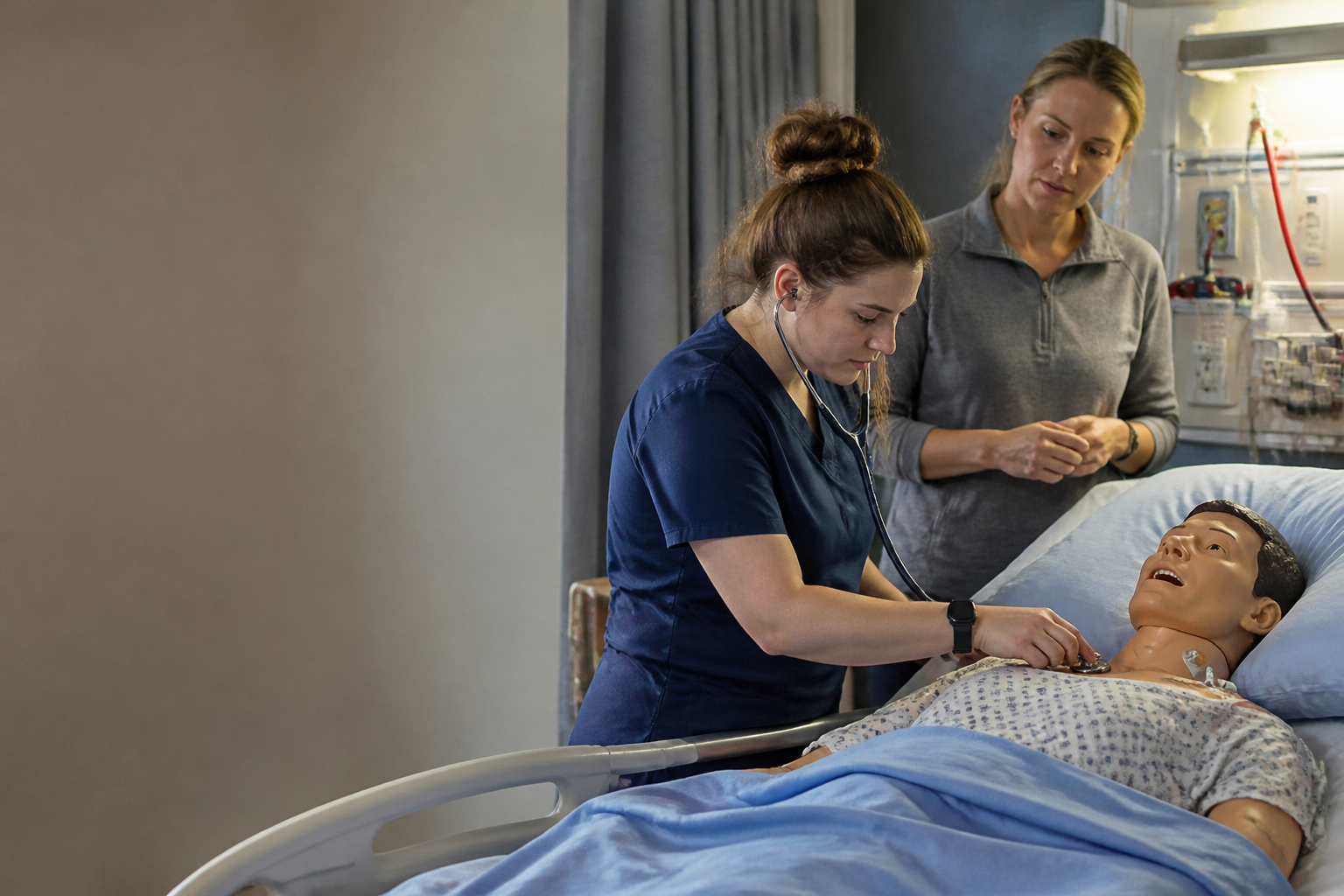
Direct-entry nursing is a common route for career changers with a non-nursing bachelor's who want an RN license and a master's in one accelerated sequence. Ohio programs run from about 20 months at Xavier and Lourdes to three years for the OSU direct-entry MSN, with in-state tuition from $12,367 at Lourdes to $53,980 at Case Western Reserve.
That spread is the real tension. Graduates still sit for the NCLEX-RN before practicing, so price, length, and prerequisites matter more than the diploma's name.
Key Points
- Lourdes lists Ohio's lowest graduate in-state tuition here at $12,367; Case Western Reserve tops out at $53,980.
- Mount St. Joseph and Lourdes pair online coursework with campus labs, so no program is fully online.
- Graduates become eligible for the NCLEX-RN only after finishing a Board-approved program.
Ohio's Top Direct-Entry Master's in Nursing Programs, Ranked
This list is built around what a career changer pays and how often students finish. Graduation rates shown are each school's institution-wide figure, not the nursing program's own. NCLEX-RN pass rates appear only where a current, verifiable first-time figure exists, so some cards omit one.
Ohio State University
#1Columbus, OH · ~$14,000/yr (est.)
Best for: Career changers aiming at advanced practice
Ohio State's Graduate Entry MSN in Columbus is a campus-based, three-year path that combines pre-licensure nursing with one of seven advanced practice specialties. Graduate tuition is listed at $12,890 in-state and $41,729 out-of-state per year, and the university's institution-wide graduation rate is about 88%. Ohio reporting shows a 100% first-time NCLEX-RN pass rate for 2025, though the test-taker count was not established. The program is MSN-only (no BSN along the way), and students must live in the Columbus area.
- 3-year, 96 credit hour program, campus-based
- Seven specialties, including family, pediatric, psychiatric mental health and nurse-midwifery
- Specialty chosen at application
- Summer start; 3.0 GPA minimum
- Three recommendation letters and a recorded online video interview
- Prerequisite courses required
- Simulation, extended reality and AI-enhanced learning
- Students must live in the Columbus area
Case Western Reserve University
#2Cleveland, OH · ~$54,000/yr (est.)
Best for: Aspiring nurses wanting Cleveland health-system rotations
Case Western's Master of Nursing in Cleveland is a four-semester, campus-based direct-entry path with clinical care starting in the first week. Graduate tuition is listed at $53,930 per year for in-state and out-of-state students alike, the highest on this list, and the university's institution-wide graduation rate is about 87%. The school reports a 100% first-time NCLEX pass rate for 2023, and the program has Ohio Board of Nursing approval through 2026. Rotations run through Cleveland Clinic, University Hospitals and MetroHealth.
- 4-semester, 72 credit hour program, campus-based
- Rotations at Cleveland Clinic, University Hospitals and MetroHealth
- Clinical care begins in the first week
- Interprofessional learning with medical, dental and PA students
- Admitted students are automatically accepted into the MSN program
- Full Ohio Board of Nursing approval through 2026
- $75 application fee
University of Cincinnati
#3Cincinnati, OH · ~$15,000/yr (est.)
Best for: In-state students watching tuition
The University of Cincinnati's Accelerated Direct-Entry MSN is a five-semester campus program with CCNE accreditation. Graduate tuition is listed at $13,224 in-state and $24,996 out-of-state per year, and the university's institution-wide graduation rate is about 75%. Ohio Board reporting shows a 92.31% first-time NCLEX-RN pass rate for the August 2025 testing period (26 candidates, 24 passed). Another source reports a slightly lower 2025 figure, so confirm the current number with the school.
- CCNE accredited
- 5-semester pathway for non-nursing bachelor's holders
- Four courses count toward a specialty MSN
- Clinical placements at a leading pediatric hospital
- Experience at the region's only Level I Trauma Center
- Immersive simulation learning
Xavier University
#4Cincinnati, OH · ~$19,000/yr (est.)
Xavier's MIDAS Direct Entry MSN is a 20-month, full-time, in-person program in Cincinnati with rolling admissions and a fall start. Graduate tuition is listed at $19,190 per year for all students, and the university's institution-wide graduation rate is about 69%. The program is CCNE accredited and prepares graduates for roles such as Clinical Nurse Leader. The school advertises a perfect NCLEX record, but we could not verify a current first-time rate, so none is shown.
- CCNE accredited
- 20-month, full-time, campus-based program
- No BSN required; bachelor's degree and prerequisites with a B or better
- Rolling admissions with a fall start
- Tuition of $739 per credit for 2026-27 (verify with Xavier)
- Over 30 clinical partners in Cincinnati
- Clinical Nurse Leader eligible
University of Toledo
#5Toledo, OH · $18,000 – $29,000/yr (est.)
The University of Toledo's Graduate-Entry MSN offers both full-time and part-time study, which is uncommon among Ohio direct-entry programs. Graduate tuition is listed at $15,661 in-state and $27,482 out-of-state per year, and the university's institution-wide graduation rate is about 57%. The school states CCNE accreditation, though we could not verify it independently. Current first-time NCLEX figures were not available, so none is shown. Clinicals take place at Toledo hospitals including UToledo Medical Center, ProMedica Toledo Hospital and Mercy St. Vincent.
- Full-time and part-time options
- School states CCNE accreditation
- Rotations in ICU, CCU, emergency, pediatric and geriatric settings
- iSpace virtual environment and high-fidelity simulators
- Interprofessional learning with 12 health programs
- Global health service trips to Guatemala, Haiti and Honduras
Mount St. Joseph University
#6Cincinnati, OH · ~$14,000/yr (est.)
Mount St. Joseph's MSN-MAGELIN in Cincinnati is a hybrid, CCNE-accredited, Ohio Board-approved program with a four-semester accelerated track and an eight-semester part-time option. Graduate tuition is listed at $13,885 per year for all students, and the university's institution-wide graduation rate is about 56%. Ohio reporting shows a 95.1% first-time NCLEX-RN pass rate for 2025, though the test-taker count was not established. The part-time track suits working students.
- CCNE accredited and Ohio Board of Nursing approved
- Hybrid format
- Accelerated four-semester track
- Part-time eight-semester option at 6 to 9 credits per semester
- Tuition of $700 per credit hour (verify with the school)
- High-fidelity simulation labs
- Prerequisite courses required
Lourdes University
#7Sylvania, OH · ~$12,000/yr (est.)
Lourdes University's Direct Entry MSN in Sylvania is a 20-month hybrid program that blends campus classes with some online coursework. Graduate tuition is listed at $11,597 per year for all students, the lowest on this list, and the university's institution-wide graduation rate is about 32%, the lowest here. The Ohio-reported first-time NCLEX-RN pass rate was 80.95% for 2024, the weakest recent figure among programs with current data. Accreditation status was not confirmed in our data, so check it before applying.
- 66 credit hours over about 20 months
- Hybrid online and campus coursework
- 3.0 GPA minimum and two recommendation letters
- Prerequisite courses required
- Clinicals supervised by Lourdes faculty
- Two skills and simulation labs, including pregnancy and birth scenarios
- Path to a DNP or Ph.D.
Cost & outcomes by school
Federal data for the highest-earning Direct Entry MSN (MENP) programs, independent of the ranking above. Earnings are this field's master's graduates four years after completing, where the Scorecard reports them.
| School | Earnings | Tuition / yr | Debt | Grads/yr | Format |
|---|---|---|---|---|---|
| Case Western Reserve University OH | $126,688 | $53,980 | $124,668 | 70 | Campus |
| University of Cincinnati OH | $114,994 | $14,902 | $54,666 | 409 | Campus |
| Ohio State University OH | $109,662 | $13,901 | $49,134 | 214 | Campus |
| University of Toledo OH | $103,865 | $17,605 | $49,000 | 72 | Campus |
| Xavier University OH | $100,121 | $19,218 | $41,000 | 28 | Campus |
| Mount St. Joseph University OH | $82,379 | $14,495 | $47,495 | 27 | Hybrid |
| Lourdes University OH | — | $12,367 | $109,952 | 20 | Hybrid |
Sources: U.S. Department of Education. Tuition and graduates: IPEDS. Earnings and debt: College Scorecard, this field's master's graduates; a dash means no figure is reported.
Cost, debt & payoff
Median earnings of this field's master's graduates (4 yrs after completing) vs. their median federal loan debt · U.S. College Scorecard
Across these programs the median graduate earns about $106,764 and finishes with roughly $49,134 in debt — a ratio that clears a common rule of thumb (keep debt below first-year salary). Tuition and debt vary widely school to school, so check the per-school figures in the table above before you shortlist.
Online and Hybrid Direct-Entry Master's Options for Ohio Residents
Fully online and partly online are very different things in direct-entry nursing, and only the second actually exists. Mount St. Joseph's MAGELIN and Lourdes University's Direct Entry MSN are the hybrid options here, pairing online coursework with campus labs; the rest, including Ohio State, Case Western, Cincinnati, Xavier1, and Toledo, run as campus programs.
No direct-entry master's can be completed from a laptop. Skills labs, simulation, and supervised clinical hours all happen in person, and schools structure them differently. Case Western rotates students through Cleveland Clinic, University Hospitals, and MetroHealth. Toledo uses ProMedica Toledo Hospital. Lourdes states that its clinicals are supervised by its own faculty. Ohio State notes preceptors in and outside Ohio but expects students to live in the Columbus area. Most schools do not publish a blanket placement guarantee, so ask admissions directly how much of the arranging falls to you.
If you are weighing an out-of-state online program, confirm in writing that it places students at Ohio clinical sites and holds Ohio Board of Nursing approval before you enroll.
Which Ohio Direct-Entry MSN Programs Skip the GRE?
The schools with published details share a core of anatomy and physiology, microbiology, and statistics, and Ohio State and Mount St. Joseph both list a 3.0 minimum GPA. Xavier requires at least a B in each prerequisite and sets a five-year window for science courses. Mount St. Joseph requires a C or better and applies the five-year window to anatomy and physiology and pathophysiology. Where an admissions page does not state a GRE or TEAS policy, the table says so instead of guessing, so confirm with each admissions office before you apply.
| School | GRE Policy | TEAS or Other Test | Key Prerequisites |
|---|---|---|---|
| Ohio State University | No published policy | Not listed | Human Anatomy, Human Physiology, Nutrition, Microbiology, Pharmacology; at least 3.0 GPA |
| Xavier University (MIDAS) | No published policy | Not listed | Human Anatomy and Physiology I and II (lecture and lab), Microbiology lecture, Statistics; B or better; science courses within five years, older statistics evaluated individually |
| Mount St. Joseph University (MAGELIN) | No published policy | Not listed | Human Anatomy and Physiology I and II, Microbiology, Pathophysiology, Introduction to Statistics, Nutrition; C or better; minimum 3.0 GPA; Anatomy and Physiology and Pathophysiology within five years of entry |
Related Articles
What a Direct-Entry Master's Really Costs in Ohio
What does a direct-entry MSN actually cost in Ohio after fees and aid?
Lourdes University lists the lowest graduate in-state tuition among the Master's Programs in Ohio ranked here at $12,367, while Case Western Reserve University sits at the opposite end at $53,980. The gap narrows only slightly after aid: Lourdes' institution-wide net price averages $23,206, versus $41,190 at Case Western. Because that figure averages net price across all students after grant aid, treat it as an approximate guide for graduate nursing students.
Base tuition rarely captures the full total cost of a master's degree. Mount St. Joseph University adds a $1,250 annual graduate fee to its $700 per-credit tuition, while Xavier and Lourdes price at $722 and $730 per credit. Uniforms, background checks, clinical and lab fees, and books routinely add several thousand dollars to the total. With program lengths ranging from 20 months at Xavier and Lourdes to 36 months at Ohio State, those per-credit and fee differences compound across the whole degree.
Program-level debt data adds another layer. Ohio State's direct-entry graduates show a median debt of $49,134, with a 10-year repayment estimate of about $559 per month. That figure is specific to the program, not an institution-wide average.
Getting Licensed as an RN in Ohio After a Direct-Entry MSN
Application Deadlines and Cohort Start Dates
A program with two start dates gives you a second chance each year. A program with one start date does not. Cincinnati's accelerated direct-entry pathway is in the first group. It accepts applications through NursingCAS, and its Summer 2027 cohort opens applications September 1, 2026, closes them February 15, 2027,1 and begins classes May 10, 2027.2 A Spring 2028 cohort follows, with a September 1, 2027 deadline1 and a January 10, 2028 start.2
Many direct-entry programs start only one cohort a year, so missing a deadline often means waiting 12 months. Ohio State, Case Western, Xavier, Toledo, Mount St. Joseph and Lourdes set their own dates, so check each school's current cycle directly.
Whatever the school, apply through NursingCAS or its own portal several months early. Plan to finish every prerequisite before the deadline, not after it.
How These Ohio Programs Were Evaluated
Where do the numbers behind these Ohio rankings come from? Mostly from federal IPEDS and College Scorecard data: graduate tuition, average net price, graduation rates, and program-level earnings and debt wherever the government publishes them.
Two cautions apply. Graduation rates and net price cover the entire institution, not just the direct-entry nursing cohort, so treat them as context rather than a promise. NCLEX pass rates and admissions details, such as prerequisites and GRE policies, come from the Ohio Board of Nursing and each school's own pages.
Only ranked schools that offer a direct-entry master's for applicants without a nursing degree are included. All figures reflect the latest data available as of October 2026, and individual programs may have updated their terms since.
Direct-Entry Nursing Master's in Ohio: Your Questions Answered
These answers cover the questions applicants ask most about direct-entry nursing master's programs in Ohio. Confirm details with each school's admissions office before you apply.
Which Ohio direct-entry MSN program is the least expensive overall?
Can I complete a direct-entry MSN online if I live in Ohio?
Do all direct-entry MSN programs in Ohio qualify graduates to take the NCLEX-RN?
Which Ohio direct-entry MSN program has the highest NCLEX pass rate?
What prerequisites are required for Ohio direct-entry MSN programs?
How long does an accelerated direct-entry MSN take to finish in Ohio?
Can you work while enrolled in an accelerated direct-entry nursing master's?
Compare Direct Entry MSN (MENP) programs on the data that matters
Explore more Nursing specializations or browse every graduate field.
All Nursing programs