Best Adult-Gerontology Primary Care Nurse Practitioner (AG-PCNP) MSN Programs
Compare 140+ accredited Adult Gerontology Primary Care Nurse Practitioner programs at 120+ schools, with graduate earnings, cost, debt, and completion data from IPEDS and the U.S. College Scorecard.

Which AG-PCNP MSN programs are accredited, affordable, and likely to get you through the AANPCB or ANCC board exam on the first attempt? That is the working question for an RN who wants to manage hypertension, diabetes, and heart failure in adults and older adults in clinic settings.
The schools here teach in online, hybrid, and on-campus formats, and the price spread is wide. A public university's in-state rate can sit at a fraction of what private schools charge for the same credential.
Accreditation and certification eligibility are fixed requirements. Cost, clinical placement support, and format are where programs actually differ.
Key Points
- Published AG-PCNP MSN totals run roughly $38,300 to $51,700 in 2027.
- AANPCB and ANCC first-time pass rates are nearly identical.
- By 2034, adults 65 and older are projected to outnumber children under 18.
10 Top AG-PCNP MSN Schools, Ranked for 2027
The schools below combine rigorous clinical training with strong graduate outcomes, and they differ meaningfully in price, format, and support for working nurses. Whether you need online coursework, a direct-entry pathway, or a program that arranges your preceptors, this list surfaces the options worth comparing first.
University of Pennsylvania
#1Philadelphia, PA · ~$48,000/yr (est.)
Best for: Future NPs wanting cross-state clinical rotations
Penn's MSN in Adult Gerontology Primary Care blends advanced physiology, pharmacology, and assessment with clinical preceptorships in community clinics, private practices, VA facilities, and long-term care. The program offers full-time and part-time study, and students can pursue scholarships such as the Leonard A. Lauder Community Care Nurse Practitioner Program, which covers full tuition, or an Academic Practice Partnership discount. Its emphasis on care transitions across settings prepares NPs to follow patients through multiple levels of care.
- CCNE accredited
- 12 total credit hours
- Full-time and part-time options
- Starts summer, fall, or spring
- Clinical preceptorships with case studies
- Follow patients across care settings
- Focus on acute and chronic health management
Yale University
#2New Haven, CT · ~$50,000/yr (est.)
Best for: Nurses focused on age-friendly care models
Yale's AGPCNP specialty uses the 4M's framework (mentation, medication, mobility, and what matters most) to build age-friendly care. Students train in simulation labs and clinical placements at community health centers, internal medicine practices, and specialty clinics, with preceptors arranged by the school. The program offers full-time and part-time options and prepares graduates for national certification.
- CCNE accredited
- Full-time and part-time options
- Prepares for certification examination
- Simulation lab with standardized patients
- Clinical preceptors provided by school
- Focus on age-friendly health systems
- Small cohort sizes
Vanderbilt University
#3Nashville, TN · ~$58,000/yr (est.)
Best for: Nurses seeking subspecialty certificate options
Vanderbilt's AGPCNP program combines online coursework with in-person sessions and more than 500 supervised clinical hours. It features small classes, faculty with active practices, and optional subspecialty certificates in dermatology and cardiology, plus a dual AGPCNP/WHGRNP track. The program reports a 100% first-time certification pass rate and uses a clinical placement team to secure sites.
- CCNE accredited
- No entrance exam required
- Test optional
- 4-semester program
- 500 clinical hours
- 3.0 GPA minimum
- Subspecialty certificates in dermatology and cardiology
- Dual AGPCNP/WHGRNP program available
Duke University
#4Durham, NC · ~$67,000/yr (est.)
Duke's AGPCNP MSN blends flexible online coursework with at least 560 clinical hours at more than 2,000 partner sites worldwide. The program emphasizes health equity and chronic disease management and includes a VA partnership, rolling admissions, holistic review, and merit-based scholarships. It is designed so working nurses can train close to home without relocating.
- CCNE accredited
- 42 total credit hours
- 560 clinical hours
- 2,000+ clinical partner sites worldwide
- Focus on health equity
- Holistic admissions review
- VA partnership for veteran care
University of North Carolina at Chapel Hill
#5Chapel Hill, NC · ~$13,000/yr (est.)
UNC Chapel Hill's AGPCNP MSN is a distance-based online program with an optional oncology focus. It blends research, professional, and clinical cores with five clinical courses emphasizing advanced diagnostic reasoning across adolescence through end of life. As a public university, it offers a more affordable in-state path, and graduates are eligible for ANCC or AANP certification.
- Prepares for ANCC or AANP certification
- Distance-based online format
- Ranked #6 for MSN
- Five clinical courses
- Emphasizes diagnostic reasoning
- Care from adolescence through end of life
Boston College
#6Chestnut Hill, MA · ~$38,000/yr (est.)
Boston College's Nurse Practitioner track with an Adult-Gerontology Primary Care concentration offers four entry pathways, including a direct entry option for non-nursing bachelor's degree holders. Clinical rotations take place at major Boston hospitals such as Boston Children's and Brigham and Women's. The program emphasizes patient histories, diagnostic testing, prescribing, and health education.
- CCNE accredited
- 5 concentration options
- No entrance exam required
- Test optional
- 2 letters of recommendation
- Prerequisite courses required
- Four routes to a master's degree
- Clinical placements at Boston Children's Hospital
University of Michigan
#7Ann Arbor, MI · $29,000 – $58,000/yr (est.)
Michigan's MSN offers an Adult-Gerontology Primary Care Nurse Practitioner track with clinical site placement support and expert preceptor guidance. Students can complete the degree in two or three years, accommodating different timelines. The School of Nursing emphasizes both rigorous theory and hands-on clinical experience, with faculty mentorship throughout.
- CCNE accredited
- 6 concentration options
- Complete degree in two or three years
- Clinical site placement opportunities
- Guided by expert preceptors
- Expert faculty and mentorship programs
Villanova University
#8Villanova, PA · $20,000 – $25,000/yr (est.)
Villanova's Adult-Gerontology Nurse Practitioner track blends online core courses with in-person clinical experiences in Pennsylvania, New Jersey, and Delaware. The 47-credit program prepares students for primary care across the lifespan and offers a seamless pathway into the DNP. Clinical placements are arranged with NP preceptors in diverse primary care settings.
- CCNE accredited
- 47 total credit hours
- Core courses offered online
- Clinical courses in-person
- Clinical placement in PA, NJ, DE
- Option to continue in DNP program
Emory University
#9Atlanta, GA · ~$49,000/yr (est.)
Emory's AGPCNP MSN combines distance-based online coursework with in-person intensives and more than 750 clinical hours across hospitals, community health centers, and VA facilities. The program offers full-time four-semester and part-time options with fall or spring starts, and requires one year of RN experience. Applicants must hold an unencumbered Georgia RN license, and military benefits are accepted.
- CCNE accredited
- 4-semester program
- Full-time and part-time options
- Starts fall or spring
- 750 clinical hours
- Work experience required
- $50 application fee
- Military benefits accepted
New York University
#10New York, NY · ~$43,000/yr (est.)
NYU's Adult-Gerontology Primary Care Nurse Practitioner MS is a 51-credit program for registered nurses with a BS in nursing or a non-nursing bachelor's degree. It requires at least one year of full-time clinical RN experience and undergraduate statistics and research courses. Students benefit from small seminars, individualized advisement, and faculty-arranged clinical placements at major New York City medical centers such as NYU Langone and Memorial Sloan Kettering.
- CCNE accredited
- 51 total credit hours
- 3.0 GPA minimum
- 2 letters of recommendation
- Work experience required
- Prerequisite courses required
- $85 application fee
- Military benefits accepted
Cost & outcomes by school
Federal data for the highest-earning Adult Gerontology Primary Care Nurse Practitioner programs, independent of the ranking above. Earnings are this field's master's graduates four years after completing, where the Scorecard reports them.
| School | Earnings | Tuition / yr | Debt | Grads/yr | Format |
|---|---|---|---|---|---|
| University of North Dakota ND | $244,209 | $13,677 | $51,250 | 130 | Online |
| San Diego State University CA | $165,564 | $10,252 | — | 31 | Campus |
| St. Joseph's University-New York NY | $153,908 | $23,278 | $43,045 | 26 | Campus |
| Molloy University NY | $148,040 | $27,520 | $45,750 | 104 | Campus |
| University of Akron OH | $146,142 | $10,125 | $41,000 | 59 | Campus |
| Fairleigh Dickinson University-Metropolitan Campus NJ | $145,105 | $19,068 | $40,432 | 57 | Hybrid |
| Fairleigh Dickinson University NJ | $145,105 | $25,628 | $40,432 | 8 | Online |
| CUNY Hunter College NY | $142,731 | $11,398 | $20,500 | 143 | Campus |
| Felician University NJ | $139,444 | $22,520 | $35,042 | 17 | Online |
| University of California-Los Angeles CA | $136,869 | $14,476 | $50,511 | 151 | Campus |
| West Coast University-Anaheim-Orange County CA | $136,520 | $16,178 | $35,570 | 591 | Online |
| Russell Sage College NY | $135,279 | $13,240 | $43,307 | 44 | Campus |
Sources: U.S. Department of Education. Tuition and graduates: IPEDS. Earnings and debt: College Scorecard, this field's master's graduates; a dash means no figure is reported.
Cost, debt & payoff
Median earnings of this field's master's graduates (4 yrs after completing) vs. their median federal loan debt · U.S. College Scorecard
Across these programs the median graduate earns about $121,815 and finishes with roughly $48,355 in debt — a ratio that clears a common rule of thumb (keep debt below first-year salary). Tuition and debt vary widely school to school, so check the per-school figures in the table above before you shortlist.
Tuition, Fees, and the Full Price of an AG-PCNP MSN
Published totals for AG-PCNP MSN programs that state one land roughly between $38,300 and $51,700 in 2026. Capella's online track lists 64 quarter credits at $595 each (about $38,080 in tuition) and a total program cost of about $38,317, assuming no transfer credit and 36 months to finish. Chamberlain's online AG-PCNP runs about $47,100 at $760 per credit over 47 credits, a July 2026 figure that bundles tuition, books, and fees. Rasmussen's approximate tuition-and-fee total is $51,680.1 These are not strictly comparable, but they bracket what you should plan for.
Annual Tuition Is Not Program Cost
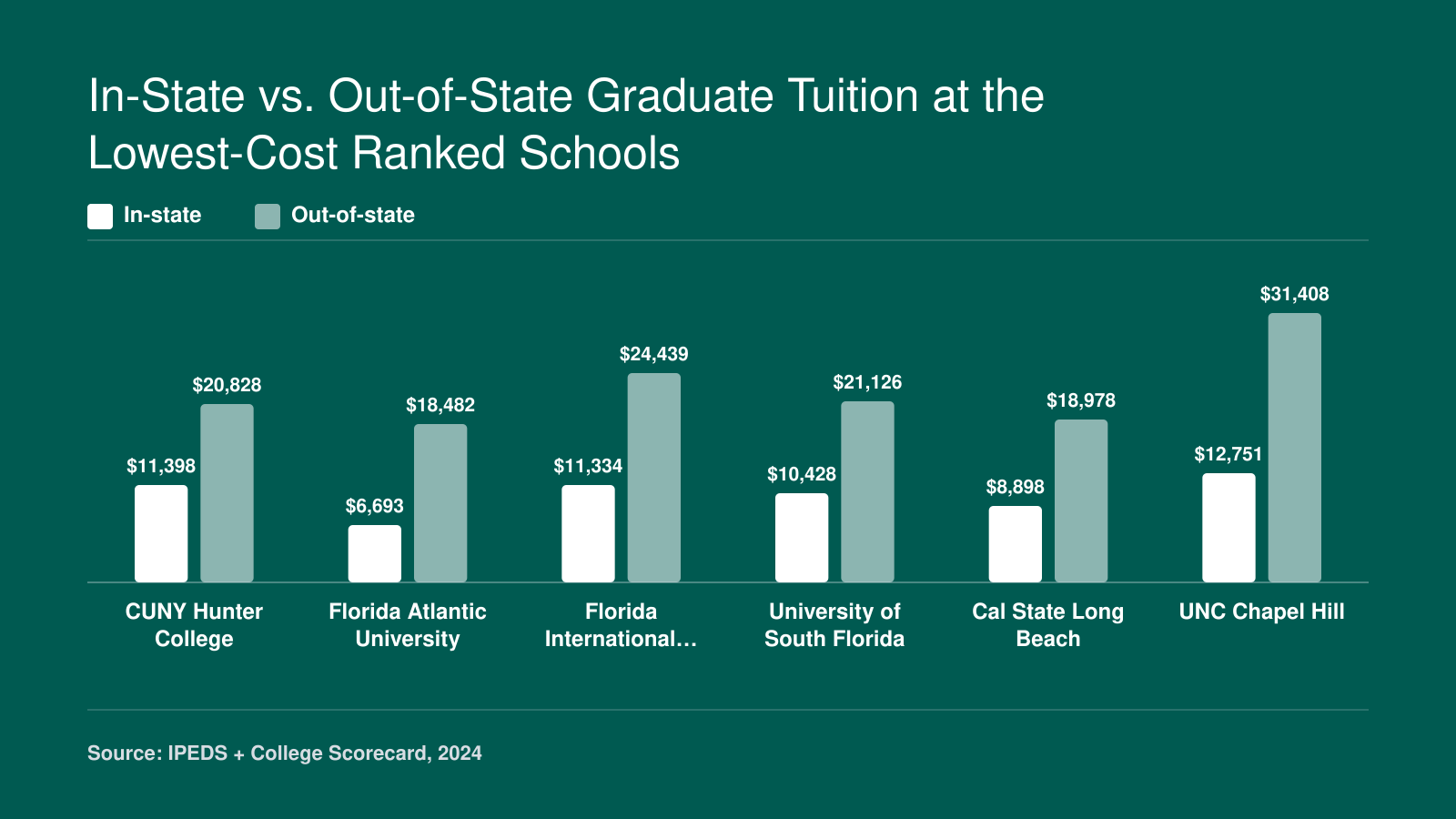
Public sticker prices look small because they are yearly. Florida Atlantic lists graduate tuition near $6,693 in-state and $18,482 out-of-state, but its program spans 52 credits over eight semesters. Hunter requires 42 credits, FIU 45, USF 57. The honest math is per-credit rate times total credits, not one year's tuition. University of Delaware's online MSN, at $913 per credit across 47 credits, works out to roughly $42,911 in tuition alone.
Fees the Sticker Price Hides
- Clinical and program fees: Florida Southern's AGPCNP MSN charges $680 per credit plus a $550-per-semester program fee covering clinical placement, which the college may adjust.
- Technology and compliance: Expect a per-term technology charge (Florida Southern's runs $25 to $100), a background check, and a CastleBranch or similar tracking package (about $224 there, roughly $34 at Capella).
- Specialty surcharges: Chamberlain adds an APRN fee of $6,750 and a $3,000 student services fee, and notes other clinical fees vary by state.
- Travel: Hybrid programs bill nothing for intensives, but you pay the airfare and hotel.
Residency Rules and How You Will Pay
Some public universities charge online students outside the state the in-state rate or a flat e-tuition price, so confirm before you cross a school off. Online discounts exist elsewhere too: Drexel's online rate is $1,169 per credit against $1,298. Finally, net price is an institution-wide average skewed by undergraduates. Graduate students rarely see grants and typically finance with federal Direct Unsubsidized and Grad PLUS loans.
In-State vs. Out-of-State Graduate Tuition at the Lowest-Cost Ranked Schools
These bars show annual graduate tuition and fees, not total program cost, so multiply by the length of your program and add clinical and living expenses. Residency matters a lot at public schools: the gap runs from about $9,400 a year at Hunter College to nearly $18,700 at UNC Chapel Hill. The two online programs here, FIU and UNC, do not narrow the gap in these figures, so ask whether your online track bills a flat rate regardless of residency.
Clinical Hours and Who Finds Your Preceptors
Who arranges your clinical placements matters as much as how many hours you log, and programs differ sharply on both.
How Many Hours, and Where
National standards for nurse practitioner programs from NONPF and AACN require supervised, in-person direct patient care. They do not set one universal hour count for AG-PCNP programs. In practice, most accelerated adult gerontology primary care nurse practitioner MSN programs require roughly 500 to 600 supervised hours. Published totals run from 504 at the University of Cincinnati to 765 at North Park University, with Xavier and Franklin at 600, Walden at 640, and Capella at 750. Chamberlain lists 625 hours in one description and 750 in another, so confirm the current figure directly.
Rotations stay within the adolescent-through-older-adult population: internal medicine, geriatrics, women's health for adults, long-term care, and outpatient specialty clinics. Pediatrics falls outside the AG-PCNP scope entirely, unlike family nurse practitioner programs.
Arranged Placements vs. Finding Your Own
Online students often ask whether any program will arrange clinicals for them. A few offer real support:
- Herzing University: Clinical placement is pledged by the university for its online AG-PCNP track.
- Wilkes University: A Placement Team researches nearby sites, secures preceptors, and tracks hours. Students stay involved, sites can be up to 125 miles away, and this is assistance rather than an unconditional guarantee.
- Chamberlain University: Students are encouraged to find their own preceptors, but its Practicum Commitment promises one preceptor or site within 100 miles if challenges arise.
At the other end, Capella University students secure their own preceptors with no formal guarantee, and the University of Cincinnati does not guarantee placement. George Washington University, a campus-based option, also encourages students to find their own.
Questions to Ask Before You Enroll
Self-placement can stall your progress if local clinicians are already saturated with students. Before committing, ask admissions:
- Are there placement fees beyond tuition?
- How far might I travel for a rotation?
- What happens if a preceptor withdraws mid-term?
AANPCB vs. ANCC: Earning the AG-PCNP Credential and Reading Pass Rates
Two national certifying bodies credential AG-PCNP graduates, and their first-time pass rates are nearly identical.
Which certification do AG-PCNPs earn?
Graduates sit for either the AANPCB exam (A-GNP-C) or the ANCC exam (AGPCNP-BC). Both are computer-based, multiple-choice, and entry-level for patients from adolescence through older adulthood. They differ in build:
- AANPCB: 150 questions (135 scored, 15 unscored pretest) in 3 hours. Assessment carries 28% of the scored content, and AANPCB publishes an age breakdown that puts older adults at 40%.
- ANCC: 175 questions (150 scored, 25 unscored pretest) in 3.5 hours at a Prometric center. Passing requires a scaled score of 350 out of 500, and ANCC publishes no raw-score conversion.
What the national pass rates show
For 2025, first-time pass rates were 85% on the AANPCB exam (about 1,400 first-time test takers) and 85% on the ANCC exam (754 of 882). One AANPCB summary lists 82% for 1,333 first-time takers, and the available sources don't explain the difference. Read the AANPCB figure as 82% to 85%. Either way, both exams are passed by the large majority of first-time candidates.
Finding a program's own pass rate
Start with the program's website, then check your state board of nursing for published reports. If neither has the number, ask admissions directly, and ask which exam most graduates take.
Push for a multi-year average. A small cohort can swing sharply on a handful of failures, so a three- to five-year trend tells you far more than one good or bad year.
This matters because certification is required for APRN licensure in most states. A program whose graduates struggle on the exam can delay your start as a practicing NP.
By 2034, adults 65 and older are projected to outnumber children under 18 for the first time in U.S. history, according to the U.S. Census Bureau's Demographic Turning Points report. That shift means primary care clinicians trained in adult and older-adult care are becoming essential to the nation's health workforce.
Related Articles
Before You Apply: An AG-PCNP MSN Admission Checklist
Requirements vary by school, so confirm each program's current criteria before you build your application list. Most programs here share the same core.
- Active, unencumbered RN licensePrograms generally want a current U.S. RN license with no disciplinary action. Some require you to keep it through enrollment and to hold it in the state where you complete clinicals, so check that before you apply.
- Nursing degreeThe usual route is a BSN from a CCNE- or ACEN-accredited program. Some schools, such as the University of Texas at Arlington and West Coast University, offer RN-to-MSN routes for ADN or diploma holders. Direct entry for non-nurses is not standard.
- Minimum GPAA 3.0 is common, but schools measure it differently: overall, in nursing coursework, or over your last 60 credits. Texas Woman's University and the University of Texas at Arlington offer provisional or probationary admission for GPAs in the 2.5 to 2.99 range, with conditions.
- RN work experienceRequirements range from none stated to two years. One year is common, at the University of Cincinnati, Wilkes, La Salle, and West Coast. UTA asks for two years for unconditional admission. Adult or geriatric experience can strengthen your application.
- PrerequisitesUndergraduate statistics is the most consistent prerequisite. La Salle also lists nursing research, and Cincinnati looks for a 3.0 science GPA.
- Application materialsExpect essays, references, a resume, and possibly an interview.
- GREIt is rarely required. La Salle asks for GRE, MAT, or GMAT scores only below a 2.67 GPA, and UTA lists the GRE as an option for probationary applicants.
The National Paycheck for Nurse Practitioners
Adult Gerontology Primary Care Nurse Practitioner programs by state
Questions Prospective AG-PCNP Students Ask Most
These answers cover the choices applicants raise most often. Rules vary by school and by state, so confirm details with each program and your state board of nursing before you commit.
How is an AG-PCNP MSN different from a family nurse practitioner program?
Should I choose an AG-PCNP or an adult-gerontology acute care NP program if I want to work in a hospital?
Do I need a BSN to start an AG-PCNP MSN?
Can I add an FNP or acute care focus later?
Compare Adult Gerontology Primary Care Nurse Practitioner programs on the data that matters
Explore more Nursing specializations or browse every graduate field.
All Nursing programs