Best Direct-Entry MSN Programs in Wisconsin
Compare 9 accredited Direct Entry MSN (MENP) programs in Wisconsin, with graduate earnings, cost, debt, and completion data from IPEDS and the U.S. College Scorecard.
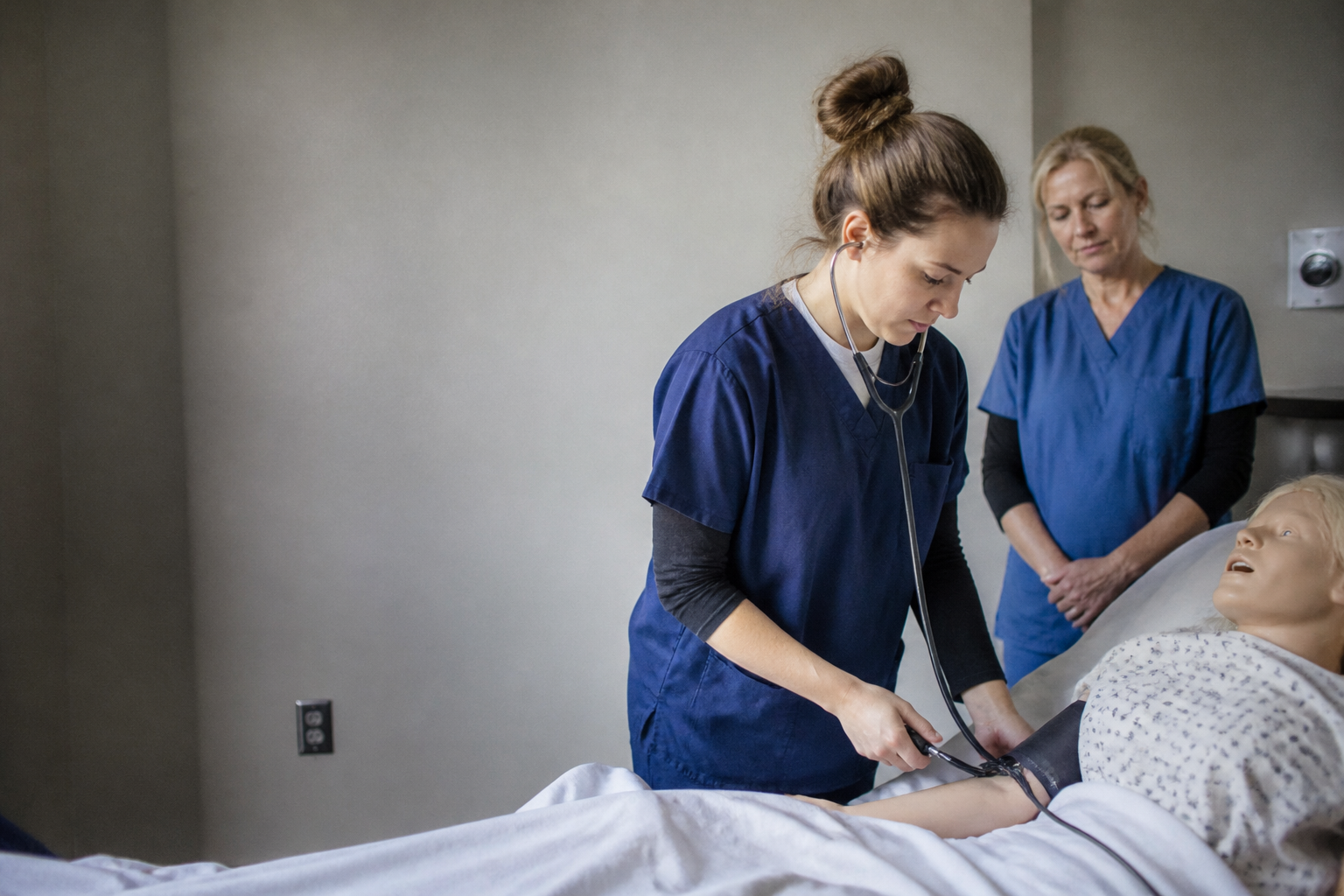
A bachelor's degree in any field can become an RN license and a master's in nursing in Wisconsin without a BSN first, one route among the Master's Programs in Wisconsin. Alverno College advertises an 18-month campus program. UWM's Direct Entry Master of Nursing runs two years across 61 credits.
Average net price at the schools ranked here runs from $15,014 at UWM to $36,201 at Concordia University-Wisconsin. Those are institution-wide averages after aid, not program quotes; the Most Affordable Direct-Entry MSN Programs ranking compares net price nationally.
No direct-entry MSN is fully online, including those marketed as online. Clinical rotations still happen in person, so geography limits your choices as much as price.
Key Points
- No direct-entry MSN here is fully online, so clinical rotations happen in person.
- Marquette does not require the GRE for its Direct Entry MSN.
- Graduates sit for the NCLEX-RN, with no extra Wisconsin certification required.
Ranked: Wisconsin's Top Direct-Entry Master's in Nursing Programs
For a career changer, the useful question is what you get for the money: how long you are in school, how much you take on in cost, and whether graduates pass the licensing exam. The nine programs below are listed in that spirit, from campus-based options in Milwaukee to online-heavy formats you can complete from elsewhere in the state. Pass rates shown are state-reported or school-reported 2025 figures for the specific program and may not be first-time-only, and graduation rates describe the whole institution, not the nursing program.
Marquette University
#1Milwaukee, WI · ~$25,000/yr (est.)
Best for: Career changers wanting multiple annual starts
Marquette is the strongest all-around option for career changers who want a well-established Milwaukee program with flexible delivery. The school reports a 93% NCLEX pass rate for 2025, and state data lists 212 candidates with 198 passing (93.4%), though that figure is not confirmed as first-time only. Clinicals run through health systems in Milwaukee, Southeast Wisconsin, and Northeast Illinois, and the school's overall graduation rate is 83%. The program is listed with ACEN and CCNE accreditation.
- As few as five semesters, with an eight-semester extended track
- Fall, spring, and summer start dates
- On-campus or hybrid-online delivery
- Requires a non-nursing bachelor's degree, prerequisites, and a 3.0 GPA
- High-fidelity simulation labs and clinical rotations across Southeast Wisconsin
- School-reported 93% NCLEX pass rate (2025)
Carroll University
#2Waukesha, WI · $10,000 – $15,000/yr (est.)
Best for: Hybrid learners in southeast Wisconsin
Carroll's hybrid Direct Entry MSN pairs online coursework with weekly in-person labs and clinical days, with a ProHealth Care partnership supporting placements in the Waukesha area. It is CCNE accredited, and the school's overall graduation rate is 71%. We did not find a published NCLEX pass rate for this program, so ask admissions for current figures.
- 72 credits completed in about 20 months over five full-time semesters
- Hybrid format with 8-week online courses and weekly Tuesday labs
- Clinical days on Wednesday, Thursday, or Saturday
- Fall semester start
- Nursing tuition $800 per credit for 2025-26, plus a $1,015 semester program fee
- CCNE accredited
- Clinical partnership with ProHealth Care
Viterbo University
#3La Crosse, WI · ~$10,000/yr (est.)
Best for: Western Wisconsin students avoiding relocation
Viterbo serves western Wisconsin with a hybrid model: online coursework, with required labs and clinicals in the La Crosse area. It accepts bachelor's degrees from science and non-science backgrounds, with prerequisites available for the latter. It is CCNE accredited, and the school's overall graduation rate is 68%. Contact graduate admissions for current cost details.
- 63 credits over about 21 months in a five-semester, full-time cohort
- Hybrid, with 46 online nursing credits and 17 clinical and lab credits
- Weekly labs and in-person clinicals in La Crosse
- Non-science bachelor's degrees accepted, with prerequisites available
- Scholarly research project and leadership focus
- CCNE accredited
Herzing University-Kenosha
#4Kenosha, WI · ~$9,000/yr (est.)
Herzing's Kenosha option is built for online learners, with a clinical placement team that arranges preceptors and only three short on-campus intensives. The program requires a 3.0 GPA and a TEAS score of 66, and the GRE is not required. Herzing describes the program as CCNE accredited, and the school's overall graduation rate is 72%.
- Online didactic coursework with 585 clinical hours
- Three on-campus intensives of 2 to 4 days
- 20 to 24 months, rolling admissions
- $790 per credit published tuition
- 3.0 GPA, TEAS score of 66, and a non-nursing bachelor's required
- No GRE required
- Capstone project and a pathway to post-master's certificates
Concordia University-Wisconsin
#5Mequon, WI · ~$13,000/yr (est.)
Concordia's Direct Entry MSN is a Christ-centered hybrid program for career changers with any bachelor's degree. It is CCNE accredited, and the school's overall graduation rate is 68%.
- 64 credits over about 22 months in a hybrid format
- $825 per credit, with scholarships for adult learners
- Minimum 2.75 GPA and CNA certification or equivalent required
- Prerequisites completed within seven years
- Personal statement, resume, and video introduction required
- Clinicals at Concordia or affiliated campuses
- CCNE accredited
University of Wisconsin-Milwaukee
#6Milwaukee, WI · $13,000 – $26,000/yr (est.)
UWM is the public-university option in Milwaukee, with a hybrid two-year program and training at the Ziemer Clinical Simulation Center. The school reports more than $500,000 in nursing scholarships awarded annually, which matters when comparing cost. The program is CCNE accredited and Wisconsin Board approved, and the school's overall graduation rate is 49%.
- 61 credits over about two years, cohort-based
- Hybrid online and on-campus format
- Fall and spring start options
- 3.0 GPA, prerequisites such as statistics and anatomy, and three references required
- Over $500,000 in nursing scholarships available
- CCNE accredited and Wisconsin Board approved
Alverno College
#7Milwaukee, WI · $10,000 – $15,000/yr (est.)
Alverno is a campus-based Milwaukee program that awards both a BSN and an MSN, in as few as 18 months full-time. State data for 2025 shows 45 of 49 candidates passing the NCLEX-RN (92%), though first-time-only status is not confirmed. It is CCNE accredited, and the school's overall graduation rate is 49%.
- Earns both BSN and MSN, in as few as 18 months full-time
- Campus-based with small classes and an abilities-based curriculum
- $825 per credit, about $63,525 for 77 credits
- 3.0 GPA, prerequisites within seven years, background check, and current BLS required
- Capstone project required
- CCNE accredited
Herzing University-Brookfield
#8Brookfield, WI · ~$9,000/yr (est.)
Herzing's Brookfield option is a hybrid version of the same curriculum, combining online coursework with in-person clinicals and intensives. It requires a 3.0 GPA, a TEAS score of 66, and no GRE. Herzing describes the program as CCNE accredited, and the school's overall graduation rate is 42%.
- Hybrid online and in-person format, 20 to 24 months
- 60 to 77 credits with 585 clinical hours
- $790 per credit tuition
- 3.0 GPA, TEAS score of 66, and a non-nursing bachelor's required
- No GRE required, rolling admissions
- Dual credit toward a DNP available
Herzing University-Madison
#9Madison, WI · ~$9,000/yr (est.)
Herzing's Madison option delivers coursework online, with in-person clinicals and intensives arranged through Herzing's Wisconsin clinical-site partnerships. It suits Madison-area career changers who want a flexible schedule. The program is CCNE accredited, and the school's overall graduation rate is 28%, the lowest among the schools listed here.
- Online didactic coursework with in-person clinicals and intensives
- 20 to 24 months, 60 to 77 credits, 585 clinical hours
- $790 per credit tuition, scholarships and grants available
- 3.0 GPA and a TEAS score of 66 required
- Rolling admissions
- CCNE accredited
Cost & outcomes by school
Federal data for the highest-earning Direct Entry MSN (MENP) programs, independent of the ranking above. Earnings are this field's master's graduates four years after completing, where the Scorecard reports them.
| School | Earnings | Tuition / yr | Debt | Grads/yr | Format |
|---|---|---|---|---|---|
| Concordia University-Wisconsin WI | $122,169 | $13,260 | $37,448 | 38 | Hybrid |
| Herzing University-Madison WI | $120,338 | $9,370 | $40,934 | 375 | Online |
| Herzing University-Kenosha WI | $120,338 | $9,370 | $40,934 | — | Online |
| Herzing University-Brookfield WI | $120,338 | $9,370 | $40,934 | — | Hybrid |
| Alverno College WI | $118,338 | $12,018 | $48,157 | 169 | Campus |
| Marquette University WI | $100,891 | $24,680 | $61,329 | 250 | Hybrid |
| University of Wisconsin-Milwaukee WI | $97,708 | $12,728 | $49,135 | 22 | Hybrid |
| Viterbo University WI | — | $9,888 | — | 19 | Hybrid |
| Carroll University WI | — | $14,424 | — | 17 | Hybrid |
Sources: U.S. Department of Education. Tuition and graduates: IPEDS. Earnings and debt: College Scorecard, this field's master's graduates; a dash means no figure is reported.
Cost, debt & payoff
Median earnings of this field's master's graduates (4 yrs after completing) vs. their median federal loan debt · U.S. College Scorecard
Across these programs the median graduate earns about $120,338 and finishes with roughly $40,934 in debt — a ratio that clears a common rule of thumb (keep debt below first-year salary). Tuition and debt vary widely school to school, so check the per-school figures in the table above before you shortlist.
Online and Hybrid Direct-Entry MSN Options in Wisconsin (And How Long They Take)
Flexibility is the thing most career-changers want from a direct-entry master's, and it is also the thing nursing education can offer least of. No direct-entry MSN anywhere is fully online. Clinical rotations happen at hospitals and clinics, skills labs happen in a simulation center, and most programs require you to sit exams under supervision. What "hybrid" means in practice is that lecture and theory coursework moves online while the hands-on half stays in a building you drive to.
How delivery differs by campus
Marquette University runs its Direct Entry MSN at two sites with different formats. The Milwaukee campus is predominantly in person. The Pleasant Prairie site delivers most didactic coursework online, with exams, labs, simulations, and clinicals completed on site. Both paths carry the same 75 credits.
Timelines
Marquette publishes a range of five to eight semesters depending on the pace you choose, which lands roughly in the 20-to-30-month band rather than the compressed 15-to-16-month timeline some national accelerated programs advertise. Confirm current length directly with any school before you commit.
A warning on out-of-state online programs
If you are searching for direct-entry MSN programs for non-nurses online, remember that an out-of-state school still has to secure Wisconsin clinical sites and hold authorization to place students here. Ask about both before you apply.
Cheapest Direct-Entry MSN Programs in Wisconsin and What the Full Master's Costs
Rows run from lowest to highest net price, an institution-wide average after aid that is not a quote for any one nursing program. The all-in cost of a direct-entry master's depends on per-credit tuition times total credits, which can land well above one year of net price, so treat the program tuition column as a rough planning figure. To close the gap, ask each school about graduate federal loans, Wisconsin Nurse Educator support, hospital tuition-for-commitment offers, and scholarships for career changers, and confirm current terms directly.
| School | Format | Net price (institution-wide average after aid) | Total credits | Published tuition basis | Estimated program tuition | Fees and extras |
|---|---|---|---|---|---|---|
| University of Wisconsin-Milwaukee | Hybrid | $15,014 | 61 | Spring 2026 resident: $1,053.71 for 1 credit and $4,110.71 for 5 credits (tuition plus segregated fees); nonresident: $1,893.15 for 1 credit | N/A (no single per-credit graduate rate published) | Separate clinical, lab, or simulation fees not identified |
| Carroll University | Hybrid | $15,193 | 72 | Per-credit rate not in our data | N/A | N/A |
| Herzing University-Brookfield | Hybrid | $20,514 | 60 to 77 | $790 per credit | About $47,400 to $60,830 before fees | N/A |
| Viterbo University | Hybrid | $21,260 | 63 | Per-credit rate not in our data | N/A | N/A |
| Herzing University-Madison | Online coursework with in-person clinicals | $22,327 | 60 to 77 | $790 per credit | About $47,400 to $60,830 before fees | N/A |
| Marquette University | Not stated | N/A | N/A | Program pricing: $13,800 per term (5-term format) or $8,625 per term (8-term format), 2026 | $69,000 | $500 deposit; approximate extras: $570 assessment, predictor and NCLEX, $300 uniform, $175 equipment, $60 CPR, $124 screening, $90 clinical tracking (Marquette's sources list differing amounts, so confirm) |
Related Articles
Getting Your Wisconsin RN License After a Direct-Entry MSN
Which Wisconsin Direct-Entry Master's Programs Waive the GRE or Go Test-Optional?
Do you need GRE scores to get into a Wisconsin direct-entry MSN? For master's programs with no GRE required, the answer varies, but at Marquette, no. Its Direct Entry MSN admissions pages say the GRE is not required, though applicants may submit scores if they think it strengthens the file, and those scores are reviewed.
School-by-school policies
- Marquette University: GRE optional. No TEAS or HESI A2 requirement appears on its direct-entry pages. Minimum 3.0 cumulative GPA in a non-nursing bachelor's.
- Concordia University Wisconsin: The Fall 2026 direct-entry page states no GRE policy and no TEAS or HESI requirement. It asks for a 3.0 overall GPA and a 2.75 science GPA.
- Carroll, Viterbo, Alverno, UW-Milwaukee, and the Herzing campuses (Kenosha, Brookfield, Madison): The pages we reviewed did not establish a GRE, TEAS, HESI, or minimum GPA policy for direct entry. Confirm each on its admissions page before you apply.
What the requirements emphasize
Where requirements are published, they center on coursework rather than testing. Concordia requires at least a C in each prerequisite (statistics, Anatomy & Physiology I and II, chemistry, microbiology, developmental psychology), with labs for science courses and completion within seven years. Marquette lists anatomy and physiology, microbiology with lab, and psychology or sociology.
The practical takeaway: protect your science grades first. Those two schools say far more about GPA and prerequisites than about test scores.
Prerequisites, Deadlines, and Clinical Placements for Wisconsin Applicants
Requirements differ by school, so confirm details on each admissions page before you plan coursework. The figures below come from Marquette and UWM, the two programs with published details we could verify.
- Degree and GPAMarquette and UWM both require a bachelor's degree in a non-nursing field and a minimum 3.0 GPA. Marquette specifies a regionally accredited institution.
- Science prerequisitesMarquette requires a C or higher in anatomy and physiology, microbiology with lab, chemistry/biochemistry/biology, nutrition, psychology or sociology, and statistics, with statistics within 7 years. UWM requires a B or better in statistics, A&P I and II, human growth and development, microbiology, biochemistry, and nutrition, all within 5 years. UWM courses may be finished before the program starts rather than by application. Ask each school which courses it accepts online.
- Deadlines and start termsUWM lists February 1 for fall and September 1 for spring. We could not confirm a current Marquette direct-entry deadline or start date, so check its admissions page directly rather than relying on the general MSN guidance.
- Clinical placementsMarquette's direct-entry program is 75 credits at Milwaukee and Pleasant Prairie, with a minimum of 5 clinical hours per credit. Total hours, partner health systems, and whether the school assigns placements were not confirmed for either school. Ask admissions staff before you enroll.
- Health clearancesExpect to need CPR/BLS certification, a background check, immunization records, and health clearances before clinicals. Exact requirements and timing vary by school, so confirm them with your program.
Graduate Earnings and Debt at Wisconsin Direct-Entry MSN Schools
These figures come from IPEDS and College Scorecard (2024) and describe master's-level nursing graduates in each school's program, not institution-wide results. Earnings are shown at one year and five years after completion. Herzing University's campuses report identical program-level figures, so treat them as one shared result rather than three separate outcomes. Before you commit, compare the estimated monthly loan payment to the first-year RN pay you expect.
| School | Median earnings, 1 year after completion | Median earnings, 5 years after completion | Median debt at completion | Estimated monthly payment (10-year plan) |
|---|---|---|---|---|
| Herzing University-Kenosha | $103,068 | $125,885 | $40,934 | $466 |
| Herzing University-Brookfield | $103,068 | $125,885 | $40,934 | $466 |
| Herzing University-Madison | $103,068 | $125,885 | $40,934 | $466 |
| Alverno College | $110,212 | $117,589 | $48,157 | $548 |
| Concordia University-Wisconsin | $102,254 | $116,575 | $37,448 | $426 |
Compare Direct Entry MSN (MENP) programs on the data that matters
Explore more Nursing specializations or browse every graduate field.
All Nursing programs