Best Public Health Nursing MSN Programs in Utah
Compare accredited Public Health master's programs by earnings, cost, and outcomes.
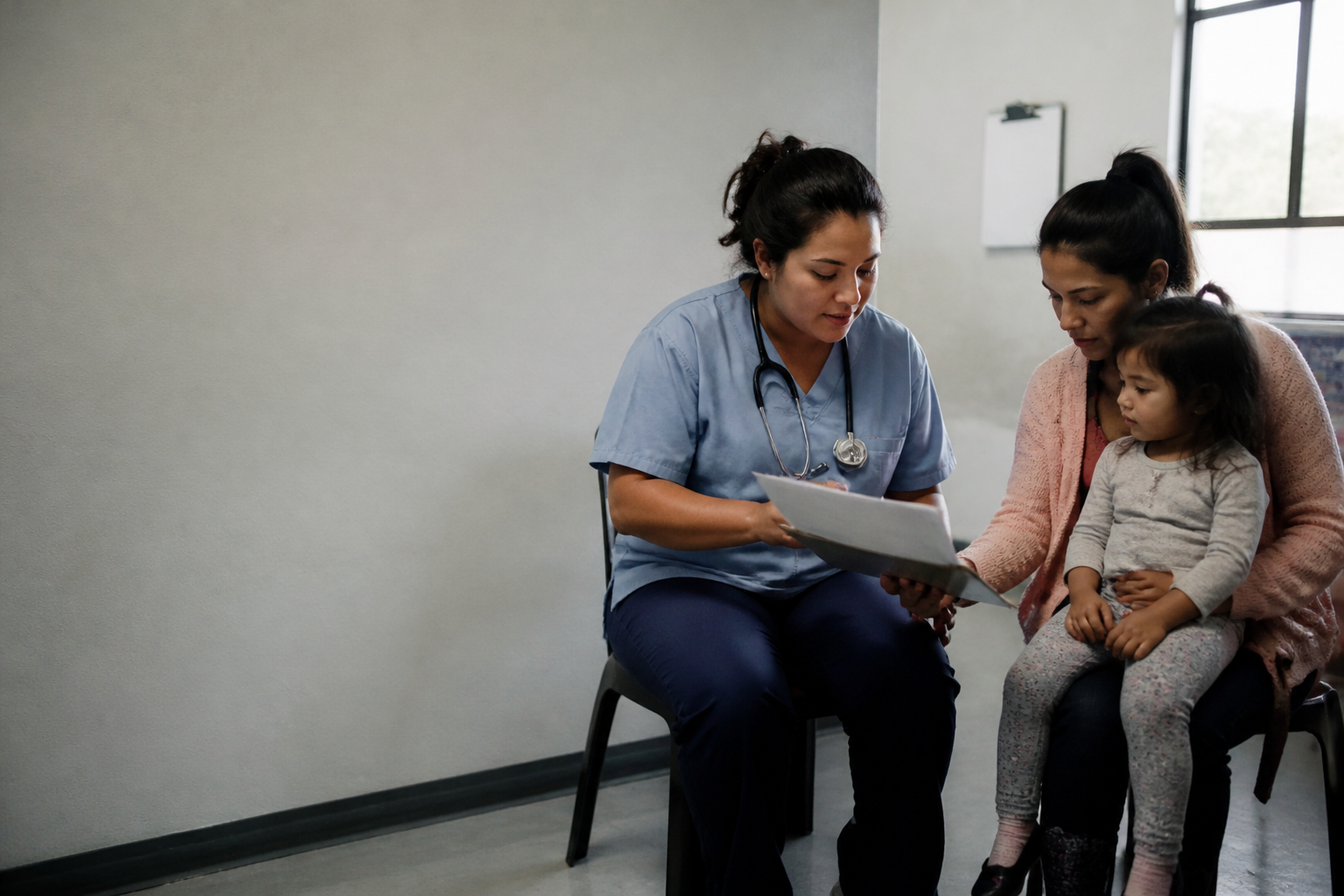
Dedicated public health nursing MSN tracks are scarce in Utah, so RNs often end up weighing broader public health or health education master's programs instead.
The schools ranked here are Brigham Young University, University of Utah, Western Governors University, and Utah State University. They mix campus and online delivery, with published in-state tuition and fees from $6,688 to $9,620.
All four award an MPH rather than an MSN, so credential fit matters as much as price. Each also requires supervised fieldwork.
Key Points
- For 2027, Brigham Young University posts the lowest in-state graduate tuition here.
- University of Utah most clearly waives the GRE for 2027 admission.
- Utah public health nurses need an active RN license from DOPL.
Best Public Health Nursing Master's Programs in Utah, Ranked
Utah has few dedicated public health nursing MSN programs, so this list ranks the strongest public health master's options at Utah universities that nurses often consider. We looked at cost, debt, and earnings data from IPEDS and College Scorecard, then weighed each program's public health focus, delivery format, and accreditation. Every school below offers an MPH rather than a nursing-specific MSN, so treat these as adjacent pathways into community and population health roles.
Brigham Young University
#1Provo, UT · $5,000 – $10,000/yr (est.)
Best for: Students wanting full-time campus MPH
Brigham Young University in Provo offers a campus-based Master of Public Health through its College of Life Sciences. The full-time program starts in fall and includes a required 300-hour field experience between the first and second years. It emphasizes global health promotion and community health education, making it a structured option for students who want an in-person public health graduate program.
- 48 credits with a 300-hour field experience
- Full-time, fall-start, finishes in 1.5 to 2 years
- No thesis required; field report instead
- Emphasizes global health and community health education
- Located in the College of Life Sciences
University of Utah
#2Salt Lake City, UT · $9,000 – $28,000/yr (est.)
Best for: Nurses seeking health equity emphasis
The University of Utah in Salt Lake City offers a CEPH-accredited Master of Public Health with emphases in community health, global health, and health equity. Students can study online with full-time or part-time pacing, and recent MPH graduates earned a median of $58,505 one year after completion and $70,327 four years after completion. Its health equity focus is especially relevant for nurses moving into population health.
- CEPH-accredited MPH with three emphasis areas
- Community health, global health, and health equity emphases
- 45 credits, about two years full-time
- Online with full-time and part-time options
- Prerequisite college algebra with B or better
- Dual MPH/MHA, MPH/MPA, MPH/MPP, MPH/MSW options
- No thesis or capstone required
Western Governors University
#3Salt Lake City, UT · ~$9,000/yr (est.)
Best for: Working adults needing self-paced online MPH
Western Governors University in Salt Lake City offers a fully online, competency-based Master of Public Health with rolling monthly starts. Tuition is charged per six-month term rather than per credit, and the 12-course program includes a capstone tied to a local community issue. It is a flexible, self-paced option for working professionals, though it is not a nursing-specific degree.
- 12-course, all-online MPH with monthly starts
- $4,995 per six-month term plus $200 e-books fee
- Bachelor's degree with 2.5 GPA minimum
- Covers biostatistics, epidemiology, policy, and social determinants
- Capstone addresses a local community issue
- 60% of graduates finish similar programs in 21 months
Utah State University
#4Logan, UT · $8,000 – $25,000/yr (est.)
Utah State University in Logan offers a fully online CEPH-accredited MPH in Health Education and Promotion. The 45-credit program includes a supervised practicum, a biennial study abroad experience, and the university reports a 100% employment rate for graduates. It is a strong fit for students focused on community health education and program planning.
- CEPH-accredited MPH in Health Education and Promotion
- 45 credits, fully online
- $536 per credit
- Includes supervised practicum and biennial study abroad
- Graduates report 100% employment rate
Online and Hybrid Public Health Nursing Master's Options in Utah
Campus programs offer structure and local faculty contacts. Online public health nursing MSN programs offer flexibility. Neither removes the in-person practicum.
How the Utah Schools Sort by Format
- Campus: Brigham Young University lists 300 clinical hours, with fieldwork between the first and second years under a faculty advisor and mentor.
- Fully online: University of Utah, Western Governors University, and Utah State University.
- Both: none of the schools here is listed with both formats.
These formats come from each school's public health master's listing, so confirm that a nursing-specific track exists in the format you want.
Practicum Hours and Placement
Online public health nursing MSN programs generally require roughly 150 to 315 in-person hours, and the range is wide. Some coordinators help you find a preceptor without guaranteeing one. Others expect you to arrange your own. Ask each school which model applies.
Salt Lake County Health Department, Utah County Health Department, and the Utah Department of Health and Human Services are natural places to approach. We could not confirm that any of them hosts these students, and placement depends on the site and preceptor. Utah rule R380-040 requires a Utah-licensed RN to supervise local health department nursing, but it does not oblige agencies to take students.
State Authorization
Online programs based outside Utah may not be authorized to enroll Utah residents. Confirm eligibility with the admissions office before you apply.
Public Health Nursing MSN vs MPH: Which Master's Should You Choose?
An MSN in public health nursing is a graduate nursing degree for licensed RNs who want to improve health across whole communities.1 An MPH in Utah is a broader public health degree open to applicants from many backgrounds. Both lead to population-level work, but they prepare graduates for different credentials and roles.
How the Two Degrees Compare
- Admission: The MSN requires an active RN license. The MPH does not require any nursing credential.
- Core curriculum: MSN coursework typically blends population health assessment, epidemiology and nursing leadership. MPH cores usually cover biostatistics, epidemiology, environmental health, health policy and behavioral science.
- Accreditation: Look for CCNE or ACEN accreditation on an MSN in Utah and CEPH accreditation on an MPH.1
- Practicum: MSN practicum requirements vary widely. Published examples run from about 150 hours2 to more than 3003. One representative CEPH-accredited MPH pairs a 42-credit curriculum with a 180-hour practicum and a capstone project.4
- Typical roles: MSN graduates often move into leadership with local, state and federal health agencies, schools, home health agencies and wellness centers. MPH graduates more often work as epidemiologists, policy analysts, program managers or health educators.
- Certification: MPH graduates of CEPH-accredited programs can generally sit for the Certified in Public Health exam. MSN graduates stay on a nursing credential track, so confirm eligibility for specific certifications with each school.
Our Verdict
The MSN is the better fit for RNs who want to stay in nursing and grow into public health nursing leadership. The MPH suits anyone pivoting toward epidemiology, policy or broader public health roles where a nursing license isn't the core qualification.
Related Articles
Which Utah Public Health Nursing Master's Programs Waive the GRE?
Which master's programs in Utah for public health nursing actually count as No-GRE master's programs, and what do they ask for instead?
University of Utah is the most explicit: its catalog lists the GRE as an exam and says quantitative ability can be shown by GRE or relevant coursework, alongside a 3.0 GPA minimum and a college algebra prerequisite. Brigham Young University and Utah State University do not publish a clear GRE requirement in their public health master's listings, and Western Governors University states no course prerequisites and does not list the GRE in the published program details. Treat these as policies to confirm, not permanent waivers.
On degree entry, the schools ranked here do not clearly advertise an ADN-entry RN-to-MSN bridge in the available admissions copy, so ADN-prepared RNs should ask each program directly. Nursing-focused applicants should expect an unencumbered RN license, and an undergraduate statistics course may be required at some programs; published GPA floors vary, with WGU noting 2.5 and University of Utah noting 3.0. RN work experience requirements are not consistently stated across these listings.
Cost of a Public Health Nursing Master's in Utah and What Comes After Graduation
Cost comes down to two different numbers: the published graduate tuition a school charges, and the net price students actually pay after grant aid.
What the programs charge
Brigham Young University posts the lowest in-state graduate tuition among affordable public health nursing MSN programs, about $6,688 a year, with the University of Utah the highest at $9,620. The nonresident gap matters if you enroll online from out of state: $30,860 at the University of Utah and $24,802 at Utah State. Western Governors charges one flat rate, $8,658, no matter where you live, billed at $4,995 per six-month term plus a $200 e-books and resources fee. Utah State lists $536 per credit over 45 credit hours; BYU's public health master's requires 48. Multiplying the per-credit rate by the credit count gives a workable program estimate.
Net price figures, roughly $12,548 at Western Governors up to $16,200 at the University of Utah, are institution-wide averages after aid across all students, not a quote for a nursing master's.
Debt, funding, and credentials after graduation
For the University of Utah's public health master's specifically, median graduate debt sits near $31,219, about $355 a month on a ten-year schedule. HRSA Nurse Corps scholarship and loan repayment programs plus employer tuition assistance from Utah health systems can offset much of that.
After graduating, keep your Utah RN license (or compact multistate privilege) active. The APHN-BC initials currently in use belong to AHNCC's Advanced Practice Holistic Nurse Board Certified credential, which requires APRN licensure, 2,000 practice hours and 500 advanced practice hours. NBPHE's Certified in Public Health Nursing credential is open for applications, with year-round testing online or at testing centers.
Utah RN Licensure for Public Health Nurses
Frequently Asked Questions About Public Health Nursing MSN Programs in Utah
Are there any public health nursing MSN programs in Utah?
How long does a public health nursing MSN take?
What can you do with a public health nursing MSN?
What do public health nursing MSN graduates earn?
Compare Public Health programs on the data that matters
Explore more Nursing specializations or browse every graduate field.
All Nursing programs