Best Master's in Educational Psychology Programs in Kansas
Compare 8 accredited Educational Psychology programs in Kansas at 5 schools, with graduate earnings, cost, debt, and completion data from IPEDS and the U.S. College Scorecard.
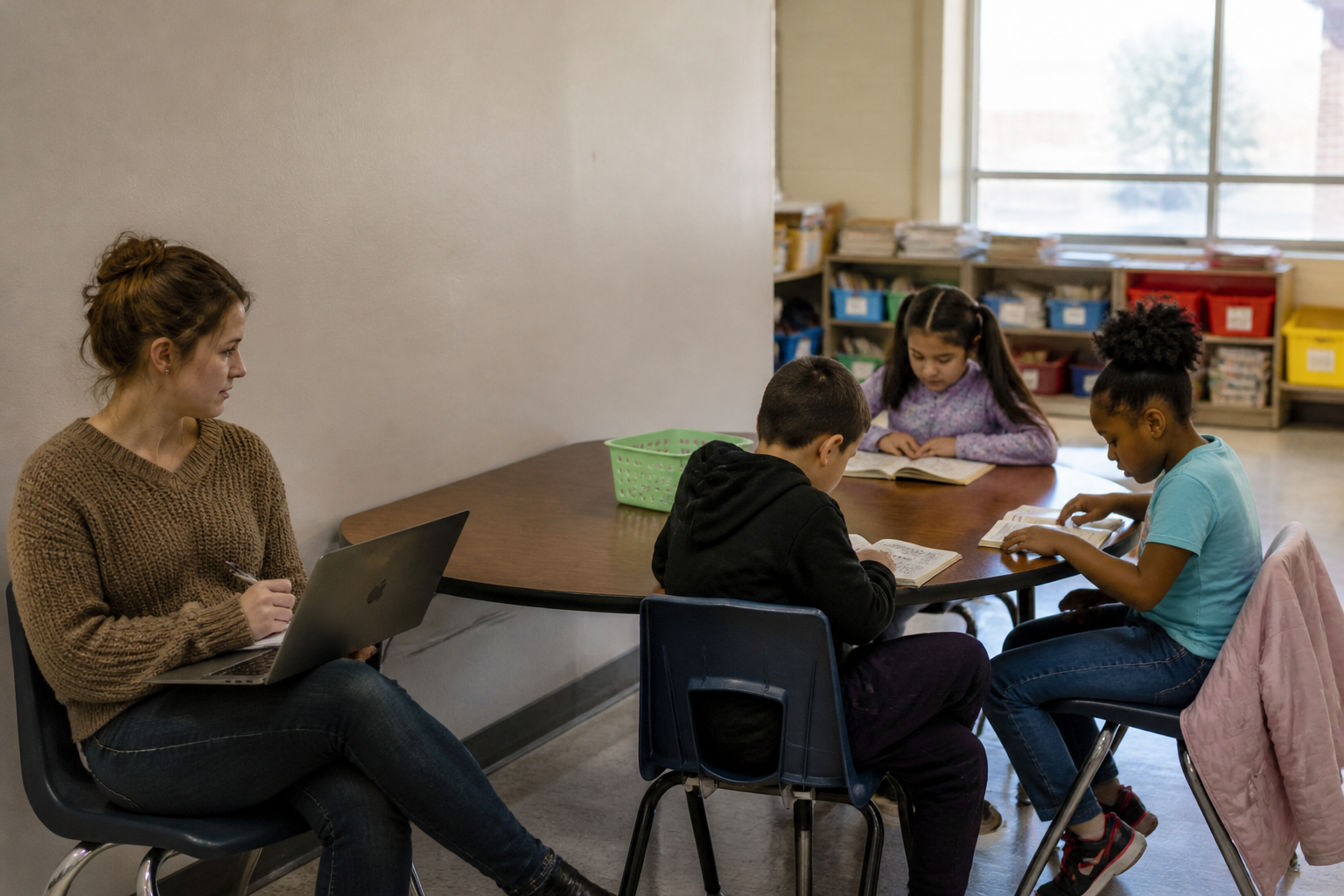
A master's in educational psychology costs less than most graduate degrees, but it does not lead to a license, and that gap trips up many applicants. It serves teachers, instructional designers, and future researchers who want to understand how students learn and develop. Kansas offers campus and online routes at KU, Emporia State, Wichita State, Fort Hays State, and Pittsburg State, all ranked together here.
School psychologist licensure is a separate credential with its own internship and exam requirements, which the cost and licensure section explains. Choosing the wrong degree type can mean an extra year of coursework.
Key Points
- Emporia State offers a 30-credit online educational psychology master's.
- Most programs here make the GRE optional for 2027 admission.
- The cheapest Kansas option costs under half the priciest in annual tuition.
Top-Ranked Master's in Educational Psychology Programs in Kansas
Kansas has a compact but distinct set of master's paths in educational psychology and school psychology. The state's options include research-oriented degrees at the University of Kansas, practitioner-focused school psychology sequences at Pittsburg State and Fort Hays, and a fully online educational psychology concentration at Emporia State. Compare tuition, delivery, and career focus to find the right fit.
University of Kansas
#1Lawrence, KS · $12,000 – $27,000/yr (est.)
Best for: Research-minded future doctoral students in Kansas
The University of Kansas houses one of the state's most research-intensive educational psychology programs. Its master's offers Development and Learning and Research, Evaluation, Measurement, and Statistics concentrations, both on campus and designed to feed doctoral study or applied research roles. Students can access graduate teaching assistantships and school scholarships.
- Applied focus on human development and learning
- Prepares for roles in schools, nonprofits, and applied settings
- Provides a pathway to PhD or doctoral training
- Graduate teaching assistantships and school scholarships available
- Three concentration options within the department
- Quantitative research and test development focus
- Prepares for doctoral-level studies
- Career paths in schools, nonprofits, and applied settings
- On-campus program with research emphasis
Pittsburg State University
#2Pittsburg, KS · ~$9,000/yr (est.)
Best for: Kansas school psychologist hopefuls needing licensure
Pittsburg State University's school psychology program is built around a three-year M.S. plus Ed.S. sequence with a full-time internship. It aligns with Kansas Department of Education and NASP standards and adds bilingual assessment training, advanced standing, and a new hybrid respecialization track for Fall 2026. The department reports strong licensure outcomes and placement.
- 66-credit M.S. plus Ed.S. path across three years
- Prepares for Kansas school psychologist license
- NASP and KSDE standards aligned
- Bilingual assessment and intervention training
- Full-time internship required for licensure
- Advanced standing for prior graduate work
- Respecialization track new for Fall 2026 in hybrid format
- Reported 100% National School Psychologist exam pass rate and job placement
Emporia State University
#3Emporia, KS · ~$9,000/yr (est.)
Best for: Working educators wanting fully online coursework
Emporia State University offers two distinct paths: a fully online M.S. in Psychology with an Educational Psychology concentration for working educators, and a hybrid school psychology sequence that pairs the M.S. with an Ed.S. for licensure. The educational psychology track emphasizes action research and customizable electives, while the school psychology option leans into Kansas educator preparation.
- 30 total credit hours, fully online
- Action research emphasis
- Electives in reading, math, and coaching
- Designed for working educators
- Does not lead to licensure or certification
- February 1 and October 1 application deadlines
- 3.0 GPA minimum and three letters of recommendation
- Financial aid and scholarships available
- Hybrid delivery format
- MS plus EdS pathway for licensure
- Three concentration options
- Leading in Kansas educator preparation
Fort Hays State University
#4Hays, KS · ~$5,000/yr (est.)
Fort Hays State University delivers school psychology training in both online and campus formats. The online M.S. uses flexible full-time or part-time study with one five-day on-campus workshop, while the campus version can be completed in one year and includes supervised training in a psychological testing clinic. Both prepare candidates for National Certification as School Psychologists.
- Fully online with flexible full-time or part-time study
- One five-day on-campus workshop required
- 30 total credit hours at $348 per credit
- GRE required or waived with a related master's
- Prepares for National Certification (NCSP)
- Requires bachelor's in psychology or education, 3.0 GPA, statistics course
- Curriculum covers assessment, intervention, and consultation
- Campus completion in one year
- Psychological Testing Clinic hands-on training
- Close partnerships with local school districts
- Apply by 2027-02-01
- GRE required unless master's in related field
- Background check required before enrollment
- Prepares for school psychologist, consultant, and specialist roles
- Financial aid and scholarships available
Wichita State University
#5Wichita, KS · ~$8,000/yr (est.)
Wichita State University's M.Ed. in Educational Psychology is a flexible, campus-based program with thesis and non-thesis options. Students can build custom specializations with an academic advisor and complete an applied learning or research experience, often a supervised case study. The program also offers an optional competency route for applicants who may not meet the standard GPA threshold.
- Thesis or non-thesis option
- Customizable specializations built with academic advisor
- Applied learning or research experience required
- Case study in CESP 728 supervised by faculty
- 3.00 GPA in last 60 hours required
- Three references, résumé, and one-page statement required
- Optional GRE or Miller Analogies Test competency route
- Criminal background check before first semester
Cost & outcomes by school
Federal data for the highest-earning Educational Psychology programs, independent of the ranking above. Earnings are this field's master's graduates four years after completing, where the Scorecard reports them.
| School | Earnings | Tuition / yr | Debt | Grads/yr | Format |
|---|---|---|---|---|---|
| University of Kansas KS | $57,816 | $11,971 | $41,000 | 21 | Campus |
| Emporia State University KS | $51,389 | $8,843 | $34,104 | 13 | Online |
| Fort Hays State University KS | — | $4,949 | — | — | Online |
| Wichita State University KS | — | $7,986 | — | 20 | Campus |
| Pittsburg State University KS | — | $9,470 | — | 3 | Campus |
Sources: U.S. Department of Education. Tuition and graduates: IPEDS. Earnings and debt: College Scorecard, this field's master's graduates; a dash means no figure is reported.
Cost, debt & payoff
Median earnings of this field's master's graduates (4 yrs after completing) vs. their median federal loan debt · U.S. College Scorecard
Across these programs the median graduate earns about $54,603 and finishes with roughly $37,552 in debt — a ratio that clears a common rule of thumb (keep debt below first-year salary). Tuition and debt vary widely school to school, so check the per-school figures in the table above before you shortlist.
Online and Hybrid Master's in Educational Psychology Options in Kansas
Which formats are available
- Emporia State University: The Master of Science in Educational Psychology is a 30-credit-hour online program, built for working educators. Official pages do not say whether courses meet live or run asynchronously, so confirm that with an advisor.
- Wichita State University: The MEd in Educational Psychology is listed as campus-based, but the Higher Education/Student Affairs track can be completed fully online as an online master's in educational psychology program. Its course delivery style and any campus visits are not specified.
- Fort Hays State University: The online school psychology master's is a hybrid in practice, because it requires one five-day on-campus workshop.
- University of Kansas and Pittsburg State University: Both programs here are campus-based. KU's online offering is in applied behavioral science, a different field. Pittsburg State's school psychology program says it accommodates working professionals' schedules.
Practicum and in-person requirements
Online does not always mean no fieldwork. Wichita State's track includes a 125-hour practicum that cannot be completed at your current workplace, including a full-time job or a current assistantship. Whether those hours must be on site is not stated. Fort Hays and Pittsburg State lead to school psychology credentials, which involve school-based training.
Practical takeaway for working teachers
Emporia State's fully online format is the easiest to fit around a full-time school schedule, and its published materials describe no required campus visits. Wichita State's online track works if you can arrange practicum hours outside your own building. Fort Hays requires blocking out a full week.
Which Kansas Master's in Educational Psychology Programs Waive the GRE?
Across the programs below, the most common GRE policy is optional. KU's educational psychology concentrations list the GRE as optional or encouraged, while Wichita State's M.Ed. does not require the exam and allows it to demonstrate academic competency instead of GPA.
| School | Program | GRE Policy | Minimum GPA & Key Materials | Application Deadline |
|---|---|---|---|---|
| University of Kansas | Master's in Educational Psychology & Research, Development & Learning (D&L) | Optional | Minimum GPA not specified; key materials include official transcripts from all degree-granting postsecondary institutions, three letters of recommendation, current resume or CV, personal statement, and an academic writing sample | January 6, 2027; summer or fall terms only; spring admission unavailable |
| University of Kansas | Master's in Educational Psychology & Research, Research, Evaluation, Measurement and Statistics (REMS) | Optional, but encouraged | Minimum GPA not specified; key materials include official transcripts from all degree-granting postsecondary institutions, three letters of recommendation, current resume or CV, personal statement, and an academic writing sample | January 6, 2027; summer or fall terms only; spring admission unavailable |
| University of Kansas | Master's in Educational Psychology & Research, Sport & Exercise Psychology (SEP) | Optional | Minimum GPA not specified; key materials include official transcripts from all degree-granting postsecondary institutions, three letters of recommendation, current resume or CV, personal statement, and an academic writing sample | January 6, 2027; summer or fall terms only; spring admission unavailable |
| Wichita State University | M.Ed. in Educational Psychology, General Track | Not required; GRE may be used to demonstrate academic competency instead of GPA | Official transcripts with a 3.00 GPA for the last 60 hours; completed graduate school application | No published deadline |
Related Articles
Cost of a Master's in Educational Psychology in Kansas and What It Means for Licensure
Among master's programs in Kansas, the cheapest option here costs less than half as much as the priciest in annual graduate tuition, but cost matters less than whether the degree leads where you want to work.
Tuition and Net Price
Fort Hays State is the low-cost leader at $4,949 in-state and $12,745 out-of-state, and its online school psychology master's lists a rate of $348 per credit. The University of Kansas sits at the top at $11,971 in-state and $27,146 out-of-state.1 The others fall between those two schools:
- Wichita State: $7,986 in-state, $16,873 out-of-state, plus a $25-per-credit College of Education fee for school psychology and related programs and $100 per credit on certain listed courses
- Emporia State: $8,843 in-state, $19,154 out-of-state
- Pittsburg State: $9,470 in-state, $20,302 out-of-state
Average net price after aid runs from $12,569 at Fort Hays State to $18,059 at KU.1 Those are institution-wide averages across all students, not a quote for any single applicant, so when comparing the most affordable master's in educational psychology programs, treat them as a benchmark rather than your bill.
Why the Degree Is Not the License
A general master's in educational psychology does not by itself qualify you to practice as a school psychologist in Kansas. The Kansas State Department of Education treats school psychologist as a school-specialist endorsement.2 It requires completion of a graduate program designed for school specialists, at least a 3.25 GPA in specialist coursework, a content assessment,2 and a supervised internship of 1,200 clock hours, at least 600 of them in a school setting.3
Pittsburg State's specialist-level school psychology program is the one here that states it prepares candidates for the Kansas license, with a required full-time internship. Emporia State says plainly that its online program does not lead to licensure. KU positions its master's as a path toward doctoral study.
For classroom teachers, the degree can still pay off as professional development, and many districts reward graduate credit on their salary schedules. Confirm how your district counts it before you enroll.
Highest Reported Earnings Among Kansas Educational Psychology Graduates
Median earnings four years after finishing
Frequently Asked Questions About Kansas Master's in Educational Psychology Programs
What can you do with a master's in educational psychology in Kansas?
What is the difference between educational psychology and school psychology?
Can I become a school psychologist in Kansas with an educational psychology master's?
Do Kansas teachers get a pay bump for this degree?
Compare Educational Psychology programs on the data that matters
Explore more Psychology specializations or browse every graduate field.
All Psychology programs