Best Master's in Special Education Programs in Vermont
Compare 2 accredited Special Education programs in Vermont, with graduate earnings, cost, debt, and completion data from IPEDS and the U.S. College Scorecard.

A special education master's in Vermont prepares teachers to serve students with disabilities through age 21, either as a first license or as an endorsement on an existing one. Few Vermont schools offer it, so campus, hybrid, and online programs share one list.
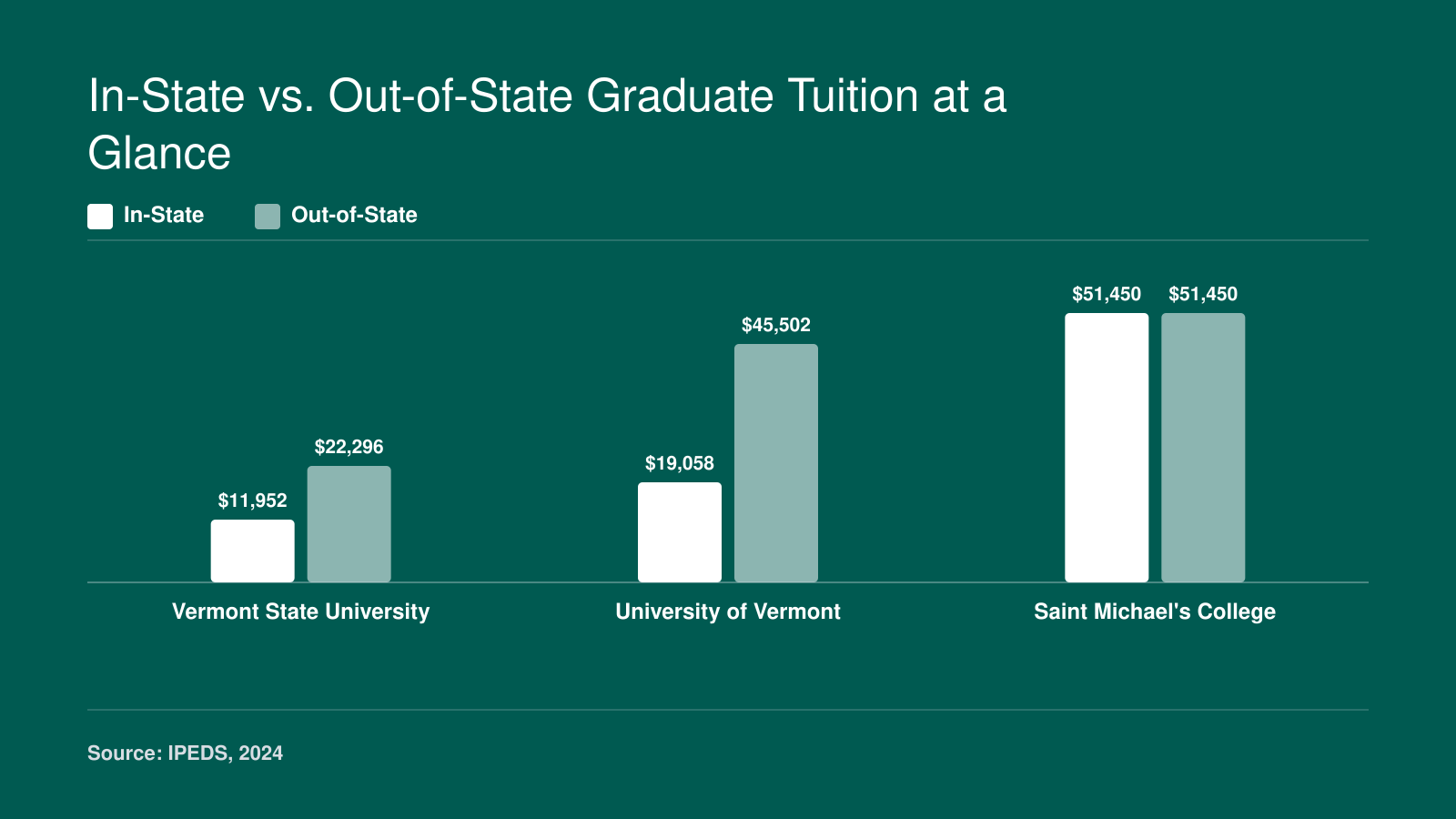
Residency drives cost: Vermont State University's graduate tuition is $708 per credit in state and $911 out of state, compared with $14,426 and $34,262 at the University of Vermont.
The bigger fork is licensure. Initial licensure qualifies you to teach; an endorsement only extends a license you already hold.
Key Points
- None of the special education programs here require the GRE.
- University of Vermont's 30-credit M.Ed. runs fully online with three annual starts.
- Vermont State University lists $708 resident and $911 nonresident per-credit tuition.
Vermont's Top Special Education Master's Programs, Ranked
These rankings weigh graduate tuition, institution-wide completion, and delivery format, the variables that most directly affect a working educator's schedule and loan balance. We also looked for clear licensure pathways, actionable practicum requirements, and scholarships that change the real cost of attendance.
University of Vermont
#1Burlington, VT · $14,000 – $34,000/yr (est.)
Best for: Online learners seeking accredited licensure
University of Vermont's fully online M.Ed. in Special Education is CAEP-accredited and leads to K-21 licensure, with a non-licensure option for experienced educators. The 30-credit program offers three start dates per year and community-based internships, and eligible licensure candidates can receive full tuition coverage through the C-CROPS scholarship. Across all undergraduates, the school graduates 79% of students, and recent federal data show median earnings of about $52,600 one year after completing this degree and $55,100 at four years.
- CAEP accredited
- 30 total credit hours
- Fully online option available
- K-21 licensure or non-licensure track
- Three start dates per year
- Community-based internships
- Scholarships available
- Licensure reciprocity across states
Vermont State University
#2Randolph, VT · $5,000 – $10,000/yr (est.)
Best for: Current teachers adding K-21 endorsement
Vermont State University's hybrid MA offers three pathways, including initial licensure with a full semester of student teaching and an endorsement option for current teachers seeking K-21 certification. Students can often complete the practicum in their own schools, and the educational research track requires an original thesis. The school graduates 47% of students institution-wide, and median earnings one year after completing this master's are about $54,700.
- 3 concentration options
- Endorsement in special education K-21
- Pathway to initial special education licensure
- Full semester of student teaching
- Practicum possible in your own school
- Thesis option in educational research
- Transcript analysis for licensure review
- Designated SPED sequence for endorsement
Saint Michael's College
#3Colchester, VT · $10,000 – $15,000/yr (est.)
Best for: Campus-based learners wanting practicum-rich inclusion
Saint Michael's College offers a campus-based Master of Education with a concentration in Special Education, built around practicum experiences in local schools and options to pursue Vermont's additional endorsement as a Special Educator. The program is designed for both licensed teachers and newcomers without a license, and the graduate tuition is $700 per credit. The school graduates 73% of students institution-wide.
- 5 concentration options
- Option to pursue Vermont Special Educator endorsement
- Suitable for licensed and unlicensed teachers
- Includes practicum in local schools
- Focus on collaborative relationships
- Courses in human development
Cost & outcomes by school
Federal data for the highest-earning Special Education programs, independent of the ranking above. Earnings are this field's master's graduates four years after completing, where the Scorecard reports them.
| School | Earnings | Tuition / yr | Debt | Grads/yr | Format |
|---|---|---|---|---|---|
| University of Vermont VT | $55,090 | $14,426 | — | 20 | Online |
| Saint Michael's College VT | — | $13,400 | — | — | Campus |
Sources: U.S. Department of Education. Tuition and graduates: IPEDS. Earnings and debt: College Scorecard, this field's master's graduates; a dash means no figure is reported.
Online and Hybrid Special Education Master's Options in Vermont
In Vermont, you can complete most online master's in special education coursework online, but field experience still happens in real classrooms. The University of Vermont delivers its 30-credit Special Education M.Ed. online, with summer, fall, and spring starts for both licensure and non-licensure candidates. Coursework is paired with classroom field experiences and community-based internships through district and agency partnerships.
Vermont State University offers Vermont M.Ed. online and campus options that let licensed teachers adding the endorsement choose fully online or mixed online and in-person study at Castleton. Initial-licensure candidates take courses online but complete an in-person practicum and a student-teaching internship in local schools, and the Placement Office helps them find a site. Neither school's program materials describe a required on-campus residency.
Saint Michael's College builds its concentration around a local-school practicum and full-time student teaching with a dedicated supervisor. Confirm its current delivery format with the college.
Ask each program about practicum hour totals, whether you can use your own school, and whether you can be placed outside Vermont before you apply.
If you teach full time, an online route at UVM or Vermont State fits a working schedule best. Any path that ends in full-time student teaching will likely require leave from your job.
Which Vermont Special Education Master's Programs Waive the GRE?
The GRE has quietly faded from education graduate admissions, and Vermont's special education master's programs with no GRE required reflect that shift: none of the schools here require it.
GRE Policies
- University of Vermont: The GRE is not required for the M.Ed. in Special Education.
- Saint Michael's College: The GRE is not required for its special education graduate programs.
- Vermont State University: Its admissions materials do not publish a GRE policy, so plan to confirm current requirements directly with the department before applying.
The Rest of the Checklist
For applicants to Master's in Education in Vermont programs, expect a bachelor's degree and a minimum GPA around 3.00 at both UVM and Saint Michael's; Saint Michael's asks licensure applicants for a 3.0 in the major as well. Typical materials include transcripts, letters of recommendation, and a statement of purpose, and Saint Michael's adds an entrance interview for licensure tracks.
Whether you need an existing teaching license depends on your pathway. UVM's licensure route for special education master's programs requires a license or eligibility, while non-licensure options welcome a broader mix of applicants. Saint Michael's reserves its advanced endorsement for licensed teachers but opens its non-licensure M.Ed. to applicants with or without a license.
Related Articles
Cost of a Special Education Master's and Vermont Licensure Pathways
What You'll Pay
Vermont State University publishes the clearest pricing: $708 per credit for residents and $911 for nonresidents in 2026-27. Its core is 21 credits, but the endorsement pathway runs 31 to 40, putting tuition alone at roughly $21,948 to $28,320 in state and $28,241 to $36,440 out of state. Mandatory fees add to that. UVM's 30-credit M.Ed. carries annual graduate tuition of $14,426 for residents and $34,262 for nonresidents, which makes VTSU the most affordable path for Vermonters and one of the cheapest master's programs in Vermont. At UVM, the C-CROPS scholarship can cover full tuition for eligible students pursuing K-8 or 7-12 special education licensure. The federal TEACH Grant may also help if you commit to teaching in a high-need school, so confirm eligibility with each financial aid office.
Licensure and Transfer
Career changers need initial licensure. Licensed teachers can instead add the special education endorsement, which Vermont issues at K-8 and at grade 7 to age 21. Full K to age 21 coverage requires at least 60 practicum hours at both levels.1 UVM states CAEP accreditation. Ask VTSU and Saint Michael's directly about their approval status. Vermont follows NASDTEC reciprocity and accepts professional licenses from every U.S. jurisdiction, though Vermont-specific requirements can still apply.2
In-State vs. Out-of-State Graduate Tuition at a Glance
Tuition and fees are one part of the total cost picture. These are annual graduate tuition-plus-fee figures, not total program cost. Private schools charge one rate regardless of residency.
In Vermont, choosing between initial licensure and endorsement-only matters most: one qualifies you to teach, the other adds to a license you already hold.
Vermont Special Education Master's: Your Questions Answered
Answers about cost, online delivery, licensure, and loan forgiveness for Vermont's special education master's programs, based on current program and federal aid details. Confirm deadlines and fees with each school because policies change.
What is the cheapest master's in special education program in Vermont?
Can I complete a special education master's degree online in Vermont?
Which Vermont special education programs lead to initial licensure?
Do I need a teaching license to apply to UVM's special education M.Ed.?
How long does it take to earn a special education master's degree in Vermont?
Can I complete my special education practicum at the school where I already teach?
Will a Vermont special educator endorsement transfer if I move to another state?
Is there funding or loan forgiveness for special education teachers in Vermont?
Compare Special Education programs on the data that matters
Explore more Education & Teaching specializations or browse every graduate field.
All Education & Teaching programs