Best Master's in Environmental Science Programs in West Virginia
Compare 2 accredited Environmental Science programs in West Virginia, with graduate earnings, cost, debt, and completion data from IPEDS and the U.S. College Scorecard.
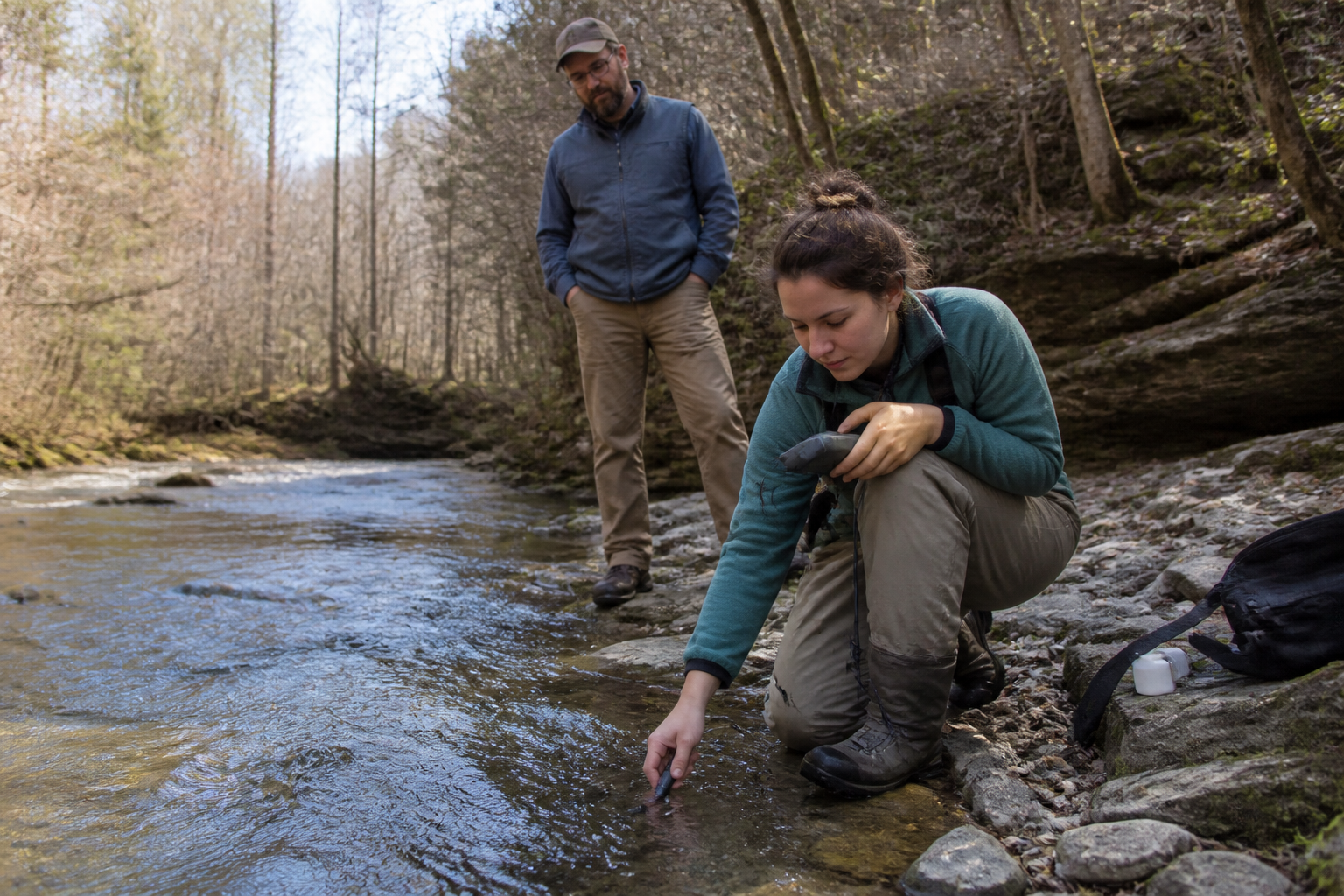
On-campus research degree or online policy degree: that is the real choice for anyone pursuing an environmental science master's in West Virginia, because the state offers only a handful of options. West Virginia University and Marshall University run campus programs, while American Public University System delivers its master's fully online.
The work these degrees feed is local and specific: mine reclamation, watershed protection, energy and land management, and forestry. Employers in those fields tend to care more about technical training and field experience than about the school's name.
Key Points
- APUS's environmental policy master's costs about $16,380 total and grads earn $80,040.
- WVU's Environmental, Soil, and Water Sciences master's requires the GRE in 2027.
- West Virginia requires no general environmental scientist license; credentialing is voluntary.
West Virginia's Top Environmental Science Master's Programs, Ranked
West Virginia's graduate landscape is compact but distinct. You will find a fully online environmental policy route, a research-intensive soil and water science program, and regional watershed-focused options at Marshall University.
American Public University System
#1Charles Town, WV · $5,000 – $10,000/yr (est.)
Best for: Working adults needing flexible online study
American Public University System, through American Public University and American Military University, offers a fully online Master of Science in Environmental Policy and Management. The program is built for working adults and career changers, with monthly starts, 8- to 16-week courses, and no GRE or GMAT requirement. Concentrations include ecosystems management, landscape ecology, and renewable energy, but these are tracks within one degree rather than separate master's programs. Listed graduate tuition is $8,400 for both in-state and out-of-state students in the 2026-2027 data.
- 36 total credits required
- Fully online delivery with monthly starts
- No GRE or GMAT required
- Transfer up to 15 credits
- Concentrations include ecosystems management, landscape ecology, and renewable energy
- Covers environmental policy, economics, and sustainability
- 8- to 16-week courses offered
- Taught by industry professionals
West Virginia University
#2Morgantown, WV · ~$11,000/yr (est.)
Best for: Field researchers pursuing soil and water depth
West Virginia University's Davis College of Agriculture and Natural Resources houses the campus-based M.S. in Environmental, Soil and Water Sciences, with both thesis and non-thesis options and original research in fields such as agronomy, horticulture, microbiology, plant pathology, and soil science. WVU also lists a separate M.S. in Wildlife and Fisheries Resources, so wildlife and fisheries should not be treated as concentrations inside the soil and water degree. Prospective students should verify the current program status because WVU's board has approved deactivation of the standalone Environmental, Soil and Water Sciences M.S. and creation of an M.S. in Plant and Soil Sciences, which retains environmental soil and water sciences as an emphasis. In-state graduate tuition is $10,104 and out-of-state is $28,608.
- Thesis and non-thesis options
- 30 to 36 credit hours
- GRE scores and three reference letters required
- 500-word statement required
- Specializations include agronomy, entomology, horticulture, microbiology, plant pathology, and soil science
- Original research with seminar and teaching practicum
- Campus-based at WVU Davis College
Marshall University
#3Huntington, WV · $5,000 – $10,000/yr (est.)
Best for: Consulting-bound students focused on watershed issues
Marshall University, located in Huntington, offers two campus-based environmental pathways: an M.S. in Environmental Science and an M.S. in Natural Resources and the Environment. The Environmental Science program covers air and water pollution, groundwater, and waste management, while the natural resources path takes an interdisciplinary approach to environmental challenges. Students gain hands-on experience through West Virginia stream health assessments and the Ohio River Way Challenge, a river-restoration expedition beginning in Kenova. In-state graduate tuition is $9,162 and out-of-state is $20,342.
- 36 credit hours required
- Campus-based program
- 2.50 GPA or GRE/MAT scores for admission
- Core includes statistics and project management
- Thesis or project option
- Prerequisites in chemistry and algebra
- Focuses on air, water, groundwater, and waste management
- Interdisciplinary curriculum
- Campus-based program
- Research opportunities available
- Focus on environmental challenges and resource management
Cost & outcomes by school
Federal data for the highest-earning Environmental Science programs, independent of the ranking above. Earnings are this field's master's graduates four years after completing, where the Scorecard reports them.
| School | Earnings | Tuition / yr | Debt | Grads/yr | Format |
|---|---|---|---|---|---|
| American Public University System WV | $77,714 | $8,700 | $31,665 | — | Online |
| Marshall University WV | — | $9,510 | — | — | Campus |
Sources: U.S. Department of Education. Tuition and graduates: IPEDS. Earnings and debt: College Scorecard, this field's master's graduates; a dash means no figure is reported.
Online and Hybrid Master's in Environmental Science Options in West Virginia
More environmental science master's programs are moving online, but field and lab training still shapes West Virginia's delivery models. American Public University System's Master of Science in Environmental Policy and Management is the only fully online Master's in Environmental Science among the ranked schools. West Virginia University's M.S. in Environmental, Soil, and Water Sciences and Marshall University's Environmental Science M.S. are campus programs. No ranked program on this page carries a hybrid classification, so compare formats carefully and ask about weekend labs or field sessions before enrolling.
Online delivery
American Public University System does not require in-person campus visits and offers eight- to sixteen-week courses with monthly starts. If you live outside West Virginia, verify that the program is authorized to enroll students in your state before you start.
Campus fieldwork and research
WVU's Morgantown-based Environmental, Soil, and Water Sciences M.S. centers original research and includes laboratory, greenhouse, and field data collection. Available program materials do not publish a universal on-campus residency total, so ask the graduate coordinator for the actual site visit load. Marshall's campus option entails in-person coursework and a thesis or project in Huntington.
Cost consideration for out-of-state learners
Campus formats in Morgantown or Huntington add commuting or relocation expenses. A fully online degree removes weekly travel but may still have proctored exams or occasional campus events, so request the current student handbook.
Which WV Master's in Environmental Science Programs Waive or Make the GRE Optional?
Among master's programs in West Virginia, West Virginia University's Environmental, Soil, and Water Sciences master's is the one program here that plainly requires the GRE. The 2026-2027 catalog says applicants must show graduate-level aptitude as measured by the GRE, lists no minimum score, and does not mention a waiver. Treat the exam as mandatory unless the program tells you otherwise in writing.
WVU Admission Requirements
- GPA: 3.0 on a 4.0 scale, above WVU's general graduate minimum of 2.75.
- Degree: a bachelor's degree, with no specific prerequisite courses listed.
- Letters: three reference letters.
- Statement: a goals statement of 500 or more words.
- English proficiency: required for international applicants, at WVU's minimum.
- Advisor contact: the catalog page names no advisor, so ask the department who could supervise a thesis.
Marshall University and American Public University System
No published GRE policy has been confirmed for the environmental programs at Marshall University or American Public University System. Check each school's admissions page for test, GPA, and prerequisite rules, and compare environmental science master's programs with no GRE required before you apply.
One Practical Step
Email the graduate coordinator in the program before you register for any exam. Ask whether the GRE is required, optional, or waivable for your intake term, and get the answer in writing. Policies can change between catalog years, and a short email can save you a testing fee.
Before you apply, read each school's admissions page directly. Whether the GRE is required and whether a program runs online can change both your timeline and your total cost.
What a Master's in Environmental Science Costs in West Virginia
American Public University System's online Master of Science in Environmental Policy and Management publishes a $455 per-credit rate; with 36 required credits, tuition is about $16,380 before transfer credits or fees, a useful benchmark for affordable environmental science master's programs.
West Virginia University's 2026-2027 graduate schedule lists resident tuition and fees at $12,492 per year and non-resident at $33,318, based on two 9-credit semesters, with a $250 fee billed each fall and spring for on-campus programs. The online schedule shows per-credit totals from $686 to $2,024 depending on program, but the Environmental, Soil and Water Sciences rate is not itemized. Marshall University's Environmental Science master's lists in-state tuition at $9,510 and out-of-state at $22,192.
Funding and debt
Graduate assistantships, tuition waivers, and stipends can sharply cut cost, but WVU does not publish award amounts for this program, so confirm with the department. Program-level data show a median debt of $31,665 and a 10-year monthly payment around $360 for American Public University System. Institution-wide net price averages are $7,502 at Marshall and $15,634 at WVU, but these are school-wide approximations, not program quotes.
Related Articles
West Virginia Licensure and Certification for Environmental Scientists
Career Outcomes: Where WV Environmental Science Master's Graduates Work
Data on environmental science master's salary and career outcomes show the online Environmental Policy and Management master's at American Public University System delivers strong results. Five years after finishing, graduates report a median of $80,040, and about 92 percent were employed one year out. Earnings figures are not published for the campus programs at West Virginia University and Marshall University.
Where WV Graduates Work
WVU's environmental science pathways point to the West Virginia Department of Environmental Protection (WVDEP), federal agencies such as the U.S. Army Corps of Engineers and USGS, environmental consulting firms, watershed groups, and energy and reclamation companies including EQT, Consol Energy, and Range Resources. WVDEP's Governor's Internship Program also places college students in paid summer roles involving water-quality fieldwork, site assessments, and remediation oversight.1
Best Fit for Environmental Consulting
For students aiming at environmental consulting in soil, water, reclamation, or natural-resource work, WVU's Environmental, Soil and Water Sciences M.S. is the clearest fit. Its curriculum emphasizes land reclamation, water quality, and natural-resource applications, matching the needs of consulting firms and agencies that regulate those areas.
Master's in Environmental Science in West Virginia: FAQ
What is the difference between an applied environmental science master's and WVU's program?
Which WV environmental science master's program is best for environmental consulting?
Can I complete a WV environmental science master's part-time while working?
Compare Environmental Science programs on the data that matters
Explore more Science & Engineering specializations or browse every graduate field.
All Science & Engineering programs