Best Master's in Secondary Education Programs in Colorado
Compare 5 accredited Secondary Education programs in Colorado at 4 schools, with graduate earnings, cost, debt, and completion data from IPEDS and the U.S. College Scorecard.
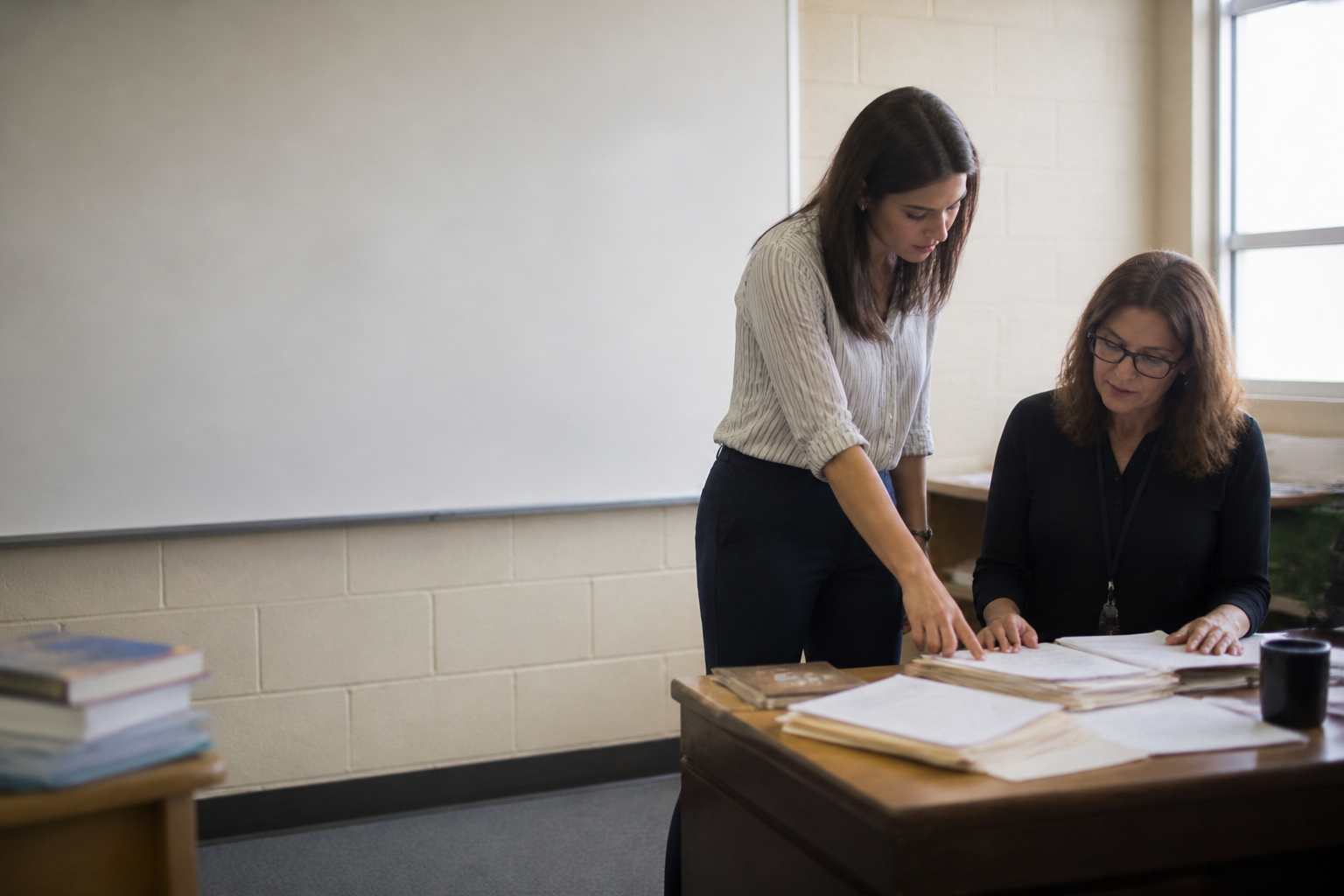
Colorado's route into a middle or high school classroom increasingly runs through a master's that builds student teaching into the degree itself, a hallmark of the best MAT programs in Colorado. Colorado State University-Fort Collins puts 15 weeks of internship inside a 41-credit program that can be finished in about 12 months, a pace typical of Accelerated Master's in Secondary Education Programs, while Colorado Mesa University spreads 42 credits across a two-year hybrid cycle.
Published in-state tuition at the schools ranked here runs from $9,927 to $15,666, so pace and price pull against each other on the Most Affordable Master's in Secondary Education Programs list.
For career changers and new graduates alike, time is the harder constraint. A full student-teaching placement rarely fits alongside full-time work, and that gap shapes budgets more than tuition does.
Key Points
- In-state tuition spans $9,927 at Colorado Mesa to $15,666 at CU Boulder.
- Online coursework pairs with required in-person teaching hours, not fully remote.
- GRE generally optional at the ranked schools; other exams may apply.
Ranked: Colorado's Top Master's in Secondary Education Programs
Colorado's strongest master's-level secondary licensure options range from a one-year campus cohort in Boulder to a hybrid two-year on the Western Slope. The ranked schools below combine measurable graduate outcomes with distinct pacing, concentration areas, and admissions expectations. Use the program-specific bullets to match your content area and timeline before comparing net price and long-term earnings.
Colorado State University-Fort Collins
#1Fort Collins, CO · ~$14,000/yr (est.)
Best for: Career changers pursuing high-need licensure areas
Colorado State University-Fort Collins pairs a one-year master's pathway with secondary teacher licensure through a Professional Development School model, so candidates begin classroom work early. Content-area options include math, science, English, social studies, and world languages, which matters for students targeting high-need subjects. The Fort Collins program normally admits on a rolling basis with a summer start, but the 2026-2027 cohort was reported at capacity, so applicants should confirm current availability before planning around this option.
- 41 total credit hours
- Complete in as little as 12 months
- $650 per credit
- No GRE required
- Professional Development School model
- 15 weeks of student teaching
- Content areas include math, science, English, social studies, and world languages
- Cohort-based curriculum with capstone
University of Colorado Boulder
#2Boulder, CO · $15,000 – $20,000/yr (est.)
Best for: Aspiring secondary educators wanting an immersive cohort
The University of Colorado Boulder offers an intensive one-year MA plus teacher licensure pathway, with separate tracks for English or social studies and math or science. The program emphasizes equity and justice, includes small group faculty interviews, and requires a 3.0 GPA in both cumulative and content-area coursework. Students earn Colorado secondary licensure eligibility and receive automatic scholarship consideration.
- 33 total credit hours
- Immersive one-year format
- Starts in summer
- 3.0 minimum GPA required
- Small group faculty interview
- Automatic scholarship consideration
- Prepares for PRAXIS Subject Assessment
- Three recommendation letters required
- No GRE required
- Math or science concentration track
- Content area prerequisite coursework required
- Spring student teaching
- Equity and justice focused curriculum
- Prepares for secondary teacher licensure
- Summer start only
Colorado Mesa University
#3Grand Junction, CO · ~$11,000/yr (est.)
Best for: Working adults needing a hybrid licensure option
Colorado Mesa University's Master of Arts in Education with Initial Teacher Licensure in Secondary uses a hybrid format and a two-year cohort cycle on the Western Slope. The program includes a directed teaching internship and content-area methods in English language arts, social studies, math, science, or Spanish. Students benefit from faculty advising and may need prerequisite leveling coursework before starting the graduate sequence.
- 42 total credit hours
- Two-year cohort cycle
- Hybrid delivery options
- Concentrations include English, social studies, math, science, and Spanish
- Directed teaching internship included
- Faculty advisor guidance provided
- Proof of youth work required
- Prerequisite leveling classes possible
Cost & outcomes by school
Federal data for the highest-earning Secondary Education programs, independent of the ranking above. Earnings are this field's master's graduates four years after completing, where the Scorecard reports them.
| School | Earnings | Tuition / yr | Debt | Grads/yr | Format |
|---|---|---|---|---|---|
| Colorado Mesa University CO | — | $10,900 | — | — | Hybrid |
| Fort Lewis College CO | — | $11,466 | — | — | Hybrid |
| University of Colorado Boulder CO | — | $16,634 | — | — | Campus |
| Colorado State University-Fort Collins CO | — | $14,125 | — | 9 | Campus |
Sources: U.S. Department of Education. Tuition and graduates: IPEDS. Earnings and debt: College Scorecard, this field's master's graduates; a dash means no figure is reported.
How We Rank Colorado Secondary Education Master's Schools
A secondary education master's degree that only adds a credential is not the same purchase as one that leads to a Colorado teaching license, and each school here had to offer the licensure path at a price a teacher's salary can support. We weigh graduate tuition, net price after aid, institution-wide graduation rate, program-level earnings and debt from College Scorecard where published, and format flexibility.
For Master's Programs in Colorado, state approval comes first: educator-preparation programs must hold Colorado Department of Education approval, renewed on a cycle of no more than five years. CDE lists CU Boulder's Master's + Teacher Licensure as an initial-licensure pathway, with reauthorization scheduled for Fall 2027. We could not confirm CAEP accreditation for any school from the sources reviewed, so we do not assume it. Its self-study cites about 65 percent of teachers placed in-state in 2018-2019, an older figure and not a current employment rate.1
Program-level earnings and debt are often unpublished for small programs, and net price is a school-wide average. Confirm current approval with each school before applying.
Online and Hybrid Master's in Secondary Education Options in Colorado
Online and hybrid delivery in Colorado secondary education master's programs usually means a mix of remote coursework and required in-person teaching hours, not a fully remote path, the same balance covered by rankings of Best Online Master's in Secondary Education Programs. This page classifies Colorado State University-Fort Collins as online and University of Colorado Boulder as campus, while Colorado Mesa University is listed as hybrid. Even a program described as online may still require intensive on-campus or local-school blocks. Colorado State's teacher licensure M.Ed., for example, includes a three-week summer session, two practicum days per week in August, and full-time student teaching in January, so online students must plan for sustained in-person work.
Student-teaching placement rules vary and are not always published clearly. Some districts and residency programs can arrange field placements in a school near you, but not every program confirms that working teachers can complete clinical hours in their current classroom.2 Denver Public Schools and other districts offer paid, school-based residency routes that can be paired with graduate study, but those residencies are mentor-based and in person, not remote.1
Placement tip
Before enrolling in any out-of-area online or hybrid program, confirm placement availability in your county and whether your current teaching position can satisfy the clinical requirement.
Related Articles
Which Colorado Master's Programs Waive or Make the GRE Optional?
Do you need GRE scores to apply to Colorado's Master's in Secondary Education Programs With No GRE Required? At the schools ranked here, generally not12, though other exams can still stand between you and a seat.
- University of Colorado Boulder: The MA+ Teacher Licensure program does not require the GRE. You must still meet a basic-skills requirement, either through college math and composition courses passed with a B- or better or through acceptable ACT, SAT, GRE or Praxis CORE scores. The Praxis Subject Assessment for your content area must be completed before the program deadline. The catalog also sets a 3.00 cumulative GPA and a 3.0 content-area GPA.
- Colorado State University-Fort Collins: The online teacher licensure and M.Ed. program does not require the GRE. You may need a passing Praxis II score after admission, depending on your licensure area.
- Colorado Mesa University: The admissions materials we reviewed do not state a GRE policy for this program, so ask admissions directly before applying.
The practical takeaway is that your GPA, transcripts and content-area coursework will shape your application far more than whether a program shows up on a No-GRE master's programs list.
Weigh what a program costs against what its graduates actually earn, and check each school's admissions page for its GRE policy before you apply.
Cost and Colorado Licensure for a Master's in Secondary Education
What the degree actually costs
Published in-state graduate tuition across the Best M.Ed. Programs in Colorado spans from $9,927 at Colorado Mesa University to $13,373 at Colorado State University-Fort Collins and $15,666 at the University of Colorado Boulder. Average net price, which folds in living costs and subtracts aid, runs higher: roughly $15,100, $21,300 and $25,300 in the same order. Credit loads differ enough to matter, too: CU Boulder's licensure master's is 33 credits, CSU's is 41 at a published rate of $650 per credit, and Colorado Mesa's runs 42. Budget separately for mandatory fees, fingerprinting and the national criminal-history check, the state license application fee, and the income you lose during an unpaid student-teaching term. CSU's placement alone runs 15 weeks.
The Colorado initial license path
The Colorado Department of Education requires a bachelor's degree or higher, completion of an approved preparation program, and proof of subject-matter knowledge. For grades 7-12, that proof can come three ways: a degree in the endorsement area, a passing score on a Colorado-approved Praxis content assessment1, or 24 semester hours of verified coursework in the subject. A fingerprint-based background check comes first, and once CDE receives your results you have 30 days to submit a complete application or repeat the fingerprinting.
Alternative licensure and stacking a master's
Career changers who already hold a bachelor's and a teaching job in their content area can pursue a district-specific alternative license, typically one to two years, and add the master's afterward. Confirm which exam your endorsement area requires before you enroll, and plan your finances around the student-teaching semester.
Compare Secondary Education programs on the data that matters
Explore more Education & Teaching specializations or browse every graduate field.
All Education & Teaching programs