Accelerated Master's in Secondary Education Programs
Compare 430+ accredited fastest Secondary Education programs at 290+ schools, with graduate earnings, cost, debt, and completion data from IPEDS and the U.S. College Scorecard.
Can you really finish a secondary education master's, and earn a teaching license, in about a year? At some schools, yes. Most traditional programs run 18 to 24 months, but accelerated formats compress coursework and a full semester of student teaching into 10 to 12 months.
The tension is cost against speed. A shorter timeline means fewer months without a teacher's salary, yet tuition per credit often runs higher, and state licensing rules still set the clinical hours no program can skip.
Key Points
- In 2027, in-state tuition here ranges from $10,600 to $19,000.
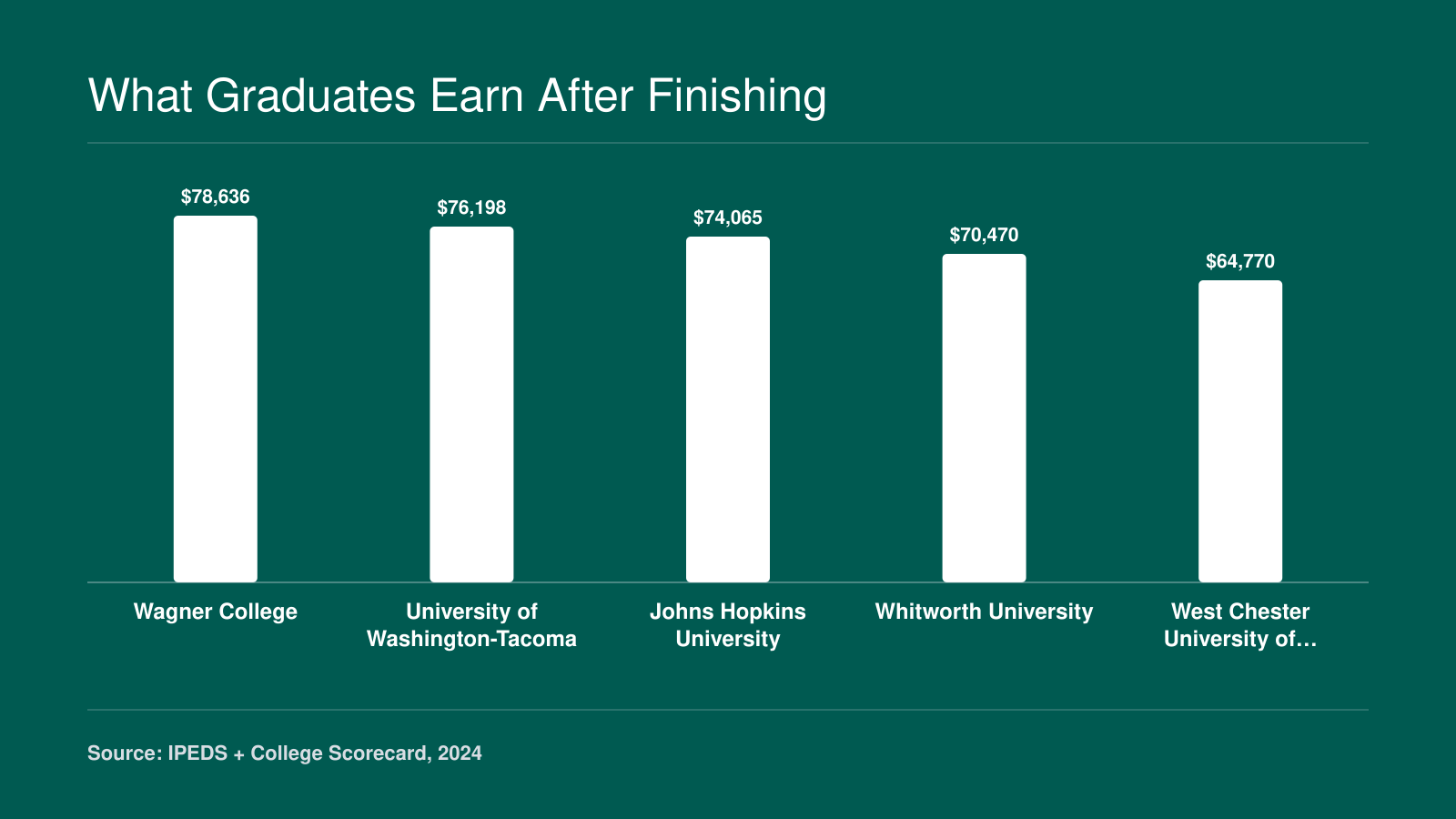
- Five-year median earnings range from $64,770 to $78,636.
- Oregon requires 600 clinical hours; Delaware requires just 200.
Best Accelerated Master's in Secondary Education Programs
These accelerated secondary education master's programs stand out for short completion timelines, substantial field experience, and direct alignment with state teaching credentials. The summaries below focus on credit load, concentration options, and what each school's own program data highlights. Where available, institution-wide graduation rates are shown as a broad signal of student support.
The University of Texas at Austin
#1Austin, TX · ~$12,000/yr (est.)
Best for: Career changers wanting urban classroom experience
The Urban Teachers program is a one-year Master of Education track for aspiring secondary social studies teachers, requiring 36 credit hours and extensive fieldwork in urban schools. It leads to a Social Studies Secondary Education endorsement and ESL endorsement, with eligibility for Texas teacher certification. The program starts in summer, requires full-time commitment, and does not require the GRE. The institution graduates about 89% of students.
- 36 total credit hours
- 1-year full-time program
- No GRE required
- Starts in summer
- Prepares for Texas teacher certification
- Earn ESL endorsement
- Extensive urban field experience
- Priority deadline December 15
William & Mary
#2Williamsburg, VA · $15,000 – $20,000/yr (est.)
Best for: Future secondary English and math teachers
William & Mary offers an intensive one-year, full-time M.A.Ed. in Curriculum and Instruction with secondary English and mathematics pathways. Candidates complete 41 to 44 credit hours depending on concentration, along with a clinical field experience and spring student teaching, preparing them for Virginia teaching licensure. The institution graduates about 89% of students.
- 44 total credit hours
- 12-month summer, fall, spring sequence
- Designed for non-certified teachers
- 60-hour clinical field experience
- 15-week spring student teaching
- Prepares for Virginia 6-12 licensure
- Cohort-based structure
- 41 total credit hours
- Complete in one year
- Prepares for Praxis Subject Assessment in Mathematics
- 60+ hour fall clinical field experience
- Spring full-time student teaching internship
- Prepares for Virginia teaching license
- Scholarships available
Johns Hopkins University
#3Baltimore, MD · ~$65,000/yr (est.)
Best for: Secondary math educators seeking funded residency
The TeachingWell Master of Education for Teaching Professionals combines four semesters of coursework with a paid residency year and full-tuition support for the Secondary Mathematics concentration. The 39-credit program emphasizes evidence-based and culturally responsive STEM teaching, followed by four years of career support. The institution graduates about 94% of students.
- 39 total credit hours
- Four semesters of coursework plus one year of residency
- Secondary Mathematics concentration
- Full-tuition support and paid residency
- Four years of career support
- Prepares for Maryland teaching certification
- Cohort-based structure
University of Massachusetts-Amherst
#4Amherst, MA · $15,000 – $20,000/yr (est.)
The Secondary Education 4+1 Accelerated MEd lets students complete a bachelor's and master's in five years, with mathematics, science, and English pathways. The program includes full-year teaching options, a $3,000 stipend for Springfield placements, and the ability to transfer up to 12 undergraduate credits. The institution graduates about 83% of students.
- 4 concentration options
- Gain experience teaching mathematics
- Second subject licensure option available
- $3,000 stipend for Springfield placement
- Apply in junior year
- Transfer up to 12 undergraduate credits
- Science concentrations include biology, chemistry, general science, and physics
- Teach full-time for the entire academic year
- Second subject license pathway available
- $3,000 stipend for Springfield placements
- Part-time in fall and full-time in spring
- Apply in fall of junior year
- Up to 12 undergraduate credits may transfer
- Add a second subject license
- $3,000 stipend available for Springfield placements
- Full-time teaching experience available
- Part-time or full-time pathways
Lehigh University
#5Bethlehem, PA · ~$29,000/yr (est.)
Lehigh's 4+1 Accelerated Master's in Secondary Education adds one additional year after the bachelor's and includes Pennsylvania teacher certification for grades 7 through 12. Students complete 30 graduate credits, choose from multiple content areas, and gain classroom experience through local field placements and student teaching. The institution graduates about 88% of students.
- 30 total credit hours
- Complete in one additional year
- 8 concentration options
- No GRE required
- Pennsylvania teacher certification included
- 3.0 GPA minimum
- Transfer up to 6 undergraduate credits
- Fieldwork in local classrooms
Florida State University
#6Tallahassee, FL · ~$11,000/yr (est.)
Florida State's combined BS/MS pathway in Social Science Teaching requires 30 graduate credit hours and is designed to be completed in one additional year. Candidates prepare for Florida certification in social science grades 6 through 12, with field experiences, student teaching, and required FTCE exams. The institution graduates about 86% of students.
- 30 total credit hours
- 1-year program
- Starts fall
- Prepares for Florida Professional Educator's Certificate in Social Science 6-12
- FTCE exams required
- Student teaching semester included
- Cohort-based structure
Arizona State University
#7Tempe, AZ · ~$14,000/yr (est.)
Arizona State's 30-credit Master of Education in Secondary Education with Teacher Certification prepares candidates for Arizona grades 6 through 12 certification. The program offers two certification pathways, including an alternative route for current teachers, and can be completed in as few as five semesters. The institution graduates about 68% of students.
- 30 total credit hours
- 5-semester program
- Two certification pathways offered
- Prepares for grades 6-12 teaching
- 3.0 GPA minimum
- Capstone required
- Professional experiences in school settings
Fairfield University
#8Fairfield, CT · ~$21,000/yr (est.)
Fairfield's Master of Arts in Secondary Education leads to initial Connecticut certification for grades 7 through 12 in English, math, science, social studies, or world languages. The program can be finished in 12 to 24 months, features paid teaching internships, and is CAEP accredited through December 2028. The institution graduates about 84% of students.
- CAEP accredited through December 2028
- Complete in 12-24 months
- $955 per credit
- Initial 7-12 teaching certification
- Paid teaching internships available
- Rolling admissions
- 2.7 GPA minimum
- 5 concentration options
University of Oregon
#9Eugene, OR · ~$19,000/yr (est.)
UOTeach offers a one-year Curriculum and Teaching MEd for future middle and high school educators, with subject endorsements including mathematics, science, social studies, English, and world languages. Candidates complete an embedded ESOL endorsement and hands-on student teaching in local classrooms, with part-time enrollment available. The institution graduates about 72% of students.
- 1-year program
- Middle and high school subject endorsements
- Embedded ESOL endorsement
- Cohort-based learning community
- Starts summer
- Full-time and part-time options
- Equity-focused pedagogy approach
University of Scranton
#10Scranton, PA · ~$12,000/yr (est.)
Scranton's Accelerated MS in Secondary Education lets undergraduates in non-education majors begin graduate work early and count up to 12 credits toward both degrees. The program leads to Pennsylvania grades 7 through 12 certification in eligible content areas and requires passing Praxis Content Knowledge tests before student teaching. The institution graduates about 80% of students.
- Up to 12 graduate credits as an undergraduate
- 12 credits count toward both degrees
- 3.2 GPA minimum
- Prepares for Praxis Content Knowledge tests
- Grades 7-12 Pennsylvania certification
- Apply spring of sophomore year
- March 1 application deadline
Cost & outcomes by school
Federal data for the highest-earning Secondary Education programs, independent of the ranking above. Earnings are this field's master's graduates four years after completing, where the Scorecard reports them.
| School | Earnings | Tuition / yr | Debt | Grads/yr | Format |
|---|---|---|---|---|---|
| University of Washington-Tacoma Campus WA | $80,738 | $18,987 | $30,990 | 20 | Hybrid |
| University of Massachusetts-Boston MA | $76,298 | $20,456 | $24,000 | 100 | Campus |
| Virginia Wesleyan University VA | — | $8,982 | — | — | Campus |
| Saint Michael's College VT | — | $13,400 | — | — | Campus |
| Ohio State University OH | — | $13,901 | — | — | Campus |
Sources: U.S. Department of Education. Tuition and graduates: IPEDS. Earnings and debt: College Scorecard, this field's master's graduates; a dash means no figure is reported.
Cost, debt & payoff
Median earnings of this field's master's graduates (4 yrs after completing) vs. their median federal loan debt · U.S. College Scorecard
Across these programs the median graduate earns about $58,845 and finishes with roughly $30,750 in debt — a ratio that clears a common rule of thumb (keep debt below first-year salary). Tuition and debt vary widely school to school, so check the per-school figures in the table above before you shortlist.
Lowest-Cost Accelerated Secondary Education Master's Programs
Below are the lowest-cost accelerated secondary education master's programs in this year's comparison, based on published net price. In-state tuition ranges from about $10,600 to about $19,000, while out-of-state rates range from about $26,700 to about $33,000. The online Arizona State program does not eliminate the out-of-state tuition penalty in the published figures.
| Program | In-State Tuition | Out-of-State Tuition | Net Price | Format | Median Program Debt | 10-Year Monthly Payment |
|---|---|---|---|---|---|---|
| University of Washington-Tacoma Campus, Master of Education with Secondary Education 5-12 Certification in the Sciences or Mathematics | $18,987 | $33,006 | $10,163 | Hybrid | $30,990 | $353 |
| Florida State University, Social Science Education | $10,553 | $26,707 | $11,297 | Campus | N/A | N/A |
| Arizona State University, Master of Education in Secondary Education (Teacher Certification) | $13,587 | $27,521 | $14,967 | Online | $20,443 | $233 |
Related Articles
What You Need to Apply
Requirements vary by program, but most accelerated secondary education programs ask for these materials.
- Accredited bachelor's degreeA completed degree from an accredited institution, often with 60–90 undergraduate credits already earned.
- Minimum GPAGPA cutoffs vary from 2.75 at Louisville and Eastern Kentucky, or 3.0 in the last 30 credits, to 3.5 at Nebraska Omaha; several other programs use 3.0.
- Subject-area content creditsMany programs expect qualifying coursework in the teaching subject; Eastern Kentucky requires a major, minor, or at least 24 content-area credits.
- Praxis or basic-skills testTesting is not uniform. Kansas State and Louisville require Praxis content tests, UNH requires BASA, and Eastern Kentucky requires Praxis before entry or within the first semester.
- Background checkUNH requires a Criminal History Records Check; not every program states its policy.
- Recommendations and statementLetters or a statement may be requested; UNH lists two recommendations and Loyola Chicago lists one.
Online, Hybrid, and 4+1 Formats and the Subjects You Can Teach
Two Accelerated Paths
The label "accelerated" covers two different routes to a secondary education master's degree. 4+1 (or BS/MS) programs are built for current undergraduates. Lehigh packages a bachelor's, a master's, and Pennsylvania certification into five years, and Saint Joseph's University expects you to apply in junior year. Post-baccalaureate MAT or M.Ed. programs serve career changers who already hold a degree. University of Saint Joseph's hybrid track runs 16 months, and the University of Northern Colorado's hybrid program takes 15.
Online Still Means Student Teaching in Person
Formats range from fully online (Ball State) to hybrid to on-campus or blended (George Mason). Even in online coursework, student teaching happens in a real school. Programs often help arrange placements near home, but confirm that before you enroll.
Subjects and Grade Bands
Common fields include English, mathematics, biology, chemistry, physics, general science, and social studies. Some schools add Earth and Space Science, computer science, or citizenship education. Offerings vary by school and state.
Grade bands differ too. Ball State and George Mason certify for grades 6-12, while Saint Joseph's and Lehigh certify for 7-12. University of Saint Joseph covers 4-12. Check that the band matches the schools where you want to work.
Math and science tend to bring more affordable master's in secondary education programs and stronger placement demand, so those concentrations can be easier to find and fill.
Oregon requires 600 clinical practice hours for teacher licensure, roughly 15 weeks at full time, while Delaware sets a 200-hour minimum. That's why even a one-year accelerated program still builds in a full semester of supervised classroom teaching: licensing rules, not program length, set the clinical requirement.
Will Your License Transfer? Licensure and Reciprocity
A master's degree and a teaching license are two different credentials. The university grants the degree. A state grants the license, and it requires a state-approved preparation program plus state tests, typically the Praxis Subject Assessments for your teaching field.
Two Agreements, Neither Automatic
The Interstate Teacher Mobility Compact is a licensure compact. 2026 listings show 14 member states: Alabama, Colorado, Delaware, Florida, Kansas, Kentucky, Mississippi, Nebraska, Nevada, Oklahoma, Oregon, Pennsylvania, Utah, and Washington. Published lists differ on a few members, so verify with your state's education agency. The compact generally applies to teachers holding a full license in a member state, and the receiving state decides the equivalent license by subject and grade range.
The NASDTEC Interstate Agreement is separate. It is a non-binding agreement, reportedly signed by 47 states as of 2025. It encourages recognition but lets each state add requirements.
What "Reciprocity" Usually Means
Expect a provisional license plus extras, not an automatic transfer. A 2025 comparison found 43 states require some out-of-state secondary teachers to pass additional assessments, and 31 require added coursework, though 9 offer a test-out or exemption. Background checks are common. Nebraska asks for two full sets of fingerprints. Kentucky requires Praxis II specialty-area tests and the Principles of Learning and Teaching unless you have two years of classroom experience at the right level.
Before You Enroll Online
Get written confirmation that your online master's in secondary education program leads to licensure in your home state, not only the state where the school is located.
What Graduates Earn After Finishing
Among the programs here that publish program-level earnings, five-year median earnings range from $64,770 at West Chester University of Pennsylvania to $78,636 at Wagner College. These outcomes sit alongside the cost table above: Johns Hopkins carries the highest tuition among this earnings group, yet its five-year median lands below Wagner and UW-Tacoma.
Secondary Education programs by state
Frequently Asked Questions
Can you teach while earning an accelerated master's in secondary education?
What is the fastest way to get a master's in secondary education?
Do I need a CAEP-accredited program to get licensed in another state?
Compare Secondary Education programs on the data that matters
Explore more Education & Teaching specializations or browse every graduate field.
All Education & Teaching programs