Best Psychiatric Mental Health Nurse Practitioner (PMHNP) MSN Programs in Minnesota
Compare 3 accredited Psychiatric Mental Health Nurse Practitioner programs in Minnesota, with graduate earnings, cost, debt, and completion data from IPEDS and the U.S. College Scorecard.
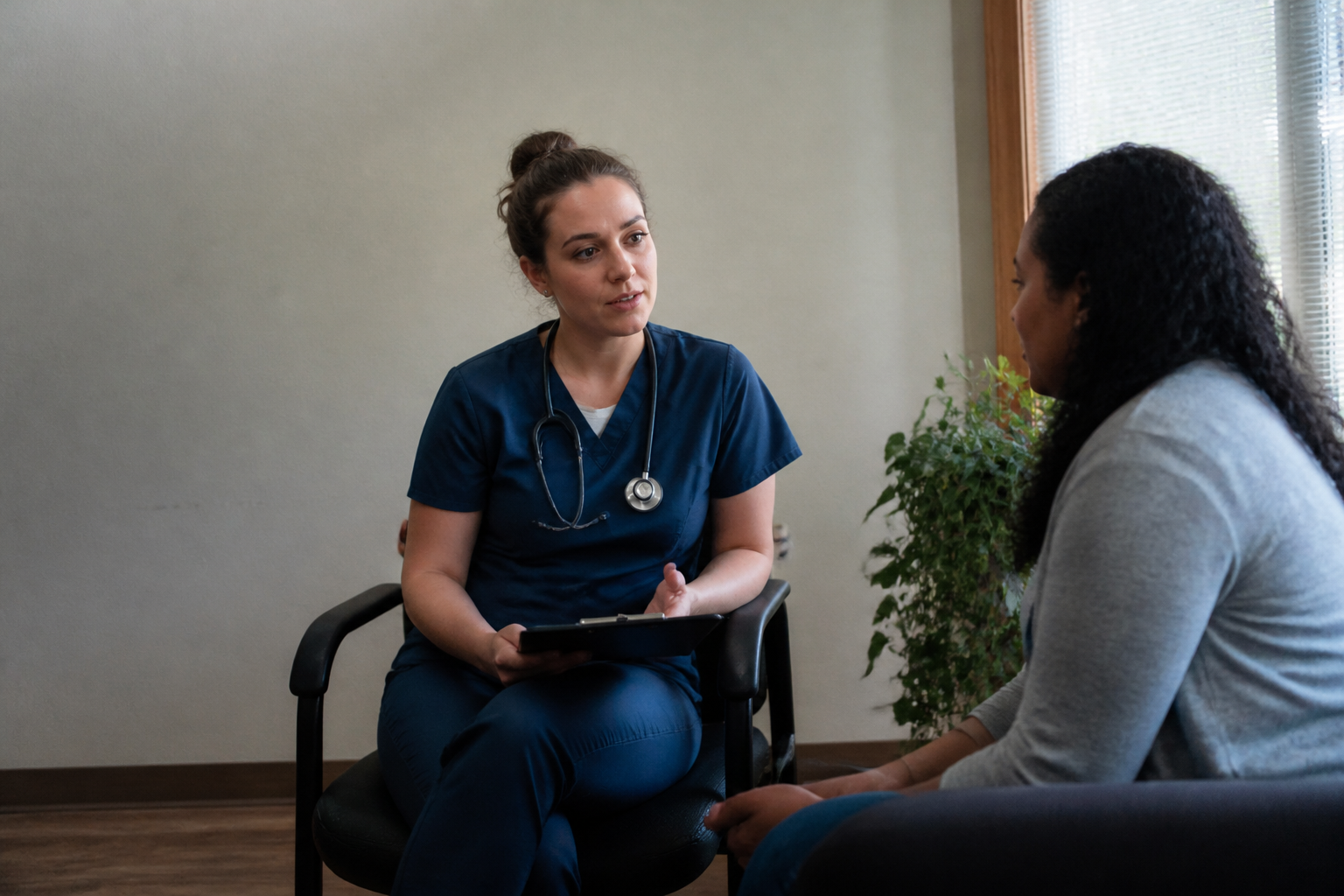
Minnesota's demand for psychiatric prescribers keeps outrunning the supply of clinicians trained to fill those roles, and rural counties feel it most, with long waits for medication management and few providers nearby. A PMHNP can diagnose, treat, and prescribe, which is why the credential is in demand.
The ranking covers MSN-level PMHNP programs only, not DNP, post-graduate certificate tracks, or direct entry MSN programs in Minnesota, which other pages often blur together. Campus and online formats share one list, and the programs below differ sharply in cost, pacing, and how much clinical placement help you get.
The real tradeoff is price against outcomes.
Key Points
- Rasmussen University-Minnesota and Capella University both waive entrance exams for their PMHNP master's tracks.
- Capella lists $41,650 in tuition, while Rasmussen estimates $50,680 for its PMHNP MSN.
- Walden graduates report median earnings of $122,823 four years after finishing.
Best PMHNP MSN Programs in Minnesota, Ranked for 2027
Three Minnesota-based schools offer a true MSN psychiatric mental health nurse practitioner track in our data, and all three deliver coursework online or in a hybrid format. The University of Minnesota and Winona State route PMHNP training through the DNP, so they are not ranked here. Accreditation and ANCC eligibility details below come from school and licensure disclosures, so confirm current status and application deadlines with each admissions office before you apply.
Rasmussen University-Minnesota
#1St. Cloud, MN · ~$7,000/yr (est.)
Best for: Working RNs wanting local practicums
Rasmussen University's St. Cloud campus anchors an online MSN nurse practitioner program with a PMHNP concentration, built for working nurses who already hold a BSN and RN license. Coursework is online with virtual immersion, paired with in-person practicums in your own community. The program is CCNE-accredited and prepares graduates for national board certification, though ANCC exam eligibility is not spelled out in the sources we reviewed, so confirm it before enrolling. The school's graduation rate is about 53 percent, and the school also advertises a pathway into a DNP.
- True MSN track with a PMHNP concentration
- CCNE accredited; ANCC eligibility not explicitly stated, so confirm
- About 27 months full-time; estimated cost $50,680
- No GRE required; 3.0 GPA and two professional references
- Requires BSN, current RN license and a background check
- January and July start dates
- Online coursework with virtual immersion and in-person practicums
- Advertises a seamless pathway to a DNP
Walden University
#2Minneapolis, MN · ~$11,000/yr (est.)
Best for: Online learners needing placement support
Walden University, based in Minneapolis, offers a fully online MSN with a PMHNP specialization and describes a Minnesota-specific process for matching students with preceptors. Walden coordinates the signed site affiliation agreement, while students help identify and confirm a suitable placement. The MSN is CCNE-accredited and prepares graduates for the ANCC certification exam. Walden does not offer Minnesota-specific tuition rates, so budget using its standard per-credit pricing.
- True MSN track; fully online option available
- CCNE accredited; prepares for the ANCC certification exam
- 63 quarter credits for BSN to MSN; 89 for RN to MSN
- Finish in as few as 24 months; tuition starts at $44,705
- Includes 640 practicum hours
- Practicum Pledge placement support and Minnesota preceptor matching
- Virtual skills lab and Grand Rounds case discussions
- Covers psychopharmacology and psychotherapy across the lifespan
Capella University
#3Minneapolis, MN · $15,000 – $20,000/yr (est.)
Best for: Nurses prioritizing Minnesota Board approval
Capella University, headquartered in Minneapolis, offers an MSN in psychiatric mental health nurse practitioner delivered online and in person. Its licensure disclosure states that the program meets Minnesota's educational requirements and is approved by the Minnesota Board of Nursing. It is CCNE-accredited, and graduates are eligible for the ANCC or AANP national certification exam. Applicants need one year of RN experience, and the school's graduation rate is about 20 percent, so ask about completion support.
- True MSN track; hybrid delivery, online with in-person components
- CCNE accredited; approved by the Minnesota Board of Nursing
- Eligible for the ANCC or AANP certification exam
- 70 quarter credits: 42 core and 28 specialization
- Minimum 750 practicum hours; about 39 months
- $595 per credit, about $41,650 total with no transfer credits
- No GRE or GMAT; 3.0 GPA and one year of recent RN experience
- Practicum placement support; no transfer credits accepted
Cost & outcomes by school
Federal data for the highest-earning Psychiatric Mental Health Nurse Practitioner programs, independent of the ranking above. Earnings are this field's master's graduates four years after completing, where the Scorecard reports them.
| School | Earnings | Tuition / yr | Debt | Grads/yr | Format |
|---|---|---|---|---|---|
| Walden University MN | $122,823 | $10,885 | $53,686 | 3,695 | Online |
| Capella University MN | $117,823 | $15,092 | $27,661 | 950 | Hybrid |
| Rasmussen University-Minnesota MN | — | $6,627 | — | 39 | Online |
Sources: U.S. Department of Education. Tuition and graduates: IPEDS. Earnings and debt: College Scorecard, this field's master's graduates; a dash means no figure is reported.
What Moved a Program up Our Minnesota PMHNP List
Accreditation came first: psychiatric mental health nurse practitioner programs had to lead to the ANCC PMHNP-BC exam, or they never reached the page. From there, the comparison across Master's Programs in Minnesota runs on federal figures rather than reputation: net price after aid, institution-wide graduation rates, how many nursing master's degrees a school actually awards, and program-level graduate earnings where they are published.
Certification results are the honest gap. Minnesota programs posted an 83% first-time ANCC PMHNP-BC pass rate in 2024 and 82% in 2025, but those are statewide figures, not attributable to any single school, and the programs here do not post their own cohort pass or completion rates publicly. We say that plainly instead of guessing.
Two limits worth holding onto: graduation rates describe the whole institution, undergraduates included, and net price is an average across all students, not a quote for your file.
Can You Earn a PMHNP Master's Online in Minnesota?
Yes, but "online" in online PMHNP programs usually means online didactic coursework, not remote clinical training. Rasmussen University-Minnesota lists its PMHNP MSN as online with virtual immersion and in-person practicum, about 27 months. Walden University offers a fully online option with virtual skills labs and Grand Rounds. Capella University uses a hybrid format; its MSN includes 750 clinical hours and a 39-month completion path, so confirm any on-campus intensives directly. The tradeoff is scheduling, not workload: clinical hours must still be completed in person at approved sites, and MSN programs in Minnesota generally require 500 to 750 hours.1 Fully online and hybrid options still leave the clinical component local, so working nurses often choose a format around their shift schedule and preceptor availability. If you are considering an out-of-state online program, confirm Minnesota state authorization and clinical site approval before applying.
Related Articles
Which Minnesota PMHNP Master's Programs Skip the GRE?
Rasmussen University-Minnesota and Capella University both waive entrance exams for their PMHNP master's tracks. Walden University's GRE policy didn't turn up in our review, so confirm it with admissions.
- GRE policy by schoolRasmussen: no GRE requirement. Capella: no entrance exam required. Walden: no published GRE policy in the material we reviewed.
- Degree, license and GPARasmussen requires a BSN, an RN license and a 3.0 minimum GPA. Capella also lists a 3.0 minimum. Walden's GPA floor wasn't available to us. Check that your license is unencumbered and valid for Minnesota practice (Minnesota or compact).
- Experience, references and statisticsCapella requires work experience, but the length wasn't specified. Rasmussen asks for two professional references and a background check. None of these pages listed a statistics prerequisite, so ask admissions before applying.
- RN-to-MSN or ADN entryRasmussen requires a BSN, and no ADN-entry or RN-to-MSN route into the PMHNP track was identified for any of these three schools. ADN-prepared nurses should finish a BSN first or ask each school directly.
Clinical Hours and Preceptor Placement: Who Does the Legwork?
Supervised clinical hours are the blocks of real patient care you log under a licensed psychiatric provider before you can sit for certification. ANCC PMHNP-BC certification criteria set a floor of 500 direct patient care hours, and PMHNP programs commonly land between 500 and 750. Capella publishes 750 clinical hours for its hybrid master's.
Who finds those placements is the bigger variable across Minnesota nurse practitioner programs. Walden describes a shared model: the school coordinates placements and holds the site contracts, but students help identify and confirm each rotation. Rasmussen advertises personalized practicum coordination alongside its in-person practicum components. Neither promises a seat waiting for you.
That matters here because psychiatric preceptors cluster in the Twin Cities and Rochester. Outside those metros, a student may wait longer or drive farther, though Minnesota allows rotations out of state and does not require Board approval for clinical sites. The supervising preceptor must hold unencumbered Minnesota RN and APRN licenses.
Before you deposit, ask admissions two blunt questions: is placement guaranteed in writing, and does any fee apply if a site requires compensation?
What a Minnesota PMHNP Master's Costs, Plus Licensure and ANCC Certification
Published program totals and what you actually pay are rarely the same number. Start with the totals the schools advertise, then benchmark them against the Most Affordable Psychiatric Mental Health Nurse Practitioner MSN Programs. Capella lists $41,650 in tuition at $595 per credit across 70 quarter credits. Rasmussen University-Minnesota estimates $51,230. Walden's published total is $51,760 for 63 credits. Credit structures differ (quarter versus semester), so compare totals rather than per-credit rates.
Then add what listed tuition hides. Ask each school for its current fee schedule covering technology, clinical placement, immersion or travel, background checks, books, and student liability insurance. Capella and Rasmussen both require background checks, and Rasmussen includes in-person practicum components. We could not verify specific 2026 fee amounts for these, so confirm them before you budget.
ANCC PMHNP-BC Exam
Graduates of a CCNE, ACEN, or NLN CNEA accredited program, with at least 500 supervised clinical hours, sit for the ANCC PMHNP-BC exam. Fees in 2026 run from $220 for APNA members to $395 for nonmembers, including a $140 non-refundable administrative fee. Membership can lower the price.
For the Minnesota Board of Nursing APRN steps, see the licensure callout below.
Minnesota Board of Nursing APRN Licensure at a Glance
Earnings and Job Outlook for Minnesota PMHNP Graduates
Walden University's PMHNP graduates report median earnings of $122,823 four years after finishing, and Capella University's report $117,823 at the same mark. Rasmussen University-Minnesota's figure is $89,809 one year after finishing, drawn from a very small group of completers, so treat it cautiously.
Debt shapes the ROI read. Walden's median debt is $53,686, under half of one year's earnings at that four-year mark. Capella's is $27,661, about a quarter, against published program tuition of $41,650. Both look strong on payback.
Demand backs that up. The Bureau of Labor Statistics projects nurse practitioner employment to grow 41% from 2025 to 2035, roughly 137,800 jobs, though it publishes no PMHNP-only projection. Minnesota's economic development agency projects 44.1% growth for the state, where 7,780 NPs earn a median $65.86 an hour (Q1 2026). HRSA's Health Professional Shortage Areas Quarterly Report lists 150 mental health shortage designations in Minnesota, meeting only 24.28% of need and calling for 123 more practitioners. That is a broad mental health measure, not a count of psychiatric prescribers alone.
Minnesota Nurse Practitioner Pay Snapshot
Pay for Minnesota's nurse practitioners, the group PMHNP graduates join.
PMHNP MSN Questions Minnesota Applicants Still Ask
What is the difference between a PMHNP MSN and a post-graduate certificate?
Can ADN-prepared nurses in Minnesota enter a PMHNP master's program?
What are the clinical hour requirements for PMHNP programs?
Compare Psychiatric Mental Health Nurse Practitioner programs on the data that matters
Explore more Nursing specializations or browse every graduate field.
All Nursing programs