Best Master's in Music Education Programs in Maryland
Compare 5 accredited Music Education programs in Maryland, with graduate earnings, cost, debt, and completion data from IPEDS and the U.S. College Scorecard.
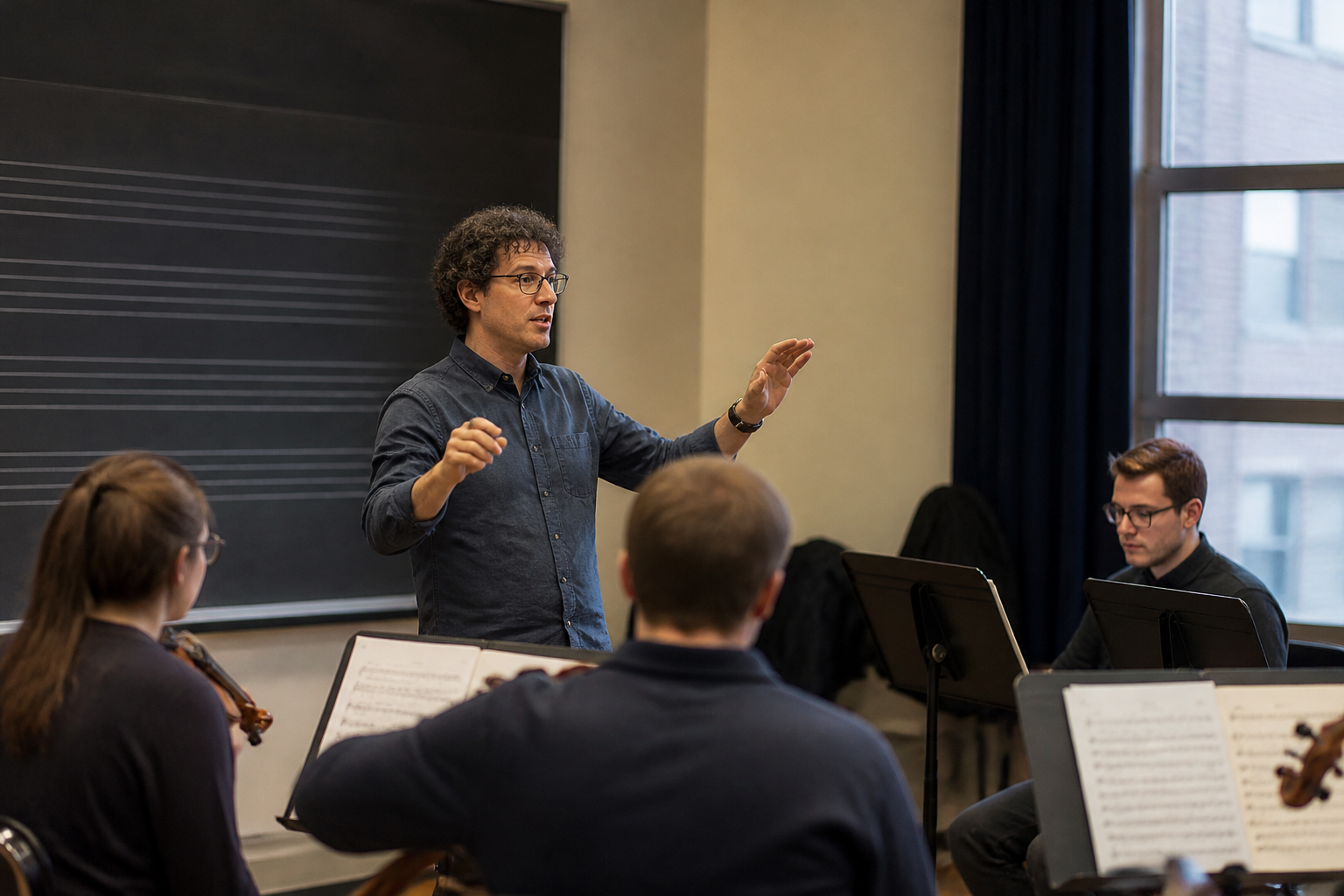
A Maryland master's in music education can run from Towson University's $12,636 in-state tuition to Johns Hopkins University's $65,230 sticker price, and the net price narrows that spread considerably. For working teachers, the sharper question is format: a Kodály cohort at Loyola (admission suspended for 2026 and 2027), a flexible MAT at Mount St. Mary's, or a conservatory program with no entrance exam at Peabody. Maryland offers only a handful of these degrees, so each option's certification pathway and payback timeline deserve close comparison.
Key Points
- Towson University lists in-state graduate tuition of $12,636 and out-of-state tuition of $22,860.
- Peabody at Johns Hopkins University publishes the most specific admission criteria, so confirm each school's requirements directly.
- Maryland Music PreK-12 certification requires Praxis Music: Content and Instruction (5114) with a passing score of 162.
Best Master's in Music Education Schools in Maryland
Maryland's master's in music education options range from a full-time Baltimore conservatory program to a summer-cohort Kodály degree and an online teaching-licensure track. Graduation rates below describe the whole institution, not completion of the music program, and net price figures are approximate institution-wide averages, not quotes for any individual student. Check each program page for current admission status and certification details before applying.
Johns Hopkins University
#1Baltimore, MD · ~$65,000/yr (est.)
Best for: Career changers seeking Maryland teaching certification
Johns Hopkins University offers its Master of Music in Music Education through the Peabody Institute in Baltimore. The 38-credit program combines coursework in research, curriculum, and the psychology of music teaching with teaching practica in local schools. Students without prior certification become eligible for Maryland K-12 music certification, while certified teachers can take core courses online in the Hyflex format. Schools offering this program graduate about 94% of students institution-wide, though the program itself is small.
- 38 total credits, completed in four semesters of full-time study
- In-person and Hyflex formats, with online core courses for certified teachers
- Leads to Maryland K-12 music teaching certification for those not yet certified
- Elementary and secondary practica plus a full-semester teaching internship
- Thesis or capstone option; no residency required
- No entrance exam required; 3.0 GPA minimum
- Full-time and part-time options; up to 6 transfer credits accepted
Towson University
#2Towson, MD · ~$13,000/yr (est.)
Best for: Working Maryland teachers wanting flexible, in-state study
Towson University's M.S. in Music Education is aimed at new and practicing educators who want advanced teaching skills with room to individualize. Students choose a thesis or a graduate project (a paper, recital, or composition) and can fill up to 15 credits with electives in theory, history, or performance. Towson's music programs hold NASM accreditation, though available sources do not confirm whether that review covers this specific degree. Schools offering this program graduate about 69% of students institution-wide, and Maryland residents benefit from a substantial in-state tuition advantage.
- 34 total credits with thesis or graduate project pathways
- Two concentration options
- Up to 15 elective credits in a specialization
- Project options include research paper, recital, or composition
- Online and face-to-face courses, including summer options
- Comprehensive exam covers music and music education content
- Program director: Dr. Marina McLerran
Loyola University Maryland
#3Baltimore, MD · ~$20,000/yr (est.)
Loyola University Maryland offers a Master of Education in Kodály Music Education, one of very few programs of its kind worldwide. Practicing teachers meet in Baltimore for three weeks each July over four summers, progressing through Kodály levels while continuing to teach during the school year. Admission is currently suspended for Summer 2026 and Summer 2027, so confirm status with the school before planning around it. Schools offering this program graduate about 79% of students institution-wide.
- 36 total credits completed over four successive summers
- Three-week in-person sessions each July in a cohort model
- Thesis project required
- Kodály certification after Level III, with Levels I-IV in the sequence
- Secondary choral studies focus for middle and high school teachers
- Admission suspended for Summer 2026 and Summer 2027
- Not open to international students needing an F-1 visa
Mount St. Mary's University
#4Emmitsburg, MD · $10,000 – $15,000/yr (est.)
Mount St. Mary's University in Emmitsburg delivers its Master of Arts in Teaching in Music Education (Grades P-12) online through Mount Online. The degree leads to initial teacher certification, and it pairs scheduled Zoom sessions with asynchronous Canvas coursework. It suits career changers who need licensure and cannot relocate. Program size appears very small, and schools offering this program graduate about 65% of students institution-wide.
- Master of Arts in Teaching leading to initial music teacher certification
- Prepares teachers for pre-K through grade 12
- Online with regular Zoom meetings and asynchronous Canvas coursework
- Offered through Mount Online for non-residential learners
- Taught alongside MAT candidates in other subject areas
- Catholic university emphasis on ethical leadership
Cost & outcomes by school
Federal data for the highest-earning Music Education programs, independent of the ranking above. Earnings are this field's master's graduates four years after completing, where the Scorecard reports them.
| School | Earnings | Tuition / yr | Debt | Grads/yr | Format |
|---|---|---|---|---|---|
| Loyola University Maryland MD | $81,156 | $20,070 | $34,531 | 54 | Campus |
| Towson University MD | $69,571 | $12,636 | — | 63 | Campus |
| Mount St. Mary's University MD | — | $14,351 | — | 5 | Online |
| University of Maryland-College Park MD | — | $18,276 | — | — | Campus |
| Johns Hopkins University MD | — | $64,730 | — | 7 | Campus |
Sources: U.S. Department of Education. Tuition and graduates: IPEDS. Earnings and debt: College Scorecard, this field's master's graduates; a dash means no figure is reported.
Online and Hybrid Master's in Music Education Options in Maryland
Music Education is a hands-on field, so even the most flexible degrees usually require in-person conducting and ensemble work. Keep that tension in mind when you compare formats.
Towson University's M.S. in Music Education offers thesis and graduate-project plans, each at a minimum of 34 units, with up to 15 elective units in a specialization. The 2026-2027 catalog calls the curriculum flexible, but it does not label the degree fully online, hybrid, or summer-only, and it describes no residency. Treat Towson as a campus-based program until the department confirms otherwise.
For Loyola University Maryland and Mount St. Mary's University, confirm delivery format directly with the program office before you plan around it.
No Maryland program here is clearly documented as fully online. If you need a fully remote master of music education, out-of-state options in the Best Online Master's in Music Education Programs guide are the realistic alternative.
Summer-intensive and hybrid schedules suit full-time K-12 teachers because coursework avoids the school-year rehearsal and concert calendar. Ask each school three things: which courses meet in person, whether summer sessions can carry the degree, and where conducting and ensemble requirements are completed.
Which Maryland Master's in Music Education Programs Waive or Make the GRE Optional?
Most music education master's programs weigh performance and teaching experience more heavily than standardized test scores. We only record a GRE policy when a school's admissions page states one, and we never infer a waiver from silence. Where a policy could not be verified, confirm it with the program before you apply.
| School | GRE Policy | Audition / Interview / Teaching Video | Notes |
|---|---|---|---|
| Towson University | No published policy | Not stated as an admissions requirement | The Music Education M.S. degree-requirements page does not mention the GRE. Placement examinations are given during Department of Music audition dates and are required before enrolling in advanced graduate music theory courses. |
| Johns Hopkins University | Not verified | Not verified | No admissions page for the master's in music education could be confirmed for this page. Check the program's current admissions requirements directly. |
| Loyola University Maryland | Not verified | Not verified | No GRE policy or audition requirement could be confirmed for this page. Ask the graduate admissions office whether test scores, a teaching video, or an interview apply. |
| Mount St. Mary's University | Not verified | Not verified | No GRE policy or audition requirement could be confirmed for this page. Confirm current requirements with the program before applying. |
Related Articles
Admission Requirements for Maryland Master's in Music Education Programs
Requirements vary by school, so confirm details on each program's admissions page. Peabody at Johns Hopkins University publishes the most specific criteria.
- Prior degreePeabody asks for a Bachelor of Music Education or Bachelor of Music. Applicants with other majors should ask admissions directly about a proficiency check.
- Teaching certificateA current certificate is not required to apply to Peabody. You must be seeking licensure, already licensed and teaching at least part time, or completing an approved internship.
- Audition or videoPeabody asks for a short teaching video and a sample lesson plan.
- GPA and materialsPeabody expects a minimum 3.0 undergraduate GPA. Plan on transcripts, recommendation letters, essays or a statement of purpose, and a resume. Check Towson University's M.S. page for its list.
- DeadlinesPeabody's general master's regular-decision deadline is December 1, with recorded materials due February 1 and late admission on May 1. Confirm that these apply to Music Education. Towson sends applicants to its program website for current dates.
Cost, Financial Aid, and Maryland Licensure or Certification
How much does a master's in music education in Maryland actually cost? Among Master's programs in Maryland, music education tuition varies widely: Towson University at $586 per credit in-state and $1,212 out-of-state, Mount St. Mary's University at $14,351, Loyola University Maryland at $20,070, and Johns Hopkins University at $64,730. Only Towson charges residents less than nonresidents.
Per-credit math
Towson's proposed 2026-27 rates are $586 per credit in-state and $1,212 out-of-state, subject to change. Its program lists 34 credit hours, so tuition alone comes to roughly $19,900 for residents and $41,200 for nonresidents, before fees. Johns Hopkins lists 38 credits and Loyola's Kodály M.Ed., one of several M.Ed. programs in Maryland, lists 36. Mount St. Mary's per-credit rate and credit total are not covered here, so confirm both with the school.
Aid options
Loyola states that financial aid and scholarships are available. For the others, ask each music department about graduate assistantships, department scholarships, and whether your district reimburses teacher tuition. No amounts are published here, so don't budget around them until you have an offer in writing.
Certification fit
Johns Hopkins includes Maryland K-12 certification, with practica and a full-semester internship, and offers online core courses for already-certified teachers. Mount St. Mary's MAT is one of several MAT programs in Maryland that prepares P-12 teachers. Certified teachers can pursue the degree for advancement, and a master's can support advanced professional certificate status. Check current requirements with the Maryland State Department of Education.
Maryland Music Teacher Certification and Reciprocity
Career and Salary Outcomes for Maryland Music Education Graduates
What do music education graduates in Maryland actually earn, and how long does the debt take to pay off? The answer varies by program, and only a couple report graduate earnings tied specifically to this degree.
What graduates earn
Loyola University Maryland's Kodály M.Ed. reports median earnings of about $67,357 one year after finishing, rising to roughly $81,156 four years out. Towson University's Music Education M.S. graduates post a median near $61,191 one year after completion and about $68,385 five years out. Johns Hopkins and Mount St. Mary's do not publish program-level earnings for this degree, so we leave those figures out rather than substitute whole-university numbers.
Weighing debt against pay
Loyola graduates carry a median program debt around $34,531, with an estimated 10-year monthly payment near $393, a manageable load against those earnings, value-focused students can also compare the most affordable master's in music education programs. Towson does not report program-level debt here.
Where these degrees lead
Graduates commonly move into K-12 band, choral, orchestra, and general music teaching, then into roles such as department chair, district arts coordinator, or community music program director.
Maryland Music Education Master's FAQs
What is the difference between an M.A., M.M., and M.S. in music education?
Do I need a teaching certificate to apply to a music education master's program in Maryland?
Can I keep teaching full time while earning the degree?
Compare Music Education programs on the data that matters
Explore more Education & Teaching specializations or browse every graduate field.
All Education & Teaching programs