Accelerated Master's in Sociology Programs
Compare 320+ accredited fastest Sociology programs at 180+ schools, with graduate earnings, cost, debt, and completion data from IPEDS and the U.S. College Scorecard.

Columbia's sociology MA runs one year, and Oklahoma's accelerated BA/MA lets students double-count 19 credit hours toward both degrees. That overlap is the whole appeal of 4+1 and bachelor's-to-master's pathways: graduate coursework taken as an undergraduate counts twice, so the master's arrives faster than the standard two-year route.
The tension is cost against speed. A one-year degree at a private university can carry tuition above $57,000, while public flagships with shared-credit tracks charge a fraction of that.
The programs below are ordered for the shortest path to the degree, and the quickest options are not always the cheapest or the best fit for a PhD.
Key Points
- Most accelerated sociology paths take about five years total.
- Arizona State offers the clear online sociology master's option.
- A thesis track strengthens applications for doctoral study.
The 10 Fastest Accelerated Master's in Sociology Programs
We ranked these schools for the fastest accelerated sociology master's options: one-year terminal degrees, five-year bachelor's-to-master's paths, and shared-credit tracks. Each card lists the program, delivery format, in-state and out-of-state tuition, and the school's institution-wide graduation rate. Tuition figures are school-reported graduate charges; treat net price as an approximate average where shown.
Columbia University in the City of New York
#1New York, NY · ~$58,000/yr (est.)
Best for: Research-intensive urban scholars on accelerated path
Columbia University offers a one-year, free-standing MA in Sociology that emphasizes independent research and pushes students beyond traditional qualitative and quantitative divides. The program specializes in ethnographic methods applied to urban environments, while also accommodating quantitative, international, education, and historical projects. Its intensive structure suits students who want advanced sociological training in New York City without committing to a PhD.
- One-year intensive program
- Free-standing Master's degree
- Combines academic training
- Independent research component
- Ethnographic methods specialization
- Urban environment focus
- Quantitative approaches accommodated
- International research options
University of Chicago
#2Chicago, IL · ~$69,000/yr (est.)
Best for: Quantitative social scientists seeking cross-department training
The University of Chicago's MAPSS program includes a sociology concentration that lets students take nine graduate courses across all UChicago departments and professional schools. Students work directly with faculty and complete either an MA thesis or a capstone. The sociology pathway spans areas such as urban studies, global studies, race, education, economic sociology, organizations, demography, ethnography, survey research, and computational sociology.
- 6 concentration options
- One-year program
- 9 total courses
- Thesis or capstone option
- Courses from all UChicago departments
- Work directly with UChicago faculty
- World-class research university resources
University of Connecticut
#3Storrs, CT · ~$23,000/yr (est.)
Best for: Social-justice focused undergraduate sociology majors
University of Connecticut offers both a traditional 30-credit MA in Sociology and an accelerated BA/MA track for its sociology majors. The program is built around five specializations, including gender and sexuality, racism and social inequality, human rights, policy, and research methods. Students complete a capstone portfolio of at least three papers, and the accelerated path lets qualifying undergraduates double-count up to 12 graduate credits toward both degrees.
- 5 concentration options
- 30 total credit hours
- Capstone portfolio of three papers
- Major Advisor guides course selection
- Public policy elective courses
- Data science electives with advisor approval
- 30-credit master's program
- Complete BA and MA in five years
- Focus on social justice
- Covers gender and racism
- GPA above 3.3 required
- 12 credits core courses
- 9 credits required electives
- 9 additional credits
Brandeis University
#4Waltham, MA · $60,000 – $65,000/yr (est.)
Brandeis University offers a stand-alone MA in Sociology and a joint MA in Sociology and Women's, Gender, and Sexuality Studies. Both tracks require eight courses and culminate in either a master's project or an exam, with the joint program emphasizing feminist research methods and social theory. The university's small graduate seminars provide close faculty guidance for students aiming at advanced research or PhD preparation.
- Eight courses required
- Five courses in Sociology Department
- One year of SOC 300a
- Two graduate seminars required
- Research methods course
- Social theory course
- Master's project or exam
- Take-home MA exam option
- One-year completion time
- Joint MA program
- Stand-alone or PhD pathway
- 25-40 page research paper
- Foundational women's studies course
- Feminist research methods course
- Sociology theory course required
University of Oklahoma – Hudson College of Public Health
#5Norman, OK · ~$9,000/yr (est.)
The University of Oklahoma offers an accelerated BA/MA in Sociology that lets students earn both degrees in five years. The program requires a 3.5 GPA and a junior-year application, with up to 19 graduate credit hours double-counted between degrees. Students complete rigorous training in sociological theory, research methods, and a master's thesis, preparing for advanced research careers or doctoral study.
- Accelerated BA/MA program
- Completed in 5 years
- 3.5 GPA requirement
- Junior year application
- Double-count up to 19 hours
- 34 credit hours required
- Personal statement needed
- Writing sample required
Binghamton University
#6Vestal, NY · $10,000 – $15,000/yr (est.)
Binghamton University offers a sociology graduate program with MA and PhD tracks, plus a fast-track BA+MA option for undergraduates. The curriculum focuses on labor, migration, capitalism, carceral and surveillance studies, and power and the politics of resistance. Students work in a transdisciplinary environment with faculty engaged in ethnography and historical research, with doctoral students earning master's degrees along the way.
- PhD in Sociology offered
- MA in Sociology offered
- Focus on labor, migration, capitalism
- Focus on carceral and surveillance
- Focus on power and resistance
- Transdisciplinary learning environment
- Faculty do ethnography and research
- Doctoral students earn master's degrees
- BA and MA in five years
- Accelerated 4+1 program
- Graduate courses in senior year
- Undergraduate tuition first four years
- Graduate tuition fifth year
- 3.3+ GPA required for admission
- Two professor references needed
- 800-1000 word personal statement
University of North Carolina at Charlotte
#7Charlotte, NC · $5,000 – $10,000/yr (est.)
UNC Charlotte's MA in Sociology uses a 35-credit curriculum with core training in research design, sampling, data analysis, and sociological theory. Students can add an Applied Social Research concentration that substitutes a research practicum for the thesis, and UNC Charlotte undergraduates may enter through the Early Entry Program. The program does not require GRE scores and prepares graduates for PhD study and roles in government, marketing, program planning and evaluation, business, media, and nonprofits.
- No entrance exam required
- 35 total credit hours
- Thesis or capstone option
- 15 core credit hours
- Research practicum in lieu of thesis
- Early Entry for UNC Charlotte undergraduates
- Prepares students for Ph.D. study
- Applied Social Research in one year
American University
#8Washington, DC · ~$37,000/yr (est.)
American University offers a combined BA and MA in Sociology that lets qualified students apply up to 9 graduate credits toward both degrees. Admission requires a minimum 3.00 GPA and an application during the junior year, with 18 graduate credits completed after the bachelor's degree. The program keeps students continuously enrolled while satisfying all standard BA and MA requirements.
- Combined BA and MA degrees
- Accelerated bachelor's/master's program
- Up to 9 shared credits
- Minimum 3.00 GPA required
- Apply during junior year
- 18 graduate credits required
- Complete within three years
- Continuous sequential enrollment
Arizona State University
#9Tempe, AZ · ~$14,000/yr (est.)
Arizona State University's MA in Sociology is a 30-credit program designed for applied careers analyzing societal structures and solving social problems. The curriculum covers sociological theory, research methods, and statistics, with a customizable capstone and electives. Admission requires a bachelor's degree with a minimum 3.0 GPA, a personal statement, two recommendation letters, and proof of English proficiency for non-native speakers.
- 30 credit hours required
- MA Sociology degree awarded
- No second language requirement
- Minimum 3.0 GPA required
- Bachelor's degree prerequisite
- Two letters of recommendation
- Personal statement required
- Capstone culminating experience
University of Cincinnati
#10Cincinnati, OH · ~$15,000/yr (est.)
The University of Cincinnati's MA in Sociology offers concentrations in community and urban sociology, health and medicine, race and ethnicity, and gender and sexuality. Students can pursue a terminal one-year option without a thesis, a BA/MA 4+1 track for UC undergraduates, or a pathway for doctoral students. The program emphasizes social inequality and prepares graduates for research roles across sectors or further doctoral study.
- Concentrations in community and urban sociology
- Concentrations in health and medicine
- Concentrations in race and ethnicity
- Concentrations in gender and sexuality
- Terminal one-year master's option
- BA/MA 4+1 program for undergraduates
- No MA thesis requirement for some options
- Prepares for research or PhD study
None of the ranked Sociology programs match the fastest lens yet. The full ranking is at the link above.
Cost, debt & payoff
Median earnings of this field's master's graduates (4 yrs after completing) vs. their median federal loan debt · U.S. College Scorecard
Across these programs the median graduate earns about $69,199 and finishes with roughly $36,380 in debt — a ratio that clears a common rule of thumb (keep debt below first-year salary). Tuition and debt vary widely school to school, so check the per-school figures in the table above before you shortlist.
How Long an Accelerated Sociology Master's Takes and What Shared Credits Save
How long does an accelerated sociology master's take? Most pathways compress the bachelor's and sociology master's programs into about five years.1 Albany, Indianapolis, George Mason, Binghamton, SIUE, Loyola Chicago and Arizona State all describe a five-year track. American University's program is designed to finish in as little as three years.2
Shared credits are what make that possible. Nine to 12 is typical.3 Albany, Indianapolis, UMass Boston and Arizona State share 124, George Washington shares 9 (three courses)3, and SIUE allows 6 to 12. George Mason permits up to 18 attempted, with 12 counting toward the undergraduate degree and 6 reserved for graduate credit only. Loyola caps sharing at 50% of required graduate hours.7
How Shared Credits Are Billed
Billing rules differ by school. Albany bills shared graduate-level work at the undergraduate rate.1 Indianapolis charges undergraduate tuition while you remain an undergraduate, but undergraduate scholarships do not cover the graduate year.5 Binghamton charges undergraduate rates for four years and graduate rates in year five.6
The savings logic behind an affordable master's in sociology is simple: every graduate course absorbed into your senior year is one fewer billed at graduate prices, and a shorter graduate stay means fewer semesters of tuition and fees. Per-credit fees and post-baccalaureate billing vary, so confirm the exact rates with the bursar before you commit.
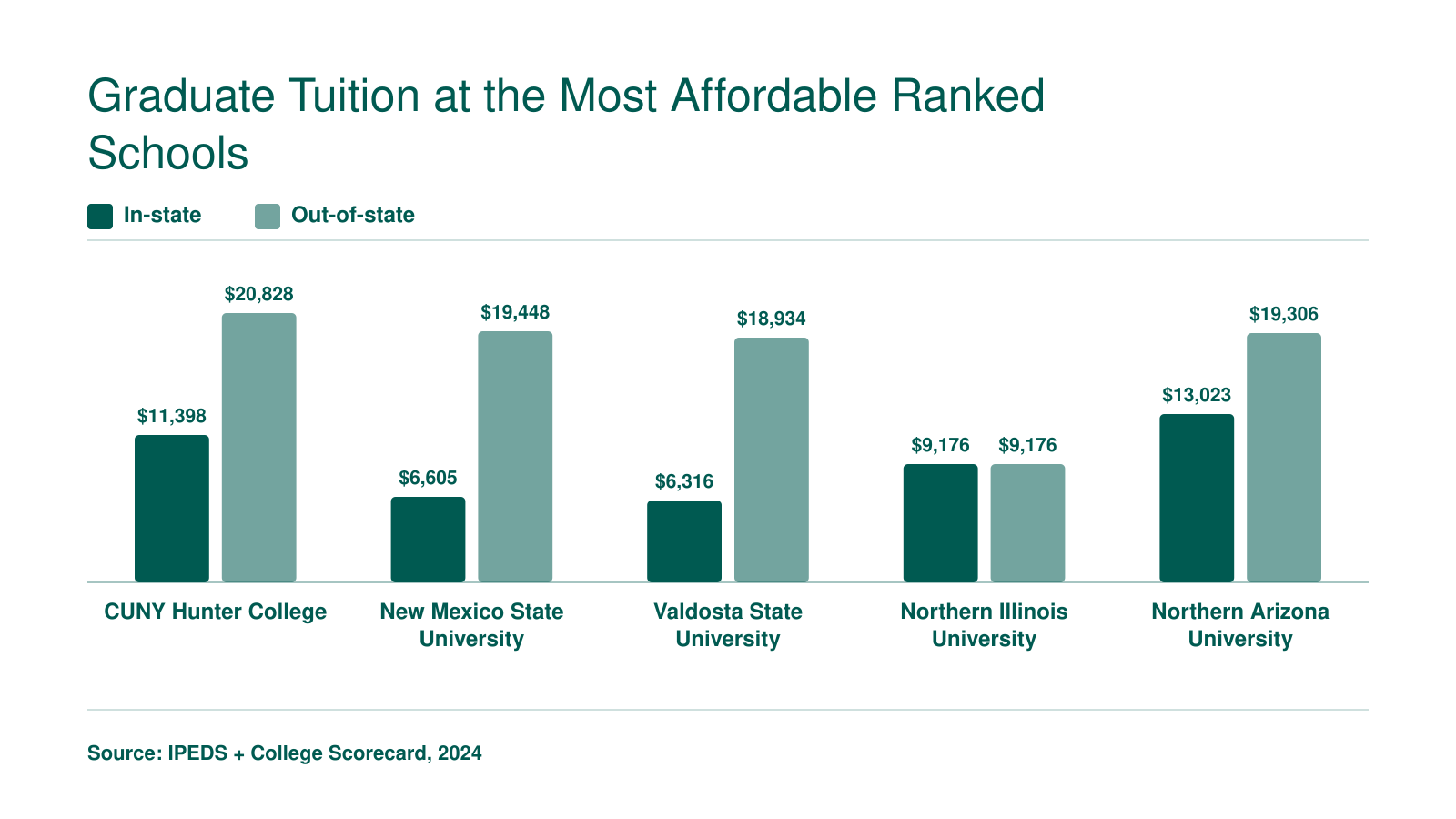
Graduate Tuition at the Most Affordable Ranked Schools
These are published annual graduate tuition and fee figures for the most affordable schools ranked here. Shared credits in accelerated programs can reduce the number of graduate semesters a student pays for.
Related Articles
Can You Complete an Accelerated Sociology Master's Online?
Online delivery versus campus study is the usual framing for online master's programs, but accelerated sociology pathways complicate it. Among the programs ranked here, campus delivery dominates, and Arizona State's Master of Arts in Sociology is the clear exception, an online master's in sociology built around 30 credit hours and a capstone.
The catch is structural. An accelerated pathway begins while you are still an undergraduate, so the shared-credit phase usually runs through your home campus even when the graduate portion is flexible. American University's combined BA/MA allows up to nine credits to double-count but requires 18 master's credits in residence after the bachelor's.1 Loyola University Chicago teaches its MA in person at the Lake Shore Campus on weekday evenings and weekends, and Temple's graduate year sits at Main Campus.3
A few schools do open the graduate phase. UMass Boston lists its accelerated master's as online, in person, or hybrid, with up to 12 advanced standing credits and at least 18 credits completed in graduate status.2 UCCS lists its Sociology BA/MA as on campus and hybrid.
One practical step: before you register for any online graduate course as an undergraduate, confirm in writing that it counts toward the shared-credit allowance.
Admission Requirements for Accelerated Sociology Programs
- Minimum GPAMost programs set a cumulative GPA near 3.0–3.3. UCCS and UMBC require 3.00 overall; Binghamton and UConn list 3.3; George Mason requires 3.25 overall and 3.50 in sociology; George Washington asks 3.4 overall and 3.5 in the major.
- Class standing and timingStudents usually apply as juniors after a credit threshold, 90 credits at UCCS or UMBC, 96 at Binghamton, though George Mason allows entry after 60 credits.
- Prerequisite courseworkPrerequisites often include sociological theory, research methods, and statistics. Examples include UCCS's SOC 1110 and SOC 3070, Oklahoma's SOC 1113, SOC 3123, and SOC 3133, and UMBC's SOCY 101 with a B or better.
- Recommendations and statement of purposeFaculty recommendations are usually required, George Washington and Oklahoma ask for three, while Binghamton, UMBC, and IU Indianapolis require two, and a brief statement of purpose is normally expected.
- GRE policyThe GRE is often waived or optional for internal accelerated applicants. George Washington and UConn do not require it, and Columbia lists it as optional.
- Application deadlinesDeadlines vary. Columbia's spring 2027 graduate-credit filing deadline is November 19, 2026; George Washington uses April 1 of junior year; Oklahoma lists October 1 for fall and April 1 for spring.
Thesis or Non-Thesis: Choosing a Track for Careers or a PhD
A thesis track means designing an original research project, writing it up under a faculty committee, and defending it. A non-thesis track swaps that project for a comprehensive exam, capstone paper, or internship. The thesis is the stronger signal for sociology PhD applicants, and Kansas State, the University of North Texas, and Texas Tech all recommend it for students aiming at doctoral work.123 Non-thesis routes are usually more career-oriented and, without committee scheduling and revisions, more likely to finish on time (how long does a master's in sociology take).
The structure varies by school. At North Texas, thesis students take 6 thesis hours plus 15 hours of substantive coursework, while exam-track students complete 21 substantive course hours instead.2 SIUE offers a comprehensive exam in theory, methods, and a selected area with 6 additional course hours, or an internship requiring at least 140 supervised hours, a written report, and an oral exam.
For workforce-bound students, research or public-service internships and applied coursework fit the government, business, and nonprofit careers Kansas State points non-thesis students toward.1
Pick your track before senior year. Shared credits only save time if the courses you double-count fit the route you finish on.
Sociology programs by state
Frequently Asked Questions About Accelerated Sociology Programs
Are accelerated master's degree programs worth it?
What can you do with a master's in sociology?
What happens if you leave the accelerated program before finishing the master's?
Compare Sociology programs on the data that matters
Explore more Social Work & Social Sciences specializations or browse every graduate field.
All Social Work & Social Sciences programs