Accelerated Master's in Educational Psychology Programs
Compare 250+ accredited fastest Educational Psychology programs at 170+ schools, with graduate earnings, cost, debt, and completion data from IPEDS and the U.S. College Scorecard.
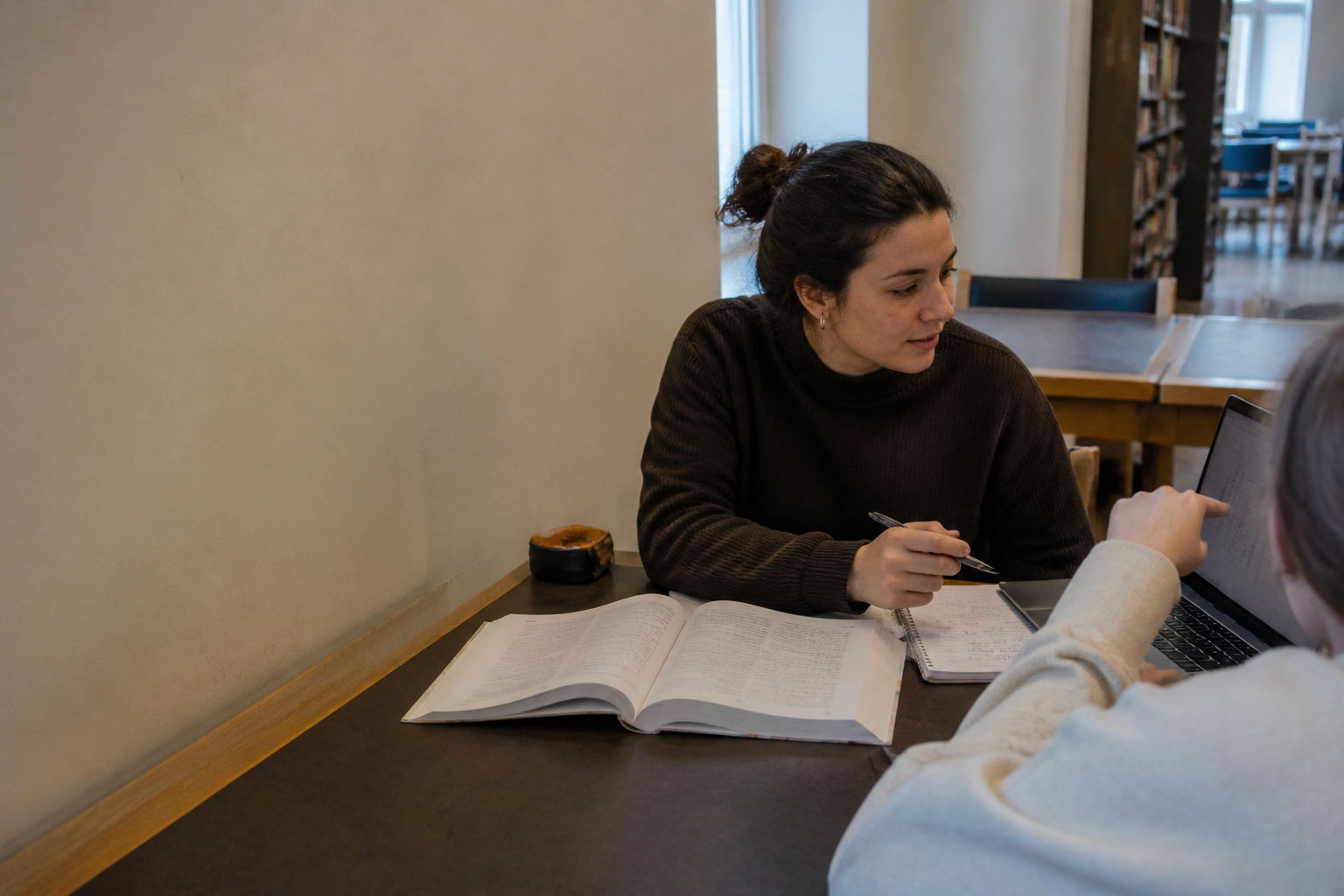
A master's in educational psychology does not require two years. Several ranked programs require only 30 to 45 credit hours and finish in about one year, and others fold graduate credits into a bachelor's final year. Formats include campus, online, and hybrid, including several online educational psychology programs.
That speed has a tradeoff. Online and hybrid formats remove the residency barrier, but many school psychology tracks still require supervised practicum and internship hours that a compressed 12-month calendar squeezes. Students should confirm the condensed sequence satisfies the state licensing or certification they need before committing.
Key Points
- 4+1 tracks count graduate credits toward both bachelor's and master's degrees
- George Mason lets accelerated students pay undergraduate rates for shared graduate credits
- A general educational psychology master's alone rarely qualifies graduates as school psychologists
The 10 Fastest Accelerated Educational Psychology Master's Programs
Speed matters, but so does what you pay and where the degree takes you, so this list puts the quickest paths first and checks each against verifiable cost and outcome data. Programs below range from one-year master's tracks to accelerated bachelor's-to-master's pathways, with formats spanning on-campus, hybrid, and online options.
University of Virginia
#1Charlottesville, VA · ~$24,000/yr (est.)
Best for: Future researchers in applied developmental science
This on-campus program blends developmental science with hands-on research and practice, emphasizing cognitive, social-emotional, and physical development. Students choose applied research or applied professional tracks and complete a 200-hour internship at centers like CASTL or Youth-Nex. Small classes and departmental funding up to $4,000 are common.
- 33 total credit hours.
- 1-Year program, full-time and part-time options.
- Two concentration options: Applied Research or Applied Professional.
- 200-hour internship experience.
- Departmental funds up to $4,000.
- Research at CASTL and Youth-Nex.
- Comprehensive exam required.
- Application fee waiver available.
Andrews University
#2Berrien Springs, MI · $25,000 – $30,000/yr (est.)
Best for: Working professionals seeking evening and online courses
Andrews offers a 33-credit educational psychology master's that emphasizes research, program evaluation, and curriculum design in diverse educational settings. The program integrates a Christian worldview into coursework and offers online or evening courses for working professionals. Small class sizes and personalized mentoring are central to the experience.
- 33 total credit hours.
- No entrance exam required.
- Online and evening course options.
- Small classes and low faculty-to-student ratio.
- Christian philosophy of learning integrated.
- Starts fall, spring, and summer.
- 2.6 GPA minimum.
- Prepares for research and program evaluation careers.
George Mason University
#3Fairfax, VA · $15,000 – $20,000/yr (est.)
Best for: Hybrid learners balancing work and graduate study
George Mason's educational psychology master's uses a hybrid model that blends on-campus and online learning through its Learning Sciences in Diverse Contexts concentration. Eligible bachelor's-to-master's students can take graduate courses at undergraduate tuition rates, and employer tuition reimbursement is supported. The program offers three start terms and capstone options in thesis, project, or internship.
- 30 total credit hours.
- Hybrid delivery blends on-campus and online learning.
- Accelerated bachelor's/master's program; BAM students pay undergraduate tuition.
- Three start dates each year: fall, spring, summer.
- Employer tuition reimbursement supported.
- Capstone options: thesis, project, or internship.
- Four concentration options available.
- Eligible Virginia educators may use a 15% tuition discount.
University of Arizona
#4Tucson, AZ · ~$15,000/yr (est.)
Arizona's educational psychology master's explores teaching, learning, and human development, preparing students for roles as researchers, academic advisors, or practitioners. An accelerated master's option lets qualified undergraduates take up to 12 graduate units during the senior year at undergraduate tuition, then finish the master's after the bachelor's. The program requires 30 credits and has a 3.0 GPA minimum.
- 30 total credit hours.
- 3.0 GPA minimum.
- Three letters of recommendation required.
- Accelerated master's option in as few as five years.
- On-campus delivery.
- Students from diverse academic backgrounds accepted.
- Graduates work in education, government, and industry.
University of Nebraska-Lincoln
#5Lincoln, NE · $5,000 – $10,000/yr (est.)
This program specializes in quantitative, qualitative, and psychometric methods, training students in research methodology, measurement, and applied statistics. It offers both thesis and non-thesis options, plus an accelerated pathway for current undergraduates. No GRE is required, and students benefit from small classes and active faculty mentorship.
- 30 total credit hours.
- No GRE required.
- Accelerated master's pathway for current UNL undergraduates.
- Option A thesis or Option B non-thesis.
- Starts fall and spring.
- Dual degree program available.
- Small class sizes and personalized mentorship.
University of Delaware
#6Newark, DE · $20,000 – $25,000/yr (est.)
Delaware's school psychology master's is a focused 30-credit program completed in one year of full-time study. A small cohort of eight students gives individualized attention, and the curriculum includes counseling skills, intelligence testing, and consultation with hands-on practica. Graduates are prepared for certification and careers in schools, mental health centers, and hospitals.
- 30 total credit hours.
- 1-Year program.
- Small cohort of eight students per year.
- Three comprehensive practicum experiences.
- Paid internships averaging $18,000.
- GRE optional; no entrance exam required.
- National Association of School Psychologists accredited.
- Prepares for Praxis.
University of Denver
#7Denver, CO · ~$42,000/yr (est.)
Denver's school psychology master's is an intensive one-year, four-quarter program built as a stepping stone to doctoral study. The 45-credit curriculum emphasizes child development, assessment, intervention, and data-based decision-making, with a capstone project. Small cohorts and faculty mentorship distinguish the experience.
- One year or four quarters.
- 45 total credit hours.
- Applied Capstone project required.
- Pathway to doctoral study.
- Full-time one-year program.
- Emphasis on child development and data-based decision-making.
University of Wisconsin-La Crosse
#8La Crosse, WI · $10,000 – $15,000/yr (est.)
UW-La Crosse offers a one-year school psychology master's with 31 credits and 700 hours of supervised practica in local K-12 schools. The program emphasizes consultation, behavioral intervention, and equitable practices, and prepares students for Wisconsin school psychologist licensure. It is approved by the Wisconsin Department of Public Instruction and conditionally accredited by NASP.
- 31 total credit hours.
- 1-Year program, full-time and part-time options.
- 700 clinical hours in K-12 schools.
- Praxis II or comprehensive exam required for completion.
- NASP accredited.
- Prepares for Wisconsin school psychologist licensure.
North Carolina State University at Raleigh
#9Raleigh, NC · $12,000 – $33,000/yr (est.)
NC State's school psychology program follows a scientist-practitioner model with two years of coursework and one full-year internship. Students gain hands-on experience in assessment, intervention, and consultation through the on-campus Psychoeducational Clinic and school-based practica. The program is NASP-approved and leads to North Carolina public school licensure; no GRE is required.
- Three-year program: two years coursework, one year internship.
- National Association of School Psychologists approved.
- No entrance exam required; full-time only.
- Four required practica.
- On-campus Psychoeducational Clinic.
- Prepares for North Carolina public school licensure.
- No thesis or capstone required.
Rowan University
#10Glassboro, NJ · ~$19,000/yr (est.)
Rowan's school psychology master's pairs classroom learning with extensive field experience and prepares students for New Jersey certification. The 33-credit program covers child psychopathology, counseling, multicultural perspectives, and research, with applied research seminars instead of a thesis. Applicants need a 3.0 GPA, an interview, and a writing sample, but no application fee.
- 33 total credit hours.
- 12 total courses.
- Three start terms per year: fall, spring, summer.
- No thesis required; applied research seminars instead.
- $0 application fee.
- Prepares for New Jersey school psychology certification.
- Interview and writing sample required.
- Residency: 15 semester hours within one year.
Cost & outcomes by school
Federal data for the highest-earning Educational Psychology programs, independent of the ranking above. Earnings are this field's master's graduates four years after completing, where the Scorecard reports them.
| School | Earnings | Tuition / yr | Debt | Grads/yr | Format |
|---|---|---|---|---|---|
| Touro University Worldwide CA | $89,314 | $9,000 | $27,075 | 115 | Online |
| University of Virginia VA | $75,525 | $23,526 | $27,000 | 42 | Campus |
| Capella University MN | $66,014 | $15,092 | $41,000 | 1,611 | Online |
Sources: U.S. Department of Education. Tuition and graduates: IPEDS. Earnings and debt: College Scorecard, this field's master's graduates; a dash means no figure is reported.
Cost, debt & payoff
Median earnings of this field's master's graduates (4 yrs after completing) vs. their median federal loan debt · U.S. College Scorecard
Across these programs the median graduate earns about $69,715 and finishes with roughly $41,000 in debt — a ratio that clears a common rule of thumb (keep debt below first-year salary). Tuition and debt vary widely school to school, so check the per-school figures in the table above before you shortlist.
How Fast Can You Finish? Shared Credits and 4+1 Timelines
Finishing a year early saves tuition and gets you earning sooner, but it leaves little room in your schedule. In a 4+1 pathway, you take graduate courses during your senior year, and some of those credits count toward both your bachelor's and your master's.
The overlap is modest. The University of North Florida's Psychology B.S. to Psychological Science M.S. lets up to 10 graduate credits double-count. That folds a 36-credit master's into a 146-credit plan built for five years instead of six or more. At George Mason University, one accelerated educational psychology track pairs a 30-credit M.S. with 9 credits planned as an integrated program. An advisor decides which of those apply to both degrees and which are held as reserve graduate credit. UNC's psychology-to-educational psychology 4+1 has students declare interest as sophomores and apply as juniors, so planning starts early.
If you already hold a bachelor's, a standalone master's in educational psychology program can be quicker. The University of North Texas offers a 33-credit online master's in educational psychology that can be finished in as few as 15 months.
The catch is real: heavier senior-year loads, compressed terms, and a GPA floor you must hold to stay in the pathway. Ask each school what happens to shared credits if you fall below it.
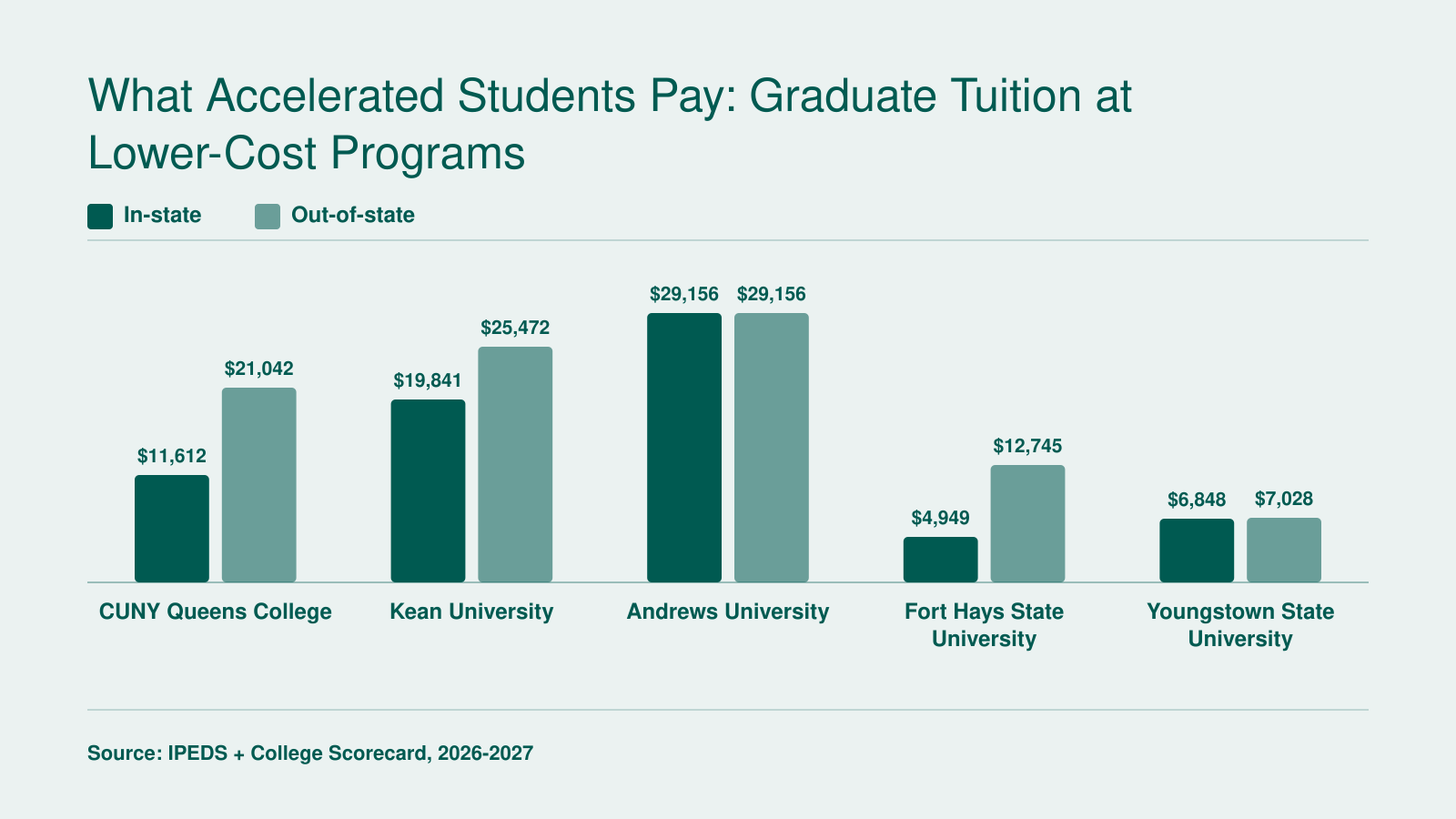
What Accelerated Students Pay: Graduate Tuition at Lower-Cost Programs
The chart compares in-state and out-of-state graduate tuition at the most affordable programs in this list. Some schools let accelerated students take shared graduate credits at undergraduate rates, which can lower the total cost; at George Mason, for example, a Virginia resident pays $596.50 per undergraduate credit instead of $779.00 per graduate credit, saving $182.50 per shared credit. The net price figure reported elsewhere is an institution-wide average after aid, not a quote for this specific degree.
Online, Hybrid, or Campus: Accelerated Format Trade-Offs
Format shapes pace and fit. Fully online programs here, such as Regent University and Indiana University Bloomington, remove the residency barrier; University of North Texas lists an accelerated online option in its M.S. in Educational Psychology, Research and Evaluation. A hybrid school psychology path at Texas Tech builds in required campus weekends and a summer intensive, and 4+1 pathways are usually campus-based because students are still undergraduates.
| Format | Example program | On-campus or residency requirement | Practicum placement | Fit for working adults |
|---|---|---|---|---|
| Fully online | Regent University M.A. in Education Psychology | No residency requirement | Practicum requirement not specified in available details | Online delivery removes campus travel and fits full-time work |
| Fully online | Indiana University Bloomington M.S.Ed. in Evidence-Based Practices in Educational Psychology | Fully online | Practicum requirement not specified in available details | No campus visits; online format fits working adults |
| Hybrid with campus intensives | Texas Tech University school psychology program | First year: four weekends each long semester plus a one-week June intensive | Second year: 14 hours per week in a school district | Requires scheduled campus blocks and school hours during year two |
| Blended and fully online options | University of Regina M.Ed. Educational Psychology | Blended (hybrid) and fully online course options | Practicum-based; practicum route students select Psychology in Education or Counselling | Online coursework can fit work, but practicum adds in-person placement hours |
Related Articles
Getting Into an Accelerated Educational Psychology Pathway
- GPACommon minimums cluster around 3.0–3.3, though some 4+1 tracks set higher standards. Examples include Fort Hays State (3.25 overall, 3.50 psychology), UT Permian Basin (3.25), Texas A&M (3.0), and Northern Colorado (3.0). Tulane’s 4+1 lists 3.4.
- Credit standing and prerequisitesApply as a junior, often with 60–90 credits earned. UT Permian Basin expects 90 credits and UTPB psychology majors only; Mississippi State notes 60 graded hours. Psychology and statistics prerequisites vary by school.
- DeadlinesDeadlines change every year and vary by term and specialization. Examples: UW–Milwaukee Dec. 1; Nebraska Jan. 15, May 1, and Oct. 1; George Mason Apr. 1 and Nov. 1 priority dates; Fort Hays Feb. 1.
- GRENot required at UW–Milwaukee, Nebraska, Northern Colorado, Tulane, and Fort Hays State. Confirm current policy with each program.
- Transfer eligibilitySome pathways are designed for continuing home-campus students. UT Permian Basin, for example, limits its accelerated psychology master’s to UTPB psychology majors. Check home-institution credit rules before applying.
The National Association of School Psychologists recommends one school psychologist for every 500 students, but the U.S. national average in 2023-2024 was 1:1,065, roughly 2.13 times the recommended caseload, leaving an extra 565 students per practitioner.
Where an Accelerated Ed Psych Master's Leads: Careers and Licensure
A faster, cheaper degree only pays off if it leads to the roles you want, and school psychologist licensure is usually not among them. A general educational psychology master's is not automatically a path to that role. The National Association of School Psychologists sets a specialist-level minimum: at least 60 graduate semester hours, supervised practica, and a 1,200-hour internship with 600 hours in a school, plus the Praxis exam. Ed.S. programs are the common format, but degree title alone does not establish eligibility.
Roles the degree does support
Many graduates move into work that needs no clinical license:
- Instructional coordinator: median pay of $77,440 (May 2025), and a master's is the typical entry degree.
- Training and development specialist: median pay of $69,280 (May 2025).
- Other options: learning specialist, instructional designer, assessment or research analyst, and coursework toward BCBA study.
Licensure depends on your state
Credentials are state-regulated and not automatically portable. In Texas, student services certificates require an approved preparation program: educational diagnostician certification adds a classroom teaching certificate and three years of teaching, while school counselor certification ended the teaching-experience requirement in 2023.
Is it worth it?
It can be, if your target is one of the non-licensed roles. Lower tuition and a shorter timeline cut the cost of reaching them, the central tradeoff in an affordable master's in educational psychology. If you want school psychology, confirm the program meets NASP standards first.
Early Earnings Snapshot
Educational Psychology programs by state
Quick Answers for Prospective Accelerated Students
These short answers cover pace, online options, school psychologist credentialing, and transfer credit. Specific policies vary, so confirm details with each program and state authority.
Is an accelerated educational psychology master's worth the faster pace?
Can I finish an accelerated educational psychology master's entirely online?
Do I need an Ed.S. after an accelerated master's to work as a school psychologist?
Can transfer students join a 4+1 educational psychology pathway?
Compare Educational Psychology programs on the data that matters
Explore more Psychology specializations or browse every graduate field.
All Psychology programs