Most Affordable Master's in Information Security and Assurance Programs
Compare 230+ accredited most affordable Information Security & Assurance programs, with graduate earnings, cost, debt, and completion data from IPEDS and the U.S. College Scorecard.

Employers weigh curriculum and credentials far more than sticker price, so the cheapest credible program is often the smart buy. Published in-state tuition among the most affordable options here runs from about $5,180 a year at Clayton State University to $9,875 at University of the Cumberlands, and several offer online delivery.
The catch is credibility: a low price pays off only when federal employers recognize the program, chiefly through NSA CAE status.
Key Points
- Clayton State's in-state graduate tuition starts around $5,180.
- CyberCorps can cover tuition plus a $37,000 stipend at NSA CAE schools.
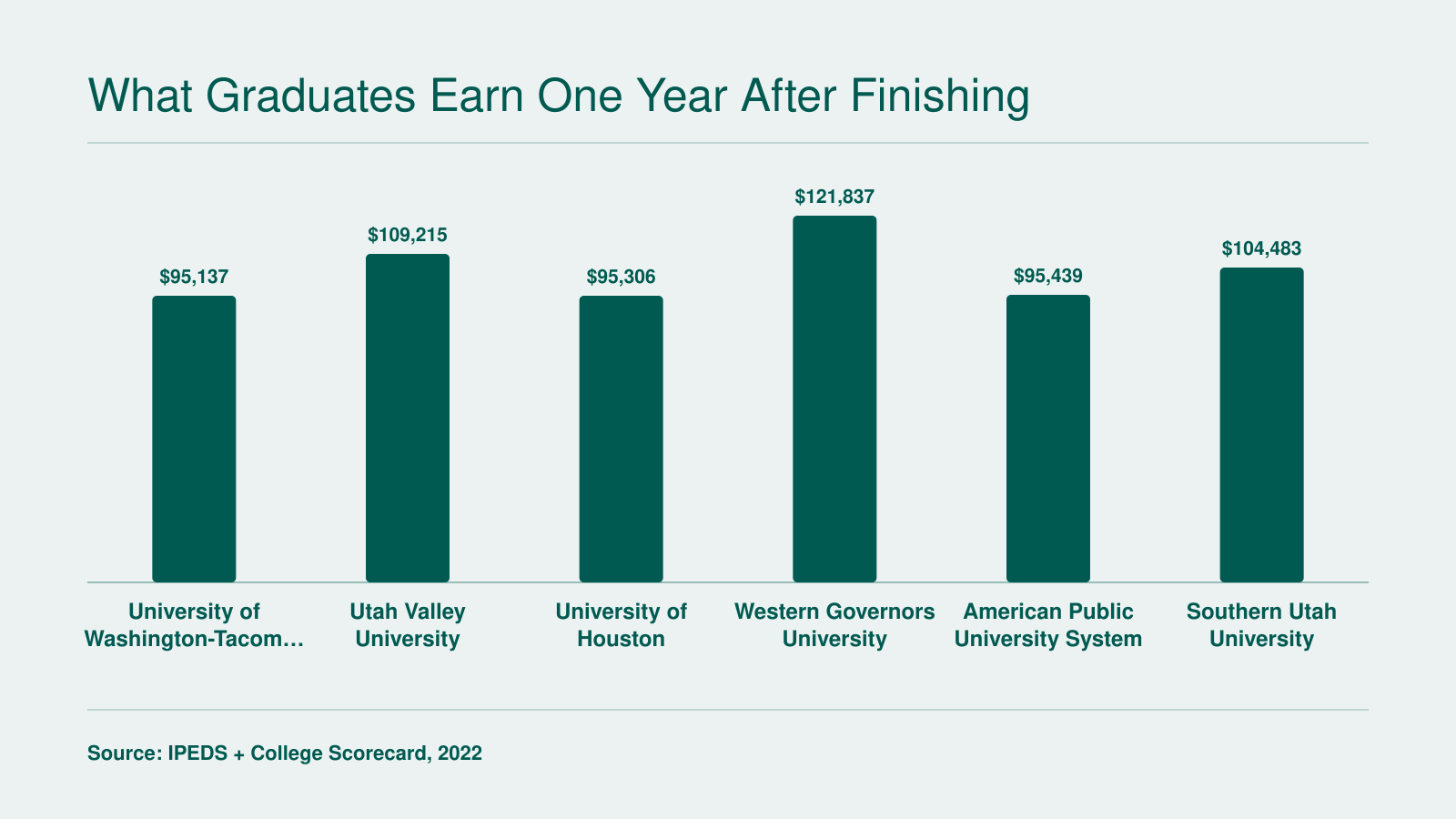
- One year after completing, median earnings range from $95,306 to $121,837.
Top 10 Most Affordable Information Security and Assurance Master's Programs
Below are ten affordable information security and assurance master's programs worth comparing side by side. Each card shows in-state and out-of-state graduate tuition, delivery format, and program concentration where the catalog provides it. Since out-of-state and online rates can vary, treat the published net price as a schoolwide average, not a personal aid offer.
CUNY City College
#1New York, NY · ~$11,000/yr (est.)
Best for: New York residents seeking public-school value
The City College of New York offers a Cybersecurity MS in the Grove School of Engineering, built with New York City Economic Development Corporation seed funding and private sector partners. The program trains students to design networks, apply security tools, and defend networked systems through internships and industry-informed coursework. It is an especially strong value for New York State residents seeking an in-state public option.
- Seed funded by NYCEDC
- Built with private and government partners
- Curriculum covers network design and architecture
- Trains students to defend networked systems
- Classroom learning paired with internships
- Housed in the Grove School of Engineering
California State University-Dominguez Hills
#2Carson, CA · $9,000 – $19,000/yr (est.)
Best for: Working professionals needing evening and weekend classes
California State University, Dominguez Hills runs an accelerated 18-month cohort model, with six core and four elective courses and a faculty-supervised research project. Admission requires a bachelor's degree, a 2.5 GPA, two letters of support, and a statement of purpose. Classes meet late afternoon, evening, and weekends, which can fit working students.
- 18-month accelerated cohort model
- Six core and four elective courses
- Faculty-supervised cyber-security research project
- 2.5 GPA minimum for admission
- Two letters of support required
- Statement of purpose required
- Late afternoon, evening, and weekend classes
University of Central Florida
#3Orlando, FL · ~$9,000/yr (est.)
Best for: Students choosing technical or managerial tracks
University of Central Florida offers a 30-credit MS in Cyber Security and Privacy with technical and interdisciplinary tracks. Students can choose thesis or non-thesis options; the technical track focuses on networks, computer architecture, and AI, while the interdisciplinary track prepares cybersecurity managers. No additional admission requirements beyond UCF apply.
- 30 total credit hours
- Nine core credits plus seven electives
- Two tracks: technical and interdisciplinary
- Thesis and non-thesis options
- No additional admission requirements beyond UCF
- Technical track covers networks and AI
- Interdisciplinary track prepares cybersecurity managers
American Public University System
#4Charles Town, WV · $5,000 – $10,000/yr (est.)
American Public University System's MS in Information Technology lets students specialize in Information Assurance and Security. The 36-credit curriculum covers network security, cryptography, intrusion detection, incident handling, risk assessment, and information systems audit, plus management and IT project management courses. Students finish with a capstone or thesis, and graduates move into roles like security analyst, information assurance officer, and IT risk manager.
- 36 total credit hours
- Information assurance concentration: 15 semester hours
- No entrance exam required
- $0 application fee
- Thesis or capstone option
- Accepts CompTIA, CISSP, CCNA certifications
University of South Florida
#5Tampa, FL · ~$10,000/yr (est.)
University of South Florida's master's in cybersecurity with an information assurance concentration focuses on risk management, security controls, regulatory environment, and incident response. The curriculum includes four core courses, five concentration courses, and a required three-credit practicum. A background in accounting information systems, database management, and systems analysis is recommended.
- 10 total courses
- Focus on information risk management
- Three-credit-hour practicum required
- Covers information security controls
- Background in database management recommended
Southern Utah University
#6Cedar City, UT · $9,000 – $25,000/yr (est.)
Southern Utah University's MS in Cybersecurity with Information Assurance offers three distinct emphases: Cybersecurity Strategy, Cyber Operations, and Healthcare Administration. Accelerated seven-week sessions let students finish in as few as 11 months, and the school charges no out-of-state tuition. The strategy emphasis prepares leaders, while cyber operations and healthcare administration add targeted electives.
- Leadership focus in cybersecurity field
- Covers strategic management and advanced procedures
- Protect critical infrastructure from global threats
- 11-month completion option
- Seven-week course sessions
- No out-of-state tuition
- Complete in as few as 12 months
- 33 total credit hours
- Hands-on cyber operations focus
- No entrance exam required
- Best Regional Universities in the West
- Healthcare administration concentration
- Common core with healthcare-focused electives
- Among most affordable online programs
- Accelerated seven-week sessions
Utah Valley University
#7Orem, UT · $10,000 – $15,000/yr (est.)
Utah Valley University's Cybersecurity MS requires 30 credits, including 21 core and nine electives. Admission typically requires a computing-related bachelor's degree with a 3.0 GPA; other applicants may use two years of relevant experience plus prerequisite coursework. Core courses cover penetration testing, network defense, law and ethics, and a capstone.
- 30 total credit hours
- 21 core credits plus 9 electives
- 3.0 GPA minimum for computing-related majors
- Two years of experience for non-computing applicants
- Two letters of recommendation required
- Admission essay and resume required
- Minimum grade B- required
University of West Florida
#8Pensacola, FL · $5,000 – $10,000/yr (est.)
University of West Florida's Cybersecurity MS takes an estimated 24 months and can be finished in five semesters. Students choose from Data Security, National Security, Security Management, and Software and System Security concentrations. The curriculum covers digital forensics, secure software development, and threat monitoring.
- Four concentrations available
- 30 total credit hours
- Complete in five semesters
- Covers digital forensics and threat monitoring
- Secure software development emphasis
- Data-centric security viewpoint
- Information security management topics
University of the Cumberlands
#9Williamsburg, KY · ~$3,000/yr (est.)
University of the Cumberlands offers an MS in Information Systems Security that maps to DHS and NSA cybersecurity education standards and the CISSP Common Body of Knowledge. The 31-credit program covers access control, cryptography, network security, risk management, incident response, and disaster recovery. Graduates are prepared for roles like information security analyst and cybersecurity manager.
- 31 total credit hours
- Mapped to DHS and NSA standards
- Prepares for CISSP certification exam
- Covers access control and cryptography
- Incident response and disaster recovery planning
- $355 per credit
Clayton State University
#10Morrow, GA · $5,000 – $10,000/yr (est.)
Clayton State University's MS in Cyber Technology with an Information Security concentration can be completed in as few as three semesters. The 30-credit program pairs cybersecurity foundations with hands-on technology and offers applied project or research tracks. Students can start in fall, spring, or summer, and strong undergraduate GPAs may waive the GRE.
- 30 total credit hours
- Complete in as few as three semesters
- Applied project or research track
- Fall, spring, and summer start dates
- 2.5 GPA minimum
- No GRE if GPA 2.7 or above
Cost & outcomes by school
Federal data for the highest-earning Information Security & Assurance programs, independent of the ranking above. Earnings are this field's master's graduates four years after completing, where the Scorecard reports them.
| School | Earnings | Tuition / yr | Debt | Grads/yr | Format |
|---|---|---|---|---|---|
| Utah Valley University UT | $154,576 | $10,224 | — | 14 | Online |
| Fordham University NY | $150,150 | $26,752 | $29,139 | 31 | Hybrid |
| Florida Institute of Technology FL | $144,218 | $24,320 | — | 10 | Campus |
| Western Governors University UT | $144,205 | $9,320 | $11,526 | 1,484 | Online |
| University of Houston TX | $138,873 | $10,051 | $34,749 | 83 | Hybrid |
| Sam Houston State University TX | $136,772 | $8,954 | — | 13 | Online |
| University of Alabama in Huntsville AL | $134,445 | $12,388 | — | 38 | Campus |
| University of Maryland Global Campus MD | $130,314 | $9,882 | $35,875 | 895 | Online |
| Temple University PA | $128,874 | $22,818 | $27,600 | 26 | Campus |
| Fort Hays State University KS | — | $4,949 | — | — | Online |
| Texas A&M University-Central Texas TX | — | $6,242 | — | — | Hybrid |
| Navajo Technical University NM | — | $6,520 | — | — | Online |
Sources: U.S. Department of Education. Tuition and graduates: IPEDS. Earnings and debt: College Scorecard, this field's master's graduates; a dash means no figure is reported.
Cost, debt & payoff
Median earnings of this field's master's graduates (4 yrs after completing) vs. their median federal loan debt · U.S. College Scorecard
Across these programs the median graduate earns about $96,961 and finishes with roughly $65,853 in debt — a ratio that clears a common rule of thumb (keep debt below first-year salary). Tuition and debt vary widely school to school, so check the per-school figures in the table above before you shortlist.
How Much Does a Master's in Information Security and Assurance Cost?
The sticker price on a Master's in Information Security and Assurance is published two ways: a per-credit rate, or a flat annual graduate tuition figure. Among the lowest-cost schools here, annual in-state graduate tuition starts at about $5,180 at Clayton State University and reaches about $17,126 at the University of Michigan-Dearborn; out-of-state figures climb toward $30,000.
To compare fairly, convert everything to cost per credit, then multiply by the program's credit requirement (usually 30 to 36). American Public University System charges $470 per credit across 36 credits, roughly $16,920 in tuition, plus a $1,020 technology fee and a $350 graduation fee. Eastern Michigan's online rate of $600 per credit over 30 credits lands near $18,000 before fees.
Watch for charges published separately from tuition: technology, online or distance-learning, registration, and graduation fees. Georgia Tech, for example, adds a per-semester online learning fee tied to credit load.
Residency matters less for an online master's in information security and assurance than you'd expect. Ferris State, Murray State, and Middle Georgia State charge one rate regardless of state, so an out-of-state online program can undercut your in-state campus option.
The CyberCorps Scholarship for Service can cover tuition and fees plus a $37,000 graduate stipend, but only at participating NSA CAE institutions, and recipients owe matching years of government cybersecurity work. Employer aid is another route: the IRS allows $5,250 tax-free in 2026. Source: U.S. Office of Personnel Management.
Information Assurance vs. Information Security vs. Cybersecurity: What's in a Degree Title
Does the degree title actually change what you study? Less than you would expect. Information assurance and cybersecurity management center on risk management, policy, compliance, and protecting the confidentiality, integrity, and availability of information. Information security concentrates on protecting the data itself. Cybersecurity master's programs lean toward technical defense of networks and systems. In practice the curricula overlap heavily, so compare required course lists rather than program names.
Fort Hays State's Information Assurance Management degree illustrates the policy end: information security policy development, security management, and risk management, with concentrations in policy development and risk management. The University at Albany's M.S. in Digital Forensics and Cybersecurity sits at the lab end, with vulnerability scanning, intrusion detection, malware reverse engineering, and an internship or thesis. Minot State's Cybersecurity and Information Assurance program blends both, pairing IT governance and risk analysis with ethical hacking and incident response.
If you want GRC, audit, or compliance work, follow the policy-heavy track. For analyst, pen-testing, or forensics roles, choose the hands-on one.
NSA CAE Designation: Why It Matters for Information Assurance Master's Programs
A low sticker price is only half the value question. The other half is whether federal employers and scholarship programs recognize the curriculum you're paying for. The National Centers of Academic Excellence in Cybersecurity program, jointly sponsored by NSA and CISA and managed by NSA's National Cryptologic University, is the clearest signal. It validates a specific program of study, not every degree a school offers.1
- CAE-CD (Cyber Defense): Open to associate, bachelor's and graduate programs.1 Curriculum is checked against federal Knowledge Units and must map to the NICE Framework, with redesignation every five academic years.2
- CAE-CO (Cyber Operations): Deeply technical programs rooted in computer science or engineering, emphasizing collection, exploitation and response.3
- CAE-R (Research): Aimed at doctoral research universities.1
The payoff is access. CAE students can be considered for the DoD Cyber Scholarship Program and CyberCorps Scholarship for Service, though eligibility is never automatic4, and SFS requires government service equal to the award period3. Beyond CAE, look for NICE or DoD 8140 alignment and agency or employer partnerships.2 Before enrolling, confirm a school's status on NSA's official CAE institution list.
Related Articles
What Graduates Earn One Year After Finishing
One year after completion, median earnings for these information security and assurance programs range from $95,306 to $121,837. Where program debt is reported, it runs from $11,526 at Western Governors University to $41,147 at American Public University System, so the return on investment varies sharply.
Can You Get a Master's in Information Security With No Experience?
Admission policies vary, but many affordable programs build on-ramps for students without technical experience.
- Bachelor's degreeA bachelor's is required, but not always technical. Hood College accepts technical and nontechnical bachelor's, while Southern Utah expects a related degree or two years of IT or cybersecurity experience.
- Prerequisite courseworkExpect subjects like programming, networking, discrete math, and data structures. Davenport and Syracuse list specific prerequisites; Syracuse offers a free three-course bridge for conditional admits.
- GRE policySouthern Utah, Davenport, and Syracuse do not require the GRE; UC Berkeley makes it optional.
- Work experienceExperience can substitute for a nontechnical bachelor's at Southern Utah, and Davenport may give credit for certifications or work experience to reduce classes.
- GPA thresholdsMinimum GPAs often cluster around 2.75–3.0; Southern Utah's resident tuition waiver lists a 3.0 minimum.
Online and Part-Time Paths: Credits, Timelines, and Transfer Credit
An online master's in information security is a 30 to 36 credit graduate degree you complete remotely, often while working. Ohio State, Indiana, and Kennesaw State require 30, Georgia Tech 32 (ten courses), Emporia State 33, and MSU Denver 36.256143 Kennesaw State's program is an accelerated master's in information security and assurance path that can be finished in about a year full-time.6 Published part-time timelines are scarce, so ask each school.
Formats differ. Georgia Tech is typically asynchronous,1 Ohio State leans on live synchronous sessions,2 and MSU Denver offers several modes.3 UC Berkeley's 27-unit, 20-month program requires one in-person immersion.7
Transfer policies vary and are not always published. MSU Denver accepts 6 semester hours, completed within six years, at a B or better.3 Confirm whether CISSP or similar certifications earn credit, since none of these sources say so.
Per-credit pricing paired with part-time pacing lets you budget one course at a time, which keeps total cost predictable.
Information Security & Assurance programs by state
Common Questions About Affordable Information Assurance Master's Degrees
Are online information assurance master's degrees respected by employers?
Which information assurance master's programs are NSA CAE designated?
Does a master's degree count toward the CISSP experience requirement?
Is a cheap master's in information security worth it compared with certifications alone?
Compare Information Security & Assurance programs on the data that matters
Explore more Computers & IT specializations or browse every graduate field.
All Computers & IT programs