Accelerated Master's in Environmental Science Programs
Compare 400+ accredited fastest Environmental Science programs at 230+ schools, with graduate earnings, cost, debt, and completion data from IPEDS and the U.S. College Scorecard.
Can graduate credits in environmental science count toward both a bachelor's and an M.S.? In several programs below, yes. Undergraduates take graduate coursework as seniors, then finish in about five years total instead of six, with some master's tracks running just 12 or 15 months.
The ranking uses federal College Scorecard and institutional data, not reputation surveys. The comparison that follows covers credit sharing, admission thresholds for master's in environmental science no GRE programs, tuition savings, delivery formats including online master's in environmental science options, and graduate earnings.
The compressed calendar changes the economics: fewer enrolled semesters mean lower tuition and an earlier first salary.
Key Points
- Shared 9-to-12 graduate credits cut tuition and shorten 4+1 timelines.
- Most ranked programs are campus-based; Oregon State and Florida International add hybrid.
- For 2027 admission, most accelerated paths require junior standing and GPA minimums.
Best Accelerated Environmental Science Master's Programs, Ranked
These accelerated environmental science programs emphasize shorter timelines and, where available, 4+1 pathways that let undergraduates begin graduate coursework early. The ranked list below compares program length, delivery format, concentration options, and institution-wide graduation outcomes to help you weigh fit against cost.
Columbia University in the City of New York
#1New York, NY · ~$58,000/yr (est.)
Best for: Policy-oriented applicants seeking Manhattan immersion
Columbia University offers a one-year, STEM-designated M.P.A. in Environmental Science and Policy that integrates environmental science with policy and management. The program is jointly offered by SIPA and the Climate School and is based in New York City, with a focus on complex global environmental challenges. Across the institution, 96% of students graduate.
- One-year program length
- STEM-designated curriculum
- Campus-based in New York City
- Jointly offered by SIPA and Climate School
- Integrates science and policy
- Focus on global environmental challenges
University of California-San Diego
#2La Jolla, CA · $15,000 – $20,000/yr (est.)
Best for: Marine and climate policy students
UC San Diego offers two one-year, full-time Master of Advanced Studies programs: one in Climate Science and Policy and another in Marine Biodiversity and Conservation. The programs emphasize interdisciplinary science and policy, with capstone projects and applied learning. Across the institution, 86% of students graduate.
- One-year program length
- Full-time campus format
- 50 credits required
- Located in La Jolla, California
- Interdisciplinary curriculum
- Focus on climate science and policy
- Includes capstone projects
- Campus-based in La Jolla
- Focus on marine conservation
- Applied learning opportunities
- Graduate-level degree
Tulane University of Louisiana
#3New Orleans, LA · ~$69,000/yr (est.)
Best for: Undergraduates wanting ecology graduate courses
Tulane University's M.S. in Ecology and Evolutionary Biology offers both thesis and non-thesis tracks, plus a 4+1 accelerated option for qualified undergraduates. The program requires 30 graduate credit hours and includes internship opportunities alongside required coursework in chemistry and biology. Across the institution, 86% of students graduate.
- 30 credit hours required
- Thesis and non-thesis options
- Campus-based program
- Chemistry and biology coursework needed
- Minimum 3.0 GPA for admission
- Internship opportunities included
- 4+1 accelerated program option
University of Florida
#4Gainesville, FL · ~$13,000/yr (est.)
The University of Florida offers a CEPH-accredited Master of Public Health in Environmental Health, with concentrations in toxicology and risk assessment. The program is campus-based and accepts applications through SOPHAS, with an accelerated option available for qualified students. Across the institution, 91% of students graduate.
- CEPH accredited program
- Focus on environmental health
- Campus-based degree
- 48 or 42 credits required
- Internship experience included
- Accelerated option available
- Admissions via SOPHAS
University of Wisconsin-Madison
#5Madison, WI · ~$12,000/yr (est.)
The University of Wisconsin-Madison offers a 15-month hybrid Master of Science in Environmental Conservation with concentrations in Environmental Conservation and Environmental Observation and Informatics. The program totals 32 graduate credits and is offered through the Nelson Institute, with a stated accelerated pace and STEM OPT eligibility. Across the institution, 90% of students graduate.
- 15-month program length
- Hybrid format: online and campus
- $1,000 per credit tuition
- 32 graduate credits required
- Minimum 3.0 GPA for admission
- No GRE required for 3.0 GPA
- Summer term admission only
- Focus on environmental conservation
- Portfolio submission required
- Focus on remote sensing
- Geospatial analysis skills
- STEM OPT eligible
- GRE optional for high GPA
- Accelerated program pace
Oregon State University
#6Corvallis, OR · $15,000 – $20,000/yr (est.)
Oregon State University offers an Environmental Sciences master's program with concentrations in Ecology and Social Science, including an Accelerated Master's Platform for current undergraduates. The program integrates life, physical, and social sciences and participates in the Western Regional Graduate Program for reduced tuition. Across the institution, 70% of students graduate.
- Campus-based program
- Concentration in Ecology
- Interdisciplinary curriculum
- No required tests
- Reduced tuition for WRGP
- Thesis or dissertation required
- Accelerated Master's Platform
- Concentration in social science
- Campus and online options
- M.A., M.S., PSM, Ph.D. degrees offered
- Western Regional Graduate Program participation
- Funding opportunities available
- English language requirements for internationals
University of Missouri
#7Columbia, MO · ~$14,000/yr (est.)
The University of Missouri offers an M.S. in Natural Resources with an emphasis in Soil, Environmental and Atmospheric Sciences, including an accelerated BS to MS option. The 30-credit program provides thesis and non-thesis tracks with original research and graduate seminars. Across the institution, 75% of students graduate.
- Campus-based program
- 30 credit hours required
- BS degree admission requirement
- 3.0 GPA minimum in last 60 hours
- Thesis and non-thesis options
- Focus on soil, environmental and atmospheric sciences
- Accelerated BS to MS option
Saint Joseph's University - Philadelphia
#8Philadelphia, PA · ~$20,000/yr (est.)
Saint Joseph's University offers a hybrid Master of Science in Biology with concentrations in Cell and Molecular Biology or Ecology and Evolution, plus a 4+1 accelerated degree option. The 30-credit program is STEM-designated and includes state-of-the-art laboratory opportunities in Philadelphia. Across the institution, 79% of students graduate.
- 30 total credits required
- Hybrid modality (online and campus)
- Located in Philadelphia
- Tuition starts at $936 per credit
- STEM-designated program
- Concentrations include Cell and Molecular Biology and Ecology and Evolution
- 4+1 accelerated degree option
University of New Hampshire
#9Durham, NH · ~$17,000/yr (est.)
The University of New Hampshire offers a 30-credit M.S. in Natural Resources and the Environment with concentrations in Ecosystem Science, Environmental Conservation and Sustainability, and Wildlife and Conservation Biology. The campus-based program includes thesis or directed research and an accelerated master's option for qualified undergraduates. Across the institution, 76% of students graduate.
- 30 credit program
- Campus-based delivery
- Five concentration options
- Thesis or directed research
- $65 application fee
- GRE scores optional
- Accelerated master's available
- Career paths in environmental consulting
University of Kansas
#10Lawrence, KS · $12,000 – $27,000/yr (est.)
The University of Kansas offers a hybrid Professional Science Master's in Applied Science with a concentration in Environmental Assessment, including an accelerated 4+1 option. The 33-credit program combines environmental science with project management and communication and is based at the KU Edwards Campus. Across the institution, 69% of students graduate.
- 33 credit hours
- Hybrid program format
- Concentration in Environmental Assessment
- Accelerated 4+1 option
- Offered at KU Edwards Campus
- Interdisciplinary curriculum
- Focus on project management
Cost & outcomes by school
Federal data for the highest-earning Environmental Science programs, independent of the ranking above. Earnings are this field's master's graduates four years after completing, where the Scorecard reports them.
| School | Earnings | Tuition / yr | Debt | Grads/yr | Format |
|---|---|---|---|---|---|
| University of North Carolina Asheville NC | — | $8,293 | — | — | Campus |
| Boise State University ID | — | $10,803 | — | — | Campus |
Sources: U.S. Department of Education. Tuition and graduates: IPEDS. Earnings and debt: College Scorecard, this field's master's graduates; a dash means no figure is reported.
Cost, debt & payoff
Median earnings of this field's master's graduates (4 yrs after completing) vs. their median federal loan debt · U.S. College Scorecard
Across these programs the median graduate earns about $74,899 and finishes with roughly $41,000 in debt — a ratio that clears a common rule of thumb (keep debt below first-year salary). Tuition and debt vary widely school to school, so check the per-school figures in the table above before you shortlist.
How 4+1 and Five-Year Environmental Science Programs Work
Texas Christian University, Adelphi, and Murray State each let students double-count 12 graduate credits, while Delaware caps the overlap at 9.1234 That range shows the basic design of environmental science master's programs. Undergraduates apply, usually in junior year, then take graduate-level courses as seniors that count toward both degrees. A fifth year finishes the master's: 18 more credits at TCU and Murray State, 21 at Adelphi.
Timing and Eligibility
Rutgers asks for a January junior-year application with at least 75 credits.6 Murray State wants a third-year application after 60 credits.4 George Mason accepts applicants after 60 credits and allows up to 18 graduate credits once students pass 75. Drexel applicants with 90 to 120 credits need a 3.25 GPA.5 Delaware requires the B.S. in Environmental Science to stay in the program.1
Thesis or Non-Thesis
Rutgers offers Plan A (thesis) and Plan B (non-thesis), and most 4+1 students are expected to take Plan B.6 Drexel's thesis track carries 24 elective credits against 36 for non-thesis.5 Adelphi lets students finish with a thesis or an internship.3 Thesis tracks suit Ph.D. or research plans. Non-thesis and internship tracks fit consulting and agency work.
Concentrations
Offered focus areas vary by school. The University of South Florida's environmental management master's lists ecology, energy and climate change, environmental health and hazards, and water management. Always check the catalog for your target program.
Admission Requirements for Accelerated Environmental Science Master's Programs
Admission rules vary by campus, but most accelerated paths ask for a GPA threshold, junior-year credit standing, and a timely application.
- Minimum GPATypical requirements range from 3.0 to 3.3. George Mason and Michigan Tech require a 3.0, while Arizona requires a 3.30.
- Undergraduate credit standingGeorge Mason accepts applications at 60 credits and allows up to 18 graduate credits early. Arizona accepts at 75 credits and requires 90 at entry.
- Prerequisite courseworkClark requires one introductory environmental science course, one statistics course, one introductory science course, and two science electives.
- Recommendation letters and statementsArizona asks for two recommendation letters; George Mason requires three. Include a statement of purpose where requested.
- Deadlines and GRE policyClark's MS application is due April 15 of junior year. UMass Amherst lists February 1, 2027, and Michigan Tech's spring deadline is September 15. GRE is not required at George Mason and Michigan Tech.
Related Articles
How Much an Accelerated Master's Saves on Tuition
The real appeal of a 4+1 isn't just a shorter timeline: it's where the money goes, and the savings come from three places at once.
The savings math
Start with the credits that count toward both degrees. At the University of Nebraska-Lincoln, up to 12 designated graduate credits apply to the bachelor's and the master's, which is roughly a semester's worth of graduate coursework you only enroll in once.1 Note that Nebraska bills those shared credits at the graduate rate, not the undergraduate rate, so the credit savings matter more than the per-credit price there.1 The second lever is one fewer year of living costs: rent, food, and fees you skip by finishing in five years instead of six. The third is earlier entry into the workforce, meaning an extra year of a graduate-level salary.
Comparing graduate tuition
Among the affordable environmental science master's programs, per-credit prices swing widely by residency. At the University of West Florida's 30-credit Environmental Science M.S., Florida residents pay about $379 per credit, Alabama residents about $484, and non-Florida residents roughly $1,137, nearly triple the in-state rate.2 UW-Madison's Nelson Institute charges a flat $1,000 per credit for everyone, totaling $32,000 plus segregated fees.3
Aid built for accelerated students
- Baylor ECS Accelerated: a 60% scholarship against standard graduate tuition for eligible undergraduates, cutting one modeled total from about $57,018 to $34,211.
- Arkansas 4+1 Non-Resident Tuition Award: applies an undergraduate non-resident percentage (50% to 100%) to the graduate portion for approved students starting Spring 2027.4
- Tufts and West Florida: merit and need-based scholarships and assistantships, though most apply to graduate students broadly.25
Treat any published net price as an institution-wide average after aid, not a quote for your file.
When graduate credits are shared with your bachelor's degree, each double-counted course is tuition you don't pay twice and a semester you don't have to spend.
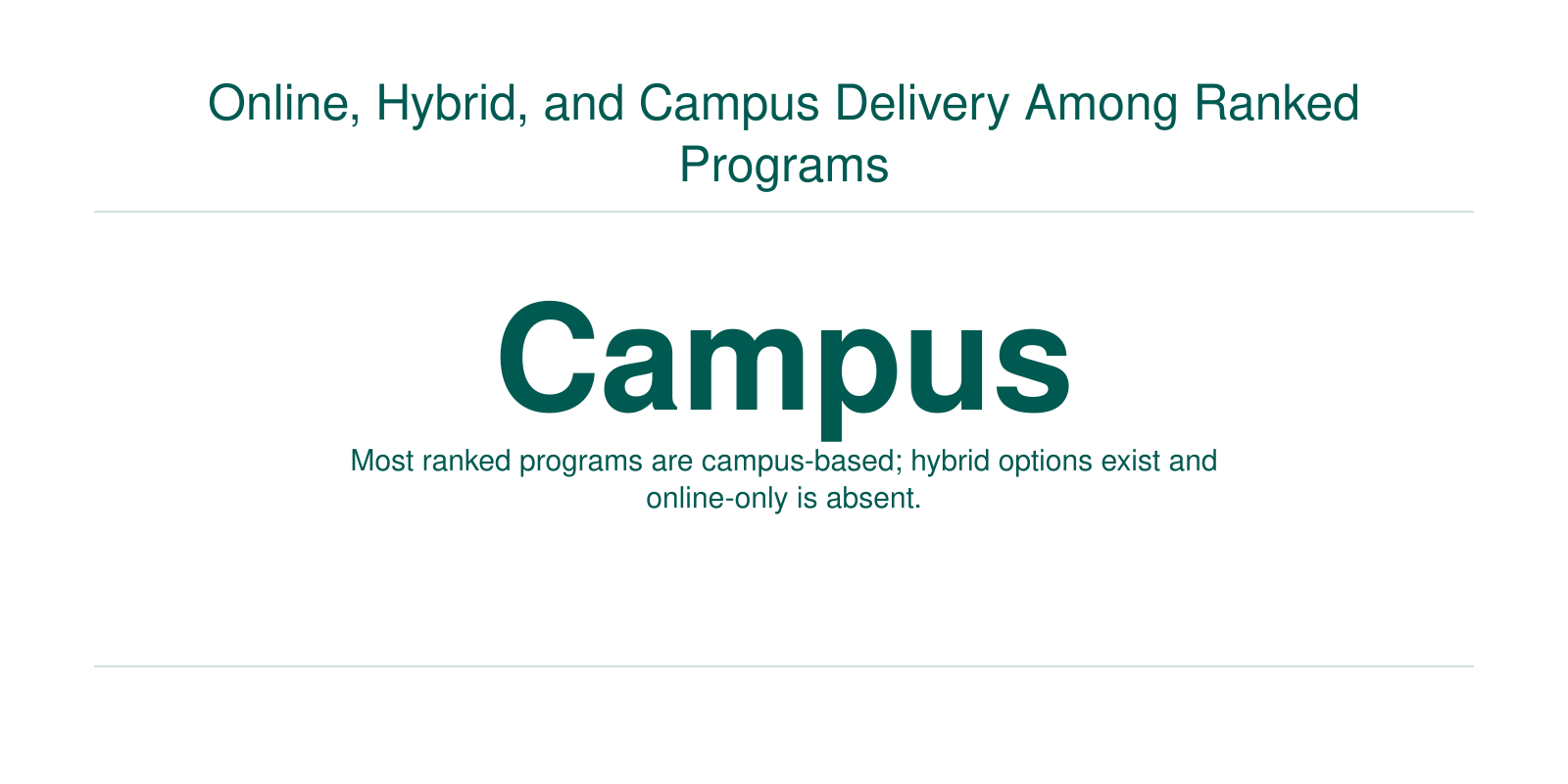
Online, Hybrid, and Campus Delivery Among Ranked Programs
Delivery mode matters for students balancing work or geography. Among the fastest accelerated environmental science programs ranked here, campus-based formats dominate, while some use hybrid delivery and none are exclusively online. Schools such as Oregon State and Florida International University advertise online accelerated options with shared-credit policies, but their published materials do not specify separate transfer limits for online students.
Environmental Science programs by state
Compare Environmental Science programs on the data that matters
Explore more Science & Engineering specializations or browse every graduate field.
All Science & Engineering programs